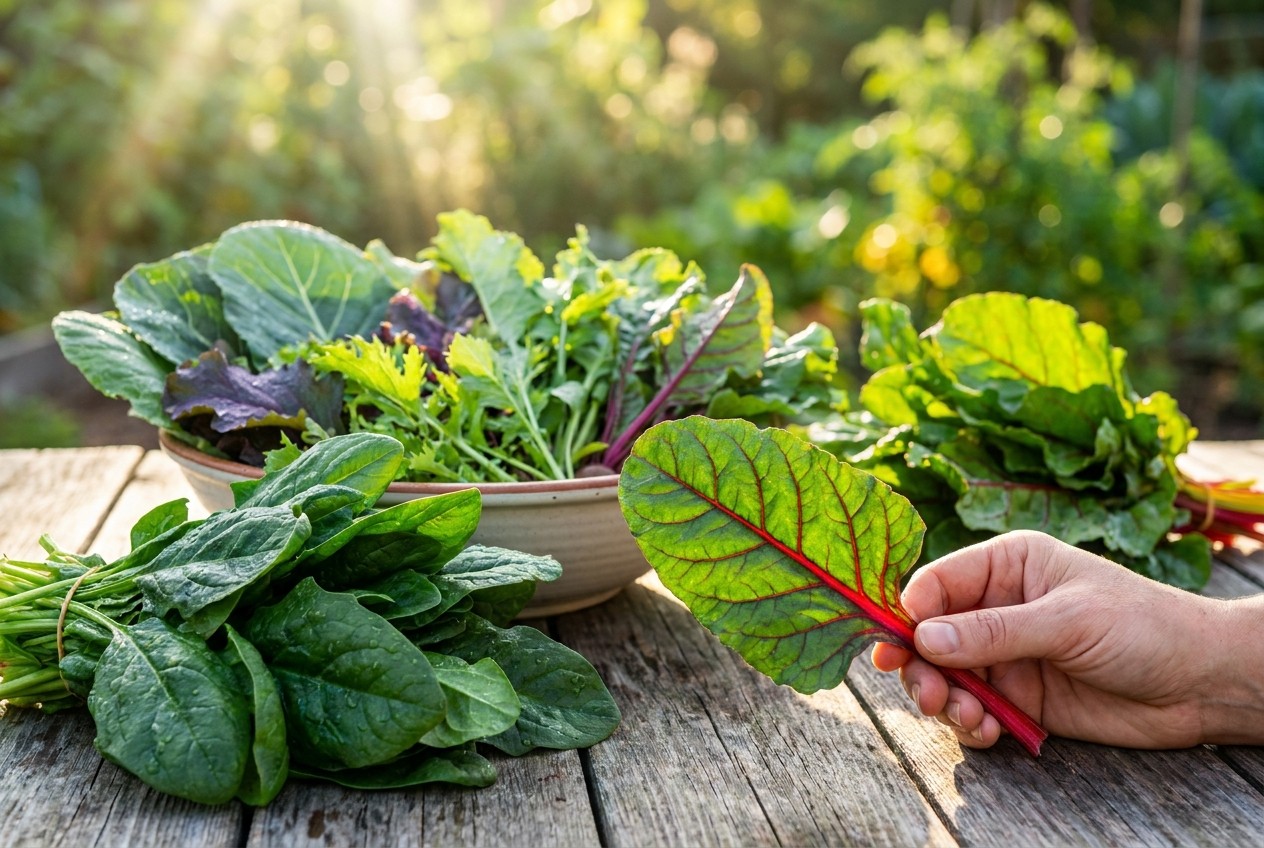
Six Leafy Greens With More Vitamin K Than Kale
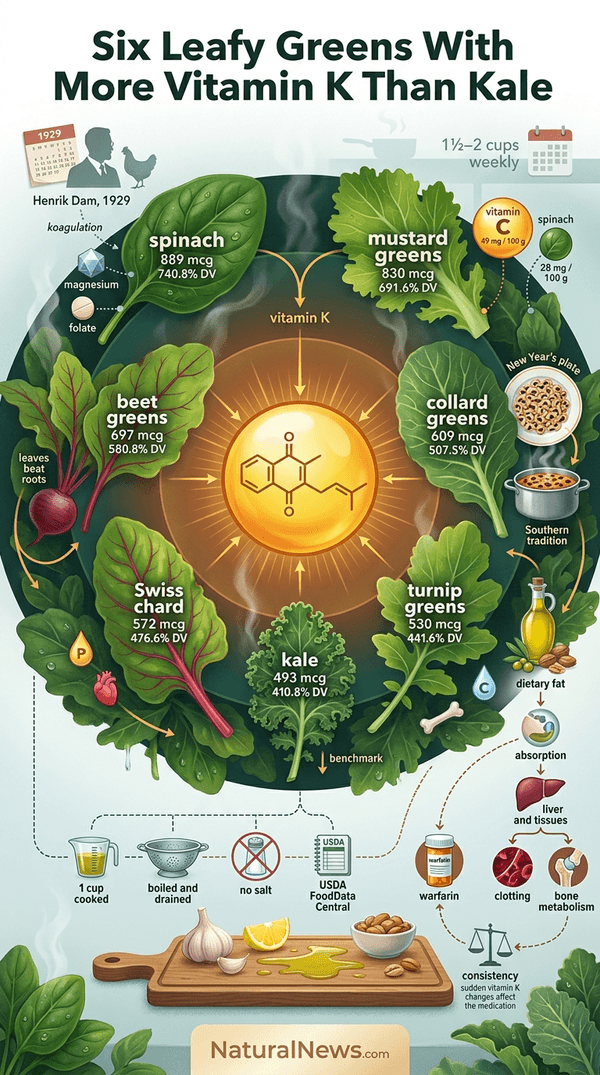
One cup of cooked kale provides 493 micrograms of vitamin K, or 410.8% of the Daily Value (DV), according to the U.S. Department of Agriculture's (USDA) FoodData Central. A review of USDA nutrient data identified six other cooked leafy greens that contain higher vitamin K content per one-cup serving.
The greens – spinach, Swiss chard, collard greens, turnip greens, mustard greens and beet greens – are widely available and can be incorporated into a range of dishes. All values cited below are for cooked greens, boiled and drained without salt, with serving size held constant at 1 cup cooked, per USDA data.
Vitamin K is a fat-soluble nutrient involved in blood clotting, bone metabolism and protein building, according to a NaturalNews.com report [1]. The nutrient was discovered in 1929 by Danish researcher Henrik Dam, who found that chickens fed a fat-free diet developed severe hemorrhages and slow-clotting blood, the report stated [1].
Spinach and Swiss Chard
Spinach tops the list with 889 micrograms of vitamin K per 1 cup cooked, or 740.8% of the DV, according to USDA data. The same serving also provides folate, vitamin A, magnesium, lutein and zeaxanthin. One cup of raw spinach contains 56% of the daily vitamin A requirement and fulfills the entire daily vitamin K need, according to a NaturalNews.com report [2].
Swiss chard contains 572 micrograms of vitamin K, or 476.6% of the DV, per 1 cup cooked. Swiss chard, collards and beet greens support heart health with potassium and magnesium, according to a report on leafy greens [3].
Stated uses for spinach include adding it raw to salads, soups, grain bowls, and smoothies or sautéing it with garlic and olive oil. Swiss chard, collards and beet greens support heart health with potassium and magnesium, according to the report [3]. Spinach is also rich in magnesium, with cooked spinach exceeding the 76.5 milligrams of magnesium found in one ounce of almonds, according to USDA figures cited in a report [6].
Collard Greens and Turnip Greens
Collard greens contain 609 micrograms of vitamin K, or 507.5% of the DV, per 1 cup cooked, according to USDA data. A report on the vegetable stated that collard greens pack more vitamin K per serving than kale [3]. Collard greens are a southern tradition in the U.S. and are often featured in traditional New Year's meals, according to a Mercola.com article [4].
Turnip greens contain 530 micrograms of vitamin K, or 441.6% of the DV, per 1 cup cooked. Turnip greens are among the leafy greens that pack more vitamin K per serving than kale [3]. Turnip greens are among the vegetables that exceed kale's calcium content on a per-cup cooked basis, according to a NaturalNews.com report [5].
Stated uses include adding collard greens to grain bowls, salads and stir-fries, or cooking them with onions and broth. Turnip greens are among the leafy greens that pack more vitamin K per serving than kale [3].
Mustard Greens and Beet Greens
Mustard greens contain 830 micrograms of vitamin K, or 691.6% of the DV, per 1 cup cooked, according to USDA data. They contain carotenoid antioxidants including beta-carotene, lutein, violaxanthin and neoxanthin. A nutritional evaluation of Atriplex triangularis leaves, spinach, and mustard found that mustard had a total ascorbic acid content of 49.0 milligrams per 100 grams, higher than spinach at 28.0 milligrams per 100 grams, according to a study published in Food Chemistry [7].
Beet greens contain 697 micrograms of vitamin K, or 580.8% of the DV, per 1 cup cooked. Beet greens support heart health with potassium and magnesium [3]. Stated uses include eating mustard greens raw in salads or on sandwiches, or cooked in grain bowls and soups. Beet greens support heart health with potassium and magnesium [3]. The USDA recommends adults eat 1½ to 2 cups of leafy green vegetables weekly, according to OSF HealthCare [8].
Vitamin K Function and Dietary Context
Vitamin K plays an essential role in skeletal health, blood clotting and other bodily processes, according to health authorities. It works in the liver and other tissues, including the brain, according to a NaturalNews.com report [1].
Vitamin K is not a single compound but a group of fat-soluble vitamins, according to a separate report [9]. A study published in the Journal of Food Composition and Analysis examined the phylloquinone (vitamin K1) content of vegetables [11].
Vitamin K's role in the body was described as fundamental and profound in a report on the nutrient [9]. For individuals taking anticoagulant medications such as warfarin, vitamin K intake requires careful management, according to a NaturalNews.com report [10].
References
- Vitamin K: Benefits, Food Sources and Recommended Intake, According to Research. https://www.naturalnews.com/2026-10-04-vitamin-k-benefits-food-sources-recommended-intake.html
- 14 must-consume vegetables to stay healthy and fight disease - NaturalNews.com, August 22, 2018. by NaturalNews.com
- 6 Leafy Greens With More Vitamin K Than Kale - HEALTH. https://www.health.com/leafy-greens-with-more-vitamin-k-than-kale-11925634
- Tips on Growing Collard Greens - Mercola.com, October 27, 2017
- Superfoods for Better Health: 5 Vegetables With More Calcium Than Kale. https://www.naturalnews.com/2026-09-29-superfoods-health-5-vegetables-more-calcium-kale.html
- Beyond Almonds: 7 Surprising Magnesium Powerhouses for Heart, Bone, and Muscle Health. https://www.naturalnews.com/2026-09-09-7-magnesium-powerhouses-heart-bone-muscle-health.html
- Nutritional and Sensory Evaluation of Atriplex triangularis Leaves by Acrobat 3.0 Capture Plug-in. Food Chemistry 0308-8146/87/$03-50 © Elsevier Applied Science Publishers Ltd, England, 1987
- Get in the greens with leafy vegetables OSF HealthCare. https://www.osfhealthcare.org/blog/get-in-the-greens-with-leafy-vegetables
- How Vitamin K powers clotting, builds bones and protects health. https://www.naturalnews.com/2026-09-30-vitamink-clotting-builds-bones-and-protects-health.html
- The delicate balance: Navigating anticoagulants, vitamin K and heart health. https://www.naturalnews.com/2026-08-02-navigating-anticoagulants-vitamin-k-and-heart-health.html
- Phylloquinone (vitamin K1) content of vegetables by Elsevier. Journal of Food Composition and Analysis 18 (2005)
Explainer Infographic






Please contact us for more information.