


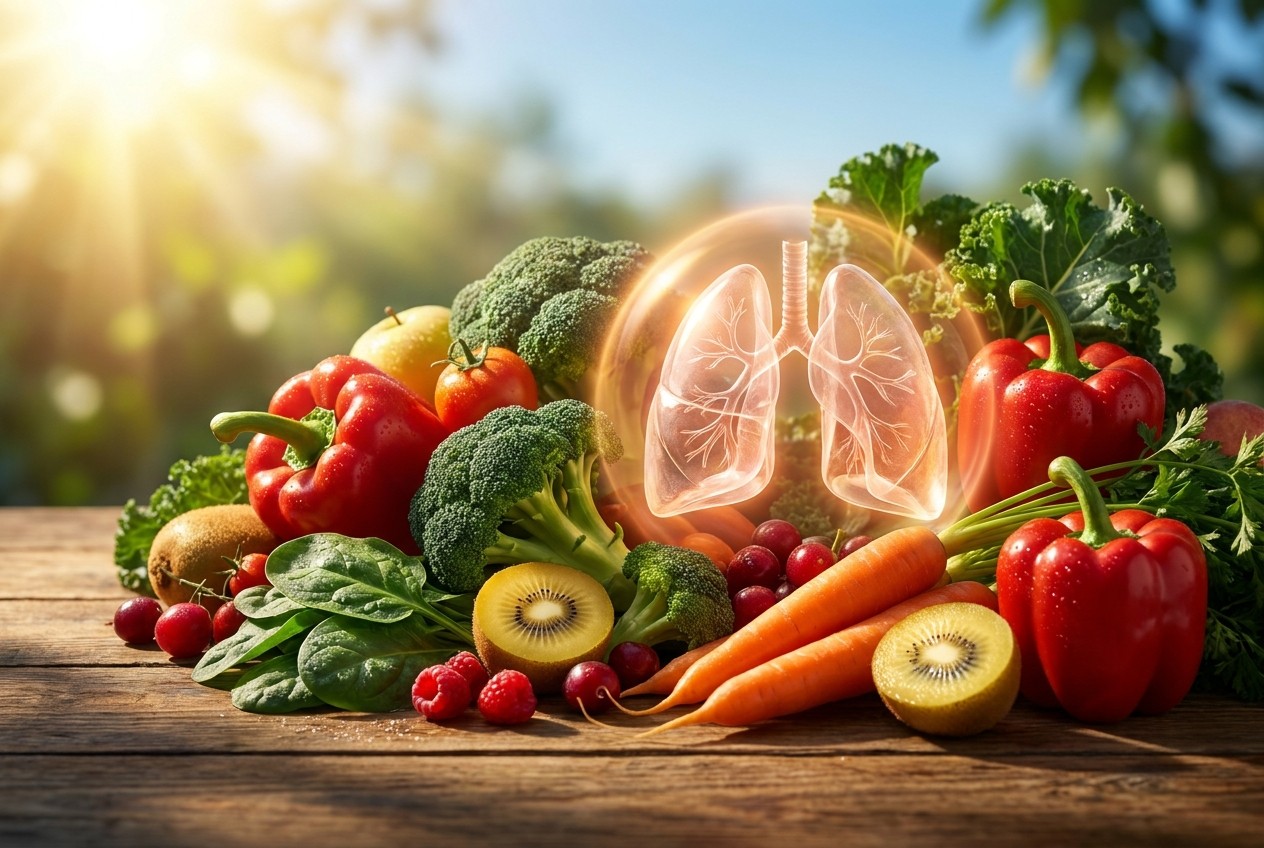
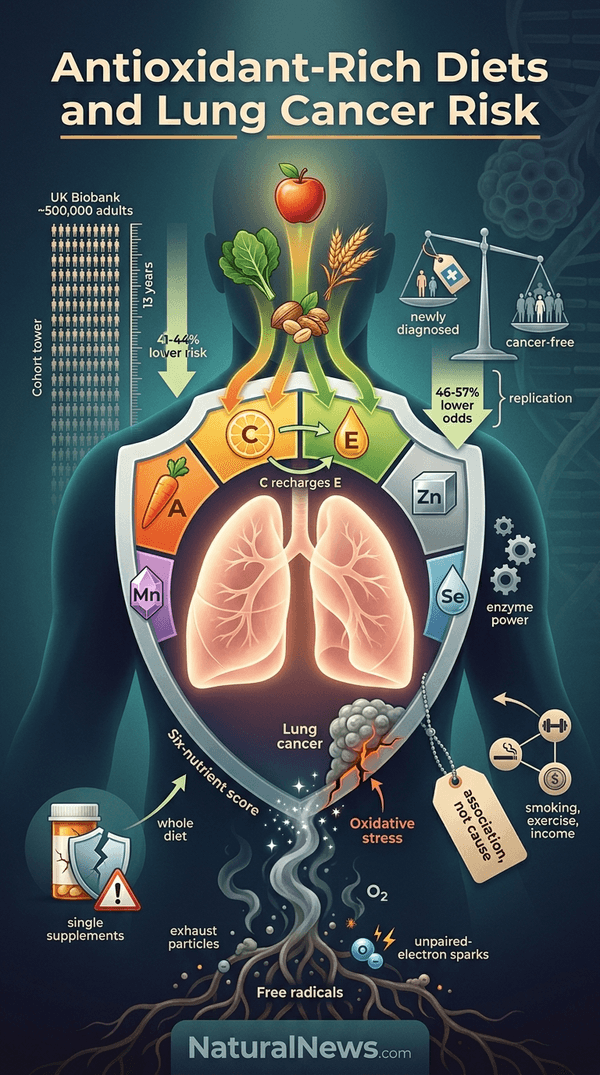
In the UK Biobank analysis, the highest third of antioxidant intake was associated with a 41% to 44% lower lung cancer risk than the lowest third, the account reported. The second study found 46% to 57% lower odds of lung cancer among people with the most antioxidant-rich diets. The authors stated that both studies were observational and showed associations rather than proof of cause.
The findings add to a body of research examining how diet relates to cancer outcomes. The October 2026 studies focused specifically on combined antioxidant intake rather than single nutrients, per the account.
UK Biobank Analysis Reports 41% to 44% Lower Risk
The UK Biobank component tracked about half a million British adults for up to 13 years and used detailed diet questionnaires, according to the NaturalHealth365 account. Researchers scored each diet on six antioxidant nutrients: vitamins A, C and E, plus zinc, selenium and manganese. The scoring captured overall antioxidant intake rather than a single vitamin, the authors stated.
The top third of antioxidant intake was associated with a 41% to 44% lower lung cancer risk compared with the bottom third, the account reported. The links held across every subgroup and additional check the researchers ran, according to the report. The authors concluded that eating more antioxidant-rich foods could play a meaningful role in lung cancer prevention.
The study design differs from earlier work that isolated single compounds. A review of dietary natural products and lung cancer examined the potential prevention and management of the disease using dietary natural products and their relevant bioactive components, and discussed possible mechanisms of action [1]. The UK Biobank analysis instead combined six nutrients into a single score, the account stated.
Second Study Finds 46% to 57% Lower Odds
The second study compared people newly diagnosed with lung cancer to cancer-free adults from a large health study, according to the NaturalHealth365 account. Participants also completed detailed diet questionnaires, and researchers applied the same six-nutrient antioxidant score. Among people with the most antioxidant-rich diets, the study found 46% to 57% lower odds of lung cancer.
The authors stated that finding the same pattern in two different populations made the results harder to dismiss, while noting that both studies were observational. The account did not name the specific cohort used in the second analysis or state the number of participants.
The results were reported against a backdrop of other research on diet and lung cancer.
Researchers Describe Mechanisms of Antioxidant Defense
The lungs are constantly exposed to oxygen, pollutants, smoke and airborne chemicals, each of which can create unstable molecules called free radicals, according to the NaturalHealth365 account. Free radicals can damage cells and DNA over time, and antioxidants help neutralize them before damage builds up, the report stated.
The role of free radicals in cellular damage is described in detail in natural health literature. Shari Lieberman writes in The Real Vitamin and Mineral Book that a free radical is an atom or group of atoms with at least one unpaired electron, and that because free radicals join so readily with other compounds, they can cause dramatic changes in the body, a process referred to as oxidative stress [2]. The book states that antioxidants help preserve healthy molecules by offering their own electrons.
Vitamin C and vitamin E work as a team, with one helping to recharge the other, while zinc and selenium power the body's own antioxidant enzymes, according to the NaturalHealth365 account. Verne Varona writes in Nature's Cancer-Fighting Foods that antioxidants protect cells from damage by neutralizing free radicals [3]. When the diet supplies all of these nutrients together, the lungs gain several layers of defense at once, the report stated.
Dietary Sources and Earlier Beta-Carotene Warning
The NaturalHealth365 account listed deeply colored produce, including bell peppers, broccoli, kiwi, citrus, berries, carrots, sweet potatoes, spinach and kale, as sources of vitamins C and A. Vitamin E can come from sunflower seeds, avocados, spinach and extra virgin olive oil, while zinc and selenium are found in sardines, salmon, eggs, beef, mushrooms and pumpkin seeds, the report stated.
The report stated that smokers should skip high-dose beta-carotene pills, which raised lung cancer risk in earlier trials, and that food sources of vitamin A remain the better choice. Patrick Holford and Jerome Burne write in The 10 Secrets of Healthy Ageing that beta-carotene supplements on their own can do more harm than good by becoming oxidized, and that even among smokers a high dietary intake of beta-carotene is not associated with increased risk [4].
The report also cited radon testing, HEPA air purifiers, kitchen ventilation and avoidance of secondhand smoke as measures to protect air quality. Research on air pollution and diet has examined related questions. A study reported by NaturalNews examined how fruit consumption interacts with exposure to PM2.5, tiny airborne particles from vehicle exhaust, factories and wildfires, and compared participants' intake of fruits, vegetables and whole grains with lung outcomes [5].
Limitations and Conclusion
Both studies were observational, so they show a strong link rather than proof of cause, the authors stated, according to the NaturalHealth365 account. The consistency of the pattern across two very different populations made the results harder to dismiss, the report stated. The authors concluded that eating more antioxidant-rich foods could play a meaningful role in lung cancer prevention.
The report did not state a clinical recommendation for antioxidant supplementation or a specific dietary target. It characterized the findings as support for diets rich in colorful produce rather than as evidence for pills. That distinction aligns with longstanding guidance in natural health literature emphasizing whole foods. Gary Null writes in Power Aging that a diet filled with the nourishment of organic foods, freshly made vegetable juices and green drinks can help address nutrient deficiencies that may otherwise give way to chronic disease or cancer over time [6].
References
- Dietary natural products and lung cancer: Effects and mechanisms of .... https://www.sciencedirect.com/science/article/pii/S1756464618305747
- The Real Vitamin and Mineral Book by Shari Lieberman
- Natures cancer-fighting foods prevent and reverse the most common forms of cancer using the proven power of whole by Varona Verne author
- The 10 Secrets Of Healthy Ageing by Patrick Holford and Jerome Burne
- Study: Fruit Consumption May Mitigate Lung Damage from Air Pollution. https://www.naturalnews.com/2026-05-03-study-fruit-consumption-mitigates-air-pollution-damage.html
- Power Aging Bottom Lines by Gary Null
Explainer Infographic






Please contact us for more information.


