


The study was observational and cannot prove that nut consumption caused the reduced risk, the researchers said.
The analysis, reported on 20 October 2026, adds to a body of research linking nut intake to cardiovascular health, but the authors cautioned that the observational design limits causal inference. The work was published amid growing interest in dietary strategies for managing blood pressure, a major risk factor for heart disease and stroke.
Study Details and Primary Results
The meta-analysis included 20,665 participants diagnosed with high blood pressure; six studies included both men and women, while two included only men. Three studies were from the United States and one each from France, Spain, South Korea, China and Iran.
For every 28 grams of nuts eaten per day, the risk of high blood pressure dropped by 20%. The highest nut consumption category was associated with a 16% lower risk of high blood pressure compared with the lowest consumption category.
The study did not specify the type of nuts consumed or whether they were salted. The review evaluated the impact of eating one serving of nuts, roughly how much fits in a palm, on someone's risk of being diagnosed with high blood pressure.
Potential Mechanisms and Dietary Context
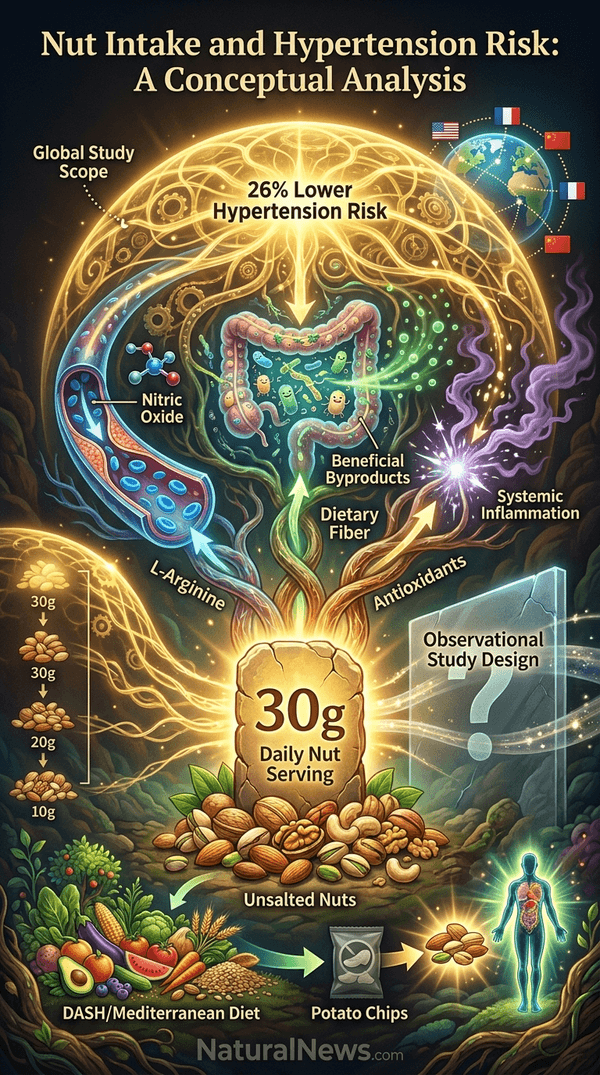
The authors suggested the benefits may come from L-arginine in nuts, which the body uses to make nitric oxide, a chemical that helps blood vessels relax and widen. Fiber in nuts can be broken down by gut bacteria into byproducts linked to lower blood pressure, while antioxidants reduce inflammation that elevates blood pressure.
Nuts are a key part of the Mediterranean diet and the Dietary Approaches to Stop Hypertension (DASH) diet, healthy diets which have both been associated with lower blood pressure and cholesterol. Previous research has found that eating almonds, cashews, walnuts and peanuts, among others, is linked to a lower risk of high blood pressure.
Limitations and Clinical Guidance
The study was observational, meaning it could not prove whether the reduced risk of high blood pressure was down to the consumption of nuts or another factor, the researchers said. The authors found no evidence of bias in the research but noted the small number of studies as a limitation.
The researchers suggested opting for unsalted mixed nuts and using them as a replacement for processed snacks like potato chips. The study did not specify whether the nuts were salted; doctors say consuming more salt raises the risk of the condition. The findings apply to populations studied in the United States, France, Spain, South Korea, China and Iran; generalization to other groups is not established.
Conclusion
The meta-analysis reports an association between daily nut consumption and lower risk of high blood pressure, but the observational design precludes causal conclusions. The findings do not establish that eating nuts lowers blood pressure in people already diagnosed with hypertension; clinical trials are needed to test that question.
The review included 143,380 participants from eight studies; 20,665 had high blood pressure, according to the paper. The authors said the benefits may come from L-arginine, fiber, antioxidants, magnesium and potassium, but the reasons are not confirmed.
References:
- Eating a handful of nuts a day slashes risk of high blood pressure by 20%, major study finds. https://www.dailymail.com/health/article-16223757/nuts-blood-pressure-hypertension-study.html
Explainer Infographic











Please contact us for more information.


