


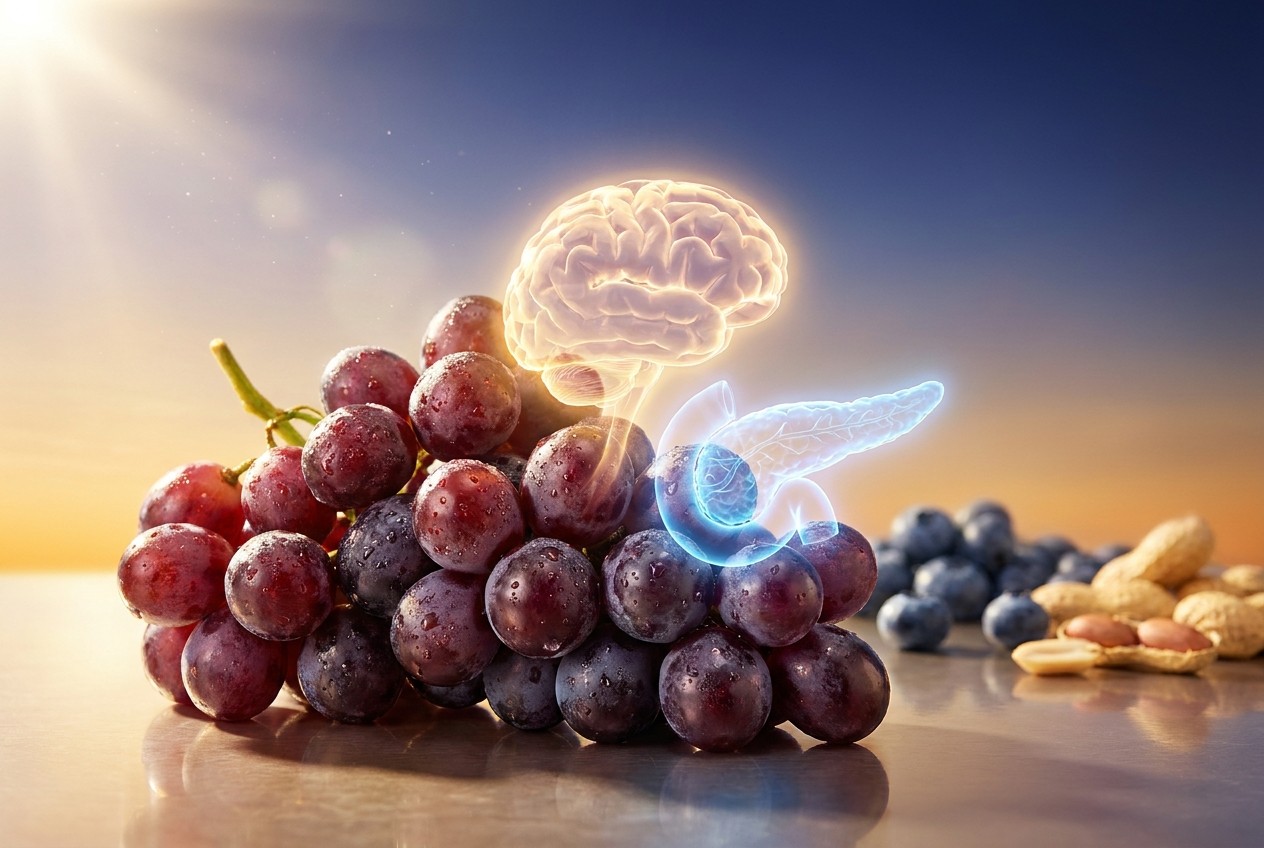
The review reported that some studies found improvements in glycemic control, particularly in people with Type 2 diabetes. However, much of the evidence comes from research involving people with Type 2 diabetes, and the review stated that more studies are needed to understand how the findings apply to the general population. The article noted that resveratrol is a polyphenol, a class of phytochemicals found in plant foods with antioxidant properties [1].
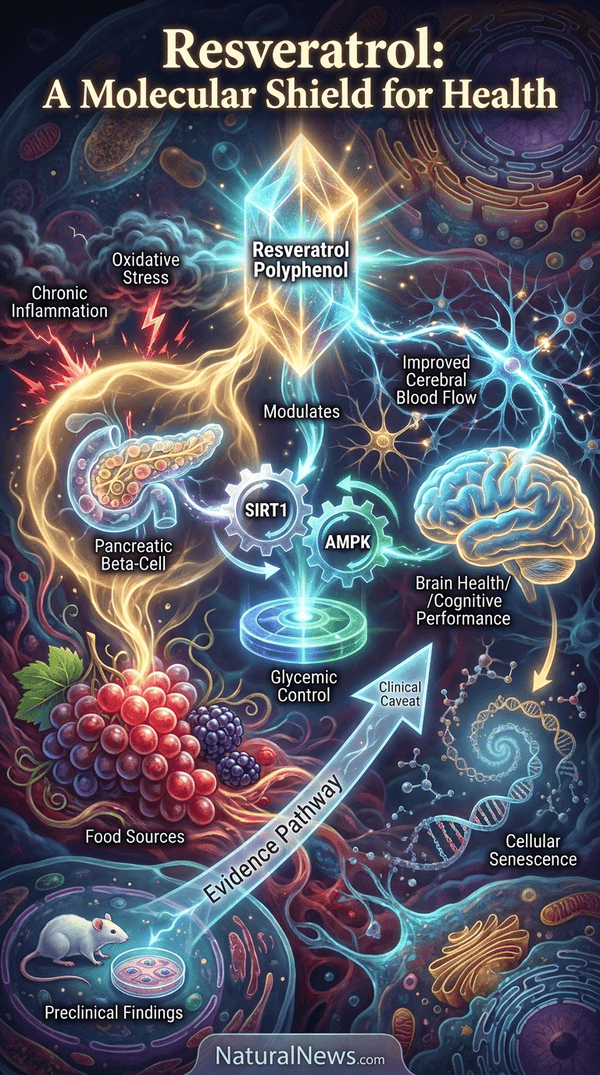
According to the review, resveratrol may counter oxidative stress and inflammation associated with metabolic dysfunction. The article stated that preliminary research suggests resveratrol may help protect pancreatic beta cells, which produce insulin. It was also reported that resveratrol appears to influence SIRT1 and AMPK signaling pathways involved in energy metabolism and glucose regulation.
Review Examines Blood Sugar Pathways
The review stated that some studies found improvements in glycemic control in people with Type 2 diabetes. According to the review, resveratrol may counter oxidative stress and inflammation associated with metabolic dysfunction. Oxidative and nitrative stress play a pivotal role in the tissue damage that occurs in response to toxicants and in the pathogenesis of multiple human diseases, according to a 2010 paper in Toxicology [2].
Preliminary research suggests resveratrol may help protect pancreatic beta cells, which produce insulin, the review stated. The review reported that resveratrol appears to influence SIRT1 and AMPK signaling pathways involved in energy metabolism and glucose regulation. A 2005 study in gerbils found that a dietary grape supplement ameliorated cerebral ischemia-induced neuronal death [3].
Molly Knudsen, M.S., R.D.N., wrote in the article that healthy blood sugar regulation is an important part of long-term metabolic health. The review's findings on glycemic control are consistent with broader research on antioxidants. A 2023 review by Basiri et al. noted that vitamin E, a lipid-soluble antioxidant, acts as a shield against lipid peroxide and is required for regular functioning [4].
Resveratrol is one of several polyphenols found in foods such as tea, wine, chocolates, fruits, vegetables, and extra virgin olive oil [1]. These compounds protect cells from free radical damage, which can lead to tissue degradation and increase the risk of diseases like heart disease, cancer, and Alzheimer's, according to Mercola.com [1]. The article stated that more research is needed to fully understand resveratrol's effects on blood sugar regulation.
Clinical Trials Explore Cognitive Effects
A 2020 clinical trial found that women ages 45 to 85 who took resveratrol daily for one year experienced significant improvements in overall cognitive performance, according to the article. A separate two-year study in postmenopausal women found that resveratrol supplementation improved cognitive performance and blood flow to the brain, the article stated. A systematic review and meta-analysis of clinical trials found that resveratrol supplementation improved certain measures of cognitive function, according to the article.
Researchers are still determining which populations may benefit most and what doses are appropriate. The article noted that these findings do not establish that resveratrol prevents cognitive decline. The article's report on cognitive effects aligns with research on polyphenols. A 2005 study found that a dietary grape supplement protected neurons from ischemia-induced damage in gerbils [3].
Resveratrol's antioxidant and anti-inflammatory properties have been explored for effects on cellular senescence, a process in which cells stop dividing but remain metabolically active. Researchers highlighted mechanisms including oxidative stress reduction, inflammation regulation, mitochondrial activity, and cardiovascular function, according to the article. The article noted that much of the evidence on resveratrol and cellular aging comes from laboratory and animal studies. The article stated that there is not yet sufficient clinical evidence to conclude that resveratrol slows human aging or extends lifespan.
Cellular Aging Evidence Mostly Preclinical
The article stated that resveratrol's antioxidant and anti-inflammatory properties have been explored for effects on cellular senescence, a process in which cells stop dividing but remain metabolically active. Researchers highlighted mechanisms including oxidative stress reduction, inflammation regulation, mitochondrial activity, and cardiovascular function, according to the article.
The article noted that much of the evidence on resveratrol and cellular aging comes from laboratory and animal studies. The article stated that there is not yet sufficient clinical evidence to conclude that resveratrol slows human aging or extends lifespan. Oxidative and nitrative stress play a pivotal role in tissue damage and in the pathogenesis of multiple human diseases, according to a 2010 paper in Toxicology [2].
Resveratrol is a polyphenol found in the skin of grapes, blue and purple berries, and dark chocolate, according to Mercola.com [5]. A 2020 article stated that a Chinese study with rats in 2013 found that resveratrol may lower the risk for vascular dementia [6]. These findings are from preclinical research and do not establish clinical benefits in humans.
Supplement Considerations and Takeaway
The article stated that a supplement offers a concentrated source of resveratrol compared with foods or red wine. Knudsen wrote that consumers should consider ingredient quality, dose, and bioavailability when choosing a resveratrol supplement. The article noted that some formulas pair resveratrol with citicoline, studied for memory and cognitive function, and kanna, researched for effects on mood and stress response.
The article stated that resveratrol can be obtained through foods like red grapes, berries, and peanuts, but that a supplement is the most efficient way to reap the research-backed benefits, according to Knudsen. The review's findings suggest potential benefits for blood sugar, cognition, and cellular health, but the article stated that more research is needed and that the evidence does not establish prevention of cognitive decline or slowing of human aging.
References
- Polyphenols What They Are and Why You Need - Mercola.com, December 14, 2015.
- Toxicological and pathophysiological roles of reactive oxygen and nitrogen species. Ruth A. Roberts. Toxicology journal homepage: www.elsevier.com/locate/toxicol 2010
- Dietary grape supplement ameliorates cerebral ischemia-induced neuronal death in gerbils. 3B2 Total Publishing System 7.51n/W. Mol. Nutr. Food Res. 2005, 49, 443–451
- Key Nutrients for Optimal Blood Glucose Control and Mental .... https://pmc.ncbi.nlm.nih.gov/articles/PMC10536295/
- Resveratrol Proven to Slow Brain Aging - Mercola.com, March 27, 2017.
- Resveratrol Protects Against Vascular Dementi - Mercola.com, March 30, 2020.
Explainer Infographic








Please contact us for more information.


