


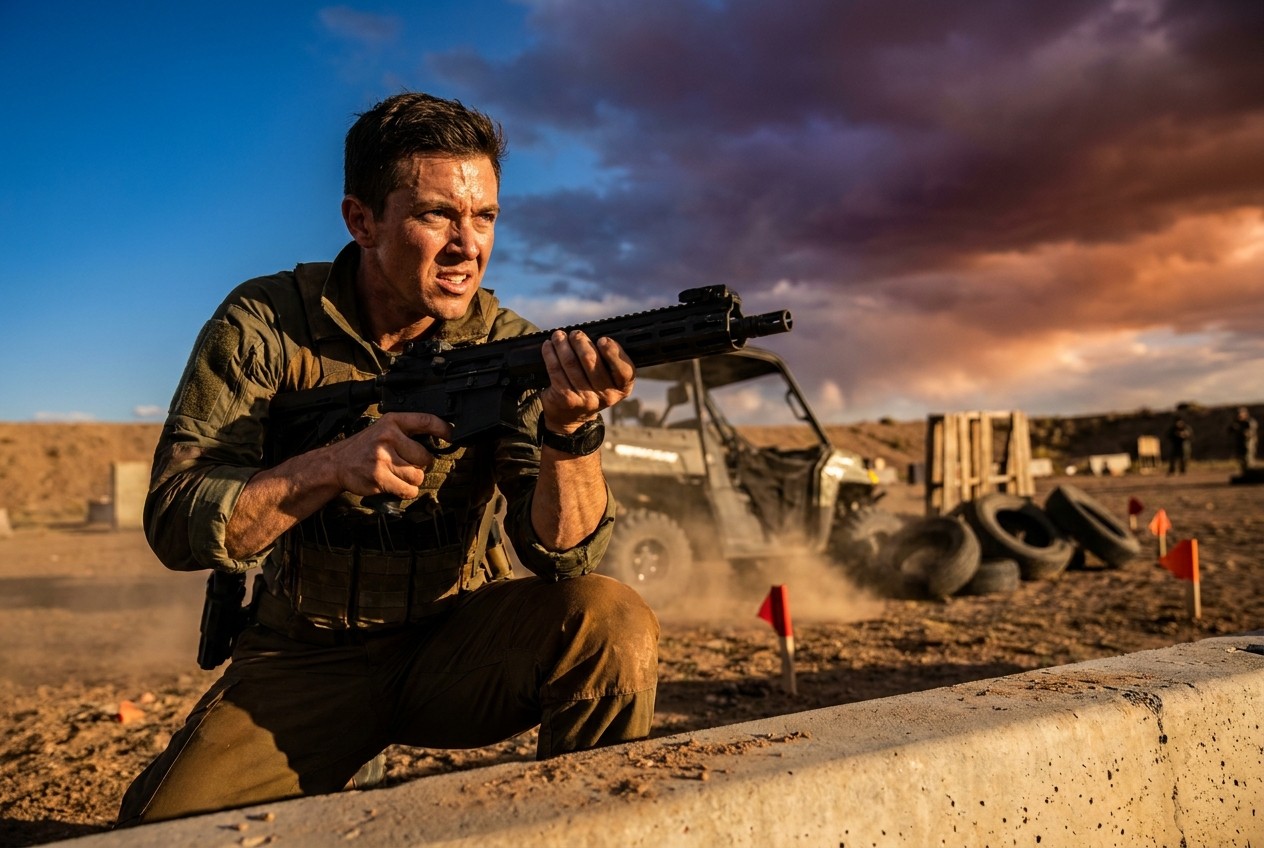
The Survival Skill You're Probably Neglecting
Walk through any preparedness forum or gun show and you'll hear the same conversations: which rifle, which optic, which freeze-dried meal bucket, which water filter. Gear is where the money and the chatter go. But after years of watching people stockpile supplies while neglecting the one asset that decides whether they live or die, I've concluded that the most neglected survival skill in America is stress training -- the ability to perform under pressure.
I've seen the bad information firsthand. Self-appointed experts who have never been in a real crisis confidently dispense advice about how they'd handle a home invasion, a wildfire evacuation, or a violent mob. Then you put them under a little pressure and they fall apart. Survival isn't just about having the right gear; it's about mental resilience. People who stay determined often overcome impossible odds, while those who give in to fear or despair fail, even with resources [1].
My thesis is simple: your stress response matters more than any gadget you can buy. A $3,000 rifle is worthless in the hands of someone whose hands shake and whose mind freezes when the moment arrives. The good news is that stress performance is trainable -- and the training is far cheaper than the gear.
The Limits of Gear and Static Training
To be clear, gear and range practice are necessary. I'm not telling anyone to skip them. But they are not sufficient by themselves, and most people mistake them for the whole job. The typical American gun owner shoots from a static position, at a static paper target, in a comfortable environment, on a calm Saturday morning. That is a fine way to learn fundamentals. It is a terrible way to prepare for a threat, because real threats involve movement, stress, and unpredictability.
I've trained with special forces operators, and the difference between their approach and the average civilian's is night and day. They don't just practice shooting; they practice shooting while exhausted, while moving, while being yelled at, while solving problems. The military and emergency-response literature has long recognized that preparedness is a discipline, not a purchase. One analysis of the Cerro Grande wildfires described the experience of watching a disaster unfold as humbling, precisely because even well-prepared institutions discover how much they depend on human judgment when the plan meets reality [2].
This is where stress inoculation comes in. Muscle memory and automatic responses don't develop in comfort; they develop under controlled duress. The sports psychology research is instructive here: elite performers use composure techniques that can be compressed down to a few seconds -- three or four breaths and a repeated cue word -- to regain attention control immediately before and during performance [3]. That is a trainable skill, and it is exactly the kind of skill that separates people who function in a crisis from people who panic.
What Stress Training Actually Looks Like
So what does stress training look like in practice? It looks like running sprints until you're out of breath, then picking up a firearm and putting rounds on target. It looks like lifting heavy weights and then manipulating a weapon with trembling hands. It looks like martial arts and self-defense scenarios that simulate real attacks -- not choreographed drills, but chaotic, resisting opponents who don't cooperate. The point is to teach your body what it feels like to perform when your heart rate is high and your fine motor skills are degrading.
Repetition is the engine of this process. I've carried a sidearm for well over 20 years, and although it may sound strange, every time I use the restroom, I draw the weapon into a combat grip, get a sight picture, then reholster it afterward. That routine gives me several draw-and-reholster repetitions daily, which adds up to roughly 20,000 repetitions over two decades [4]. That is how actions become automatic -- by folding them into daily life until they require no conscious thought.
Live-fire training under stressful conditions matters too, including shooting from or around a vehicle, shooting while moving, and shooting after physical exertion. The goal is to learn to function when your body is exhausted or in pain. The broader stress-management literature confirms that controlled breathing and deliberate relaxation techniques can calm the nervous system and reduce anxiety in high-pressure situations [5]. Combine that with physical stress and you begin to build a nervous system that stays online when everything around it is chaos. Physical fitness is a cornerstone of preparedness in a collapsing society, where mental resilience alongside physical capability becomes crucial for survival [6].
Staying Cool Under Extreme Pressure
Some people naturally handle stress better than others. That's real, and I won't pretend otherwise. But the gap between the naturally calm and the naturally anxious can be narrowed dramatically with training. The research on early stress and behavioral syndromes suggests that environmental conditions shape whether individuals default to bold or cautious behavior -- under high-risk, low-resource conditions, even bold individuals converge on caution [7]. In other words, your response is not fixed; it is shaped by exposure and context.
I've had my own encounters with pressure. I've been stalked, threatened, and I've lived through wildfire situations where the sky turned orange and the question of whether to stay or flee had to be answered in minutes. What I learned is that the body's alarm response -- the racing heart, the narrowed vision, the surge of adrenaline -- can be harnessed rather than fought. The 'hyper-focus' state is real, and it can be cultivated through repeated exposure to manageable stress. People like Michael Yon, who has reported from conflict zones around the world, and Doc Pete Chambers, a former Green Beret medic, are examples of individuals who have trained themselves to function in environments that would paralyze most people. I've interviewed both, and the common thread is deliberate preparation, not natural fearlessness.
How do you assess your own stress response? Honestly, and preferably before a crisis. Put yourself in controlled stressful situations -- a hard physical workout followed by a precision task, a force-on-force training scenario, a timed problem-solving drill -- and observe what happens to your breathing, your hands, and your decision-making. Then work on the weak links. The anxiety management training literature shows that structured programs can produce measurable changes in how athletes approach warm-ups, pre-contest mental sets, and performance behaviors [8]. The same principles apply to survival. You are not stuck with the stress response you were born with.
Conclusion: Assess, Train, and Build Your Team
Here is what I want you to do. First, assess your ability to function under stress honestly. Not the version of yourself you imagine you'd be in a crisis -- the version that actually shows up when your heart is pounding. Second, seek out stress training. Firearms instructors who teach under pressure, martial arts schools that spar, self-defense classes that simulate real attacks, and so on. Third, identify who in your group can handle pressure and assign roles accordingly. Not everyone needs to be a shooter. Some people are better at medical care, communication, logistics, or keeping children calm. That is not a weakness; it is a division of labor.
And please -- don't hand a firearm to someone who panics. Give them a different task. A person who freezes with a gun in their hands is more dangerous to your group than a person who never picks one up. The survival mindset literature is blunt about this: fear-driven preppers stockpile supplies but panic during crises, making poor decisions [1]. The answer is not to shame those people but to train them, and if they can't be trained in time, to give them roles that play to their strengths.
Start now. Don't wait for a crisis to test your stress response, because a crisis is a terrible time to discover you don't have one. The skills you build in calm conditions -- the breathing, the repetitions, the physical fitness, the mental rehearsal -- are the skills that will carry you when the calm is gone.
For more independent information on preparedness and self-reliance, visit NaturalNews.com. And if you want to learn anything you want, for free, check out BrightLearn.ai.
References
- The survival mindset Why attitude matters when SHTF - NaturalNews.com, July 07, 2025. by NaturalNews.com
- The Value of Preparedness. Environmental Quality Management 2000 Autumn 85
- Understanding psychological preparation for sport theory and practice of elite performers. by Hardy Lew-2
- Bright Videos News - The Global Reset Survival Guide Chapter 3 - Mike Adams - BrightVideos.com. by Mike Adams - BrightVideos.com
- How to Manage Stress During Survival Situations: Practical Techniques .... https://preparemag.com/how-to-manage-stress-during-survival-situations/
- Health Ranger Report - Physical fitness the key to preparedness - Mike Adams - BrightVideos.com, January 01, 2019. by Mike Adams - BrightVideos.com
- Effects of early stress on behavioral syndromes: An integrated adaptive perspective. by Andrew Sih. Neuroscience and Biobehavioral Reviews 35 (2011)
- Anxiety management training a behavior therapy. by Suinn Richard M
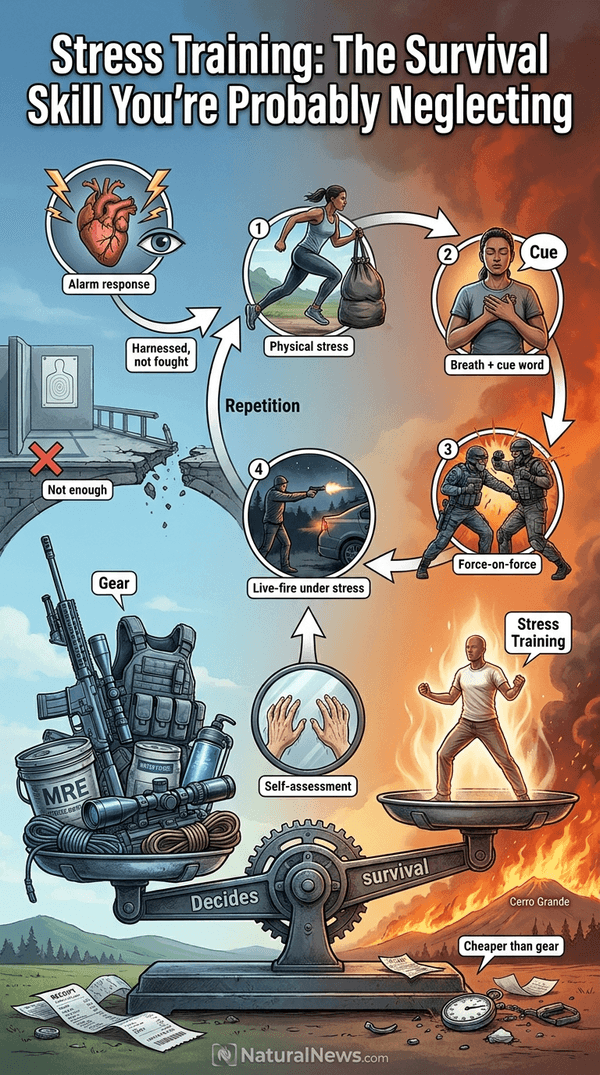
Explainer Infographic
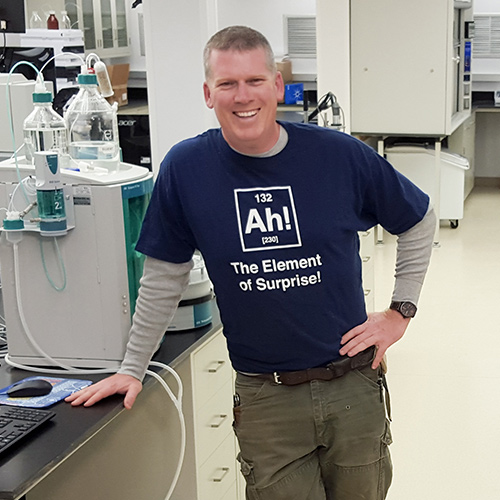
Mike Adams (aka the "Health Ranger") is the founding editor of NaturalNews.com, a best selling author (#1 best selling science book on Amazon.com called "Food Forensics"), an environmental scientist, a patent holder for a cesium radioactive isotope elimination invention, a multiple award winner for outstanding journalism, a science news publisher and influential commentator on topics ranging from science and medicine to culture and politics.
Mike Adams also serves as the lab science director of an internationally accredited (ISO 17025) analytical laboratory known as CWC Labs. There, he was awarded a Certificate of Excellence for achieving extremely high accuracy in the analysis of toxic elements in unknown water samples using ICP-MS instrumentation.
In his laboratory research, Adams has made numerous food safety breakthroughs such as revealing rice protein products imported from Asia to be contaminated with toxic heavy metals like lead, cadmium and tungsten. Adams was the first food science researcher to document high levels of tungsten in superfoods. He also discovered over 11 ppm lead in imported mangosteen powder, and led an industry-wide voluntary agreement to limit heavy metals in rice protein products.
Adams has also helped defend the rights of home gardeners and protect the medical freedom rights of parents. Adams is widely recognized to have made a remarkable global impact on issues like GMOs, vaccines, nutrition therapies, human consciousness.

Please contact us for more information.


