
Lettuce Nutrition: Research Highlights
Years of nutritional research indicate that lettuce consumption may play a significant role in improving public health outcomes, according to a compilation of peer-reviewed studies published by LettuceInfo.org. The resource, which aggregates findings on leafy green vegetables, reports that lettuce varieties range in nutrient content, with most offering low calories and high water content. Researchers cited in the material note that salads serve as a primary vehicle for increasing vegetable intake, a dietary shift that public health officials have long recommended.
The compilation includes findings from multiple studies published between 2005 and 2019 that associate lettuce and leafy green consumption with various health markers. Nutrition experts cited in the material suggest that the vegetable’s simplicity, low cost of production, and nutrient profile position it as a foundational food within natural health diets [1]. The following sections summarize findings from published research, as detailed in the source material compiled by the organization.
Cognitive Health and Leafy Green Intake
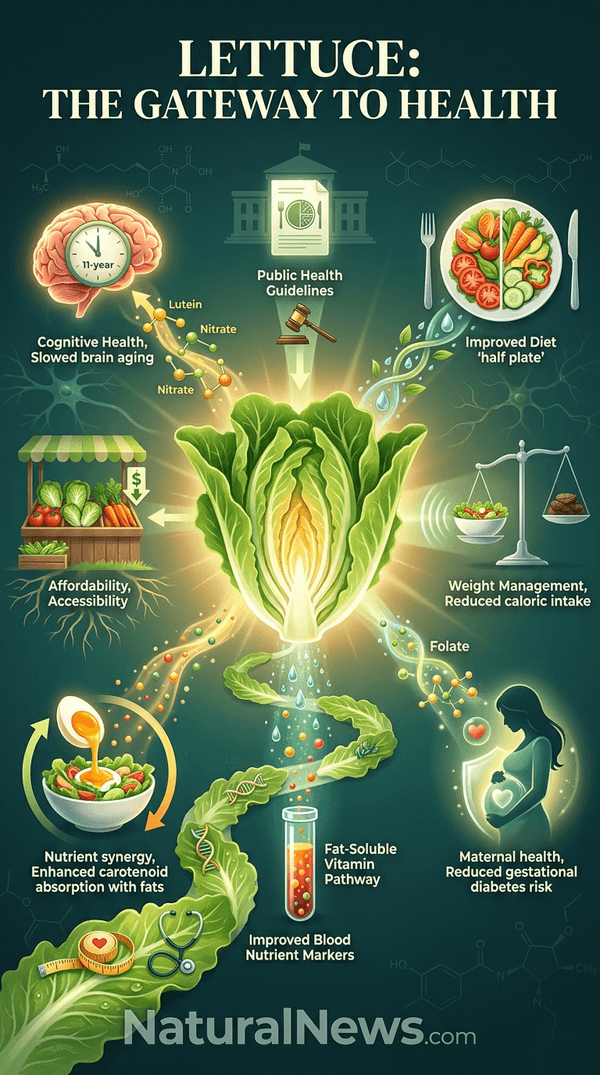
A 2018 study published in Neurology reported that consuming one serving per day of green leafy vegetables may help slow cognitive decline associated with aging, according to the research compilation. The paper attributed this association to specific nutrients found in the vegetables, including phylloquinone, lutein, nitrate, folate, ?-tocopherol, and kaempferol. Researchers involved in the study suggested that these compounds, which are present in lettuce, might support brain function in older adults.
Additional research from Rush University Medical Center in Chicago, detailed in a 2020 report, found that eating green leafy vegetables can help protect the brain and slow cognitive decline by an estimated 11 years [2]. The cognitive benefits associated with leafy greens have been characterized in other reports as a means of preventing and reversing age-related cognitive decline [3]. Observational data involving 960 participants with an average age of 81 who were followed for approximately 4.7 years indicated that daily consumption of salad or leafy greens was associated with brain function comparable to individuals roughly a decade younger [4].
Salad Consumption and Overall Diet Quality
A 2019 study published in the Journal of the Academy of Nutrition and Dietetics found that people who ate salad had higher intakes of fiber, total fat, unsaturated fatty acids, vitamins A, B-6, C, E, K, folate, choline, magnesium, potassium, and sodium compared to those who did not consume salad. Data from the “What We Eat in America” survey, part of the National Health and Nutrition Examination Survey 2011–2014, showed that people who regularly consumed salad ate significantly more total vegetables as well as more dark green and red/orange vegetables, according to the findings.
A 2006 study published in the Journal of the American Dietetic Association reported that people who ate salads, raw vegetables, and salad dressing had above-average blood levels of folic acid, vitamins C and E, lycopene, and alpha- and beta-carotene. The blood-level findings indicate that salad consumption is associated with improved absorption of key nutrients, according to the report. Dietitians and nutrition experts have noted that incorporating leafy greens into daily meals remains one of the most straightforward approaches to improving overall nutrient intake [5].
Weight Management and Caloric Intake
Several studies, including those published in the Journal of the American Dietetic Association, Appetite, and the International Journal of Science and Nutrition, reported that eating a salad before a main meal reduced overall caloric intake during that meal. The studies also associated this practice with measurable decreases in body weight, waist circumference, blood triglyceride levels, cholesterol levels, and blood pressure, according to the research compilation.
The reported effects were attributed to increased satiety and higher vegetable consumption prior to the main meal. Researchers involved in the studies stated that the practice of consuming a low-calorie, high-volume food like lettuce before eating may naturally lead to reduced energy consumption. Public health advocates have pointed to such findings as evidence that simple dietary adjustments can offer metabolic benefits without requiring complex intervention protocols [6].
Other Reported Health Associations
A study published in the Journal of Nutrition reported that a daily snack consisting of leafy green vegetables, fruit, and milk was associated with a lower risk of developing gestational diabetes in low-income women in Mumbai, India. The research, which focused on populations with low intake of vitamins and minerals, suggested that these foods may offer protective effects during pregnancy. Findings from the study indicated that increasing consumption of these food groups could play a role in maternal health.
Research published in the American Journal of Clinical Nutrition found that consuming cooked whole eggs alongside a raw mixed-vegetable salad improved carotenoid absorption from other carotenoid-rich foods, according to the source material. Carotenoids, the nutrients responsible for the red, yellow, and orange coloration in many fruits and vegetables, are associated with protective health benefits, and dietary guidance has encouraged increased consumption of these compounds [7]. These findings highlight additional potential benefits of lettuce beyond its nutrient content alone.
Conclusion
Collectively, the cited studies indicate that lettuce and leafy green consumption is associated with improved cognitive function, higher nutrient intake, better weight management, and other favorable health markers. The source, LettuceInfo.org, compiled these references from peer-reviewed publications to provide an overview of lettuce nutrition benefits. Among the lettuce varieties studied, phylloquinone content was documented at levels ranging from 24.1 micrograms per 100 grams in iceberg lettuce to 127 micrograms per 100 grams in green leaf lettuce, according to compositional data from one analyzed study [8].
Further research may be needed to confirm causality, but current evidence suggests a positive association between leafy green consumption and a range of health outcomes. Nutrition experts and advocates for natural health diets have highlighted lettuce as a foundational food given its low-cost production and nutrient profile, according to recent reporting [1]. The vegetable has been described as carrying a nutritional profile that rivals more widely promoted greens such as kale and spinach [9].
References
- NaturalNews.com. "Nutrition Experts Highlight Lettuce's Place in Natural Health Diets, Citing Low-Cost Production and Essential Nutrients". NaturalNews.com. March 11, 2026.
- NaturalNews.com. "Eating leafy greens delays cognitive decline by at least 11 YEARS finds study". NaturalNews.com. February 22, 2020.
- NaturalNews.com. "Just ONE serving of greens per day helps delay brain aging by over a decade". NaturalNews.com. August 22, 2019.
- NaturalNews.com. "Salad makes your brain younger: The nutrient boost improves memory prevents dementia study finds". NaturalNews.com. September 05, 2018.
- Everyday Health. "I'm a Dietitian and a Busy Mom of 3—Here's How I Get Healthy Dinners on the Table". February 20, 2026.
- NaturalNews.com. "The green shield: Leafy vegetables are sciences newest defense against decline". NaturalNews.com. March 18, 2026.
- NaturalNews.com. "Consumers Are Advised to Increase Dietary Carotenoid Intake for Health". NaturalNews.com. March 24, 2026.
- Elsevier. "Phylloquinone (vitamin K1) content of vegetables". Journal of Food Composition and Analysis. 2005.
- NaturalNews.com. "The leafy green revolution: Why lettuce deserves more than a garnish role". NaturalNews.com. August 29, 2026.
Explainer Infographic










Please contact us for more information.