The study stated that caffeine did not show significant binding to the receptor. The research team reported that the activation came from plant-based polyphenols and coffee oil compounds instead. The authors emphasized that the findings are preclinical, based on computer modeling and laboratory tests rather than human trials.
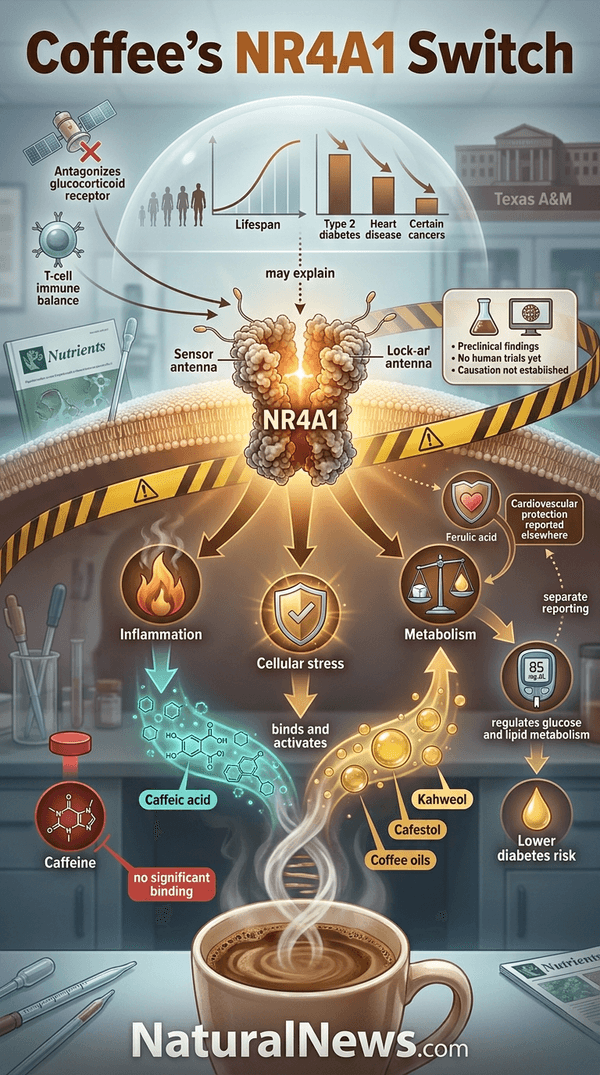
The discovery was described as involving compounds in brewed coffee that activate NR4A1, a receptor that helps the body respond to stress, inflammation, and age-related cellular damage [1].
Section 1: Study Methodology and Receptor Background
The receptor is classified as an orphan nuclear receptor that functions as a nutrient sensor in the body, the report stated, and it plays a key role in regulating inflammation, metabolism, and cellular stress responses.
The research was conducted by scientists from the Texas A&M College of Veterinary Medicine and Biomedical Sciences, according to NaturalNews.com [1].
NR4A1 has been examined in prior scientific literature as a member of the nuclear receptor family. One study noted that NR4A1, also known as Neuronal Growth Factor Induced clone B or NGFI-B, can antagonize glucocorticoid receptor-induced transcription through protein-protein interaction [2]. Separate research on regulatory T cells identified Nr4a receptors as essential for thymic regulatory T cell development and immune homeostasis [3]. The Texas A&M research was specifically focused on whether coffee's beneficial compounds could activate the receptor.
Section 2: Coffee Compounds and Receptor Activation
The study found that several of coffee's major polyphenols bind directly to NR4A1 and activate it. The same was true for kahweol and cafestol, two compounds found in coffee oils, the report stated.
Caffeine itself did not show significant binding to NR4A1, according to the study. NaturalNews.com reported separately that the receptor "responded most strongly to plant-based compounds like caffeic acid, not caffeine" [4].
When NR4A1 is activated, it sets off a cascade of beneficial responses, according to the research summary. It also described metabolic support, with the receptor helping to regulate glucose and lipid metabolism, potentially contributing to reduced diabetes risk.
Ferulic acid, one of the compounds identified in the study as binding to NR4A1, has been described in other reporting as a natural compound with cardiovascular protective properties. A NaturalNews.com article on ferulic acid noted that heart disease remains the top killer while "nature's most powerful heart protectors sit ignored on grocery store shelves" [5]. The Texas A&M research did not examine cardiovascular outcomes directly, focusing instead on receptor binding activity in laboratory conditions.
Section 3: Preclinical Caveats and Context
The authors noted that the research is preclinical. The study did not establish causation in humans, and further research is needed, the authors stated.
The results are consistent with existing literature but should not be overinterpreted, according to the study's authors.
That mechanism differs from the NR4A1 pathway identified by the Texas A&M team, which the researchers said was activated by polyphenols rather than caffeine.
Conclusion
The study suggests that coffee's longevity associations may stem from polyphenols and other compounds rather than caffeine, according to the researchers. The authors noted that brewing methods affect compound levels. Unfiltered coffee, such as French press or espresso, retains more kahweol and cafestol than filtered drip coffee, the study stated.
The authors also noted that the findings are preclinical and do not constitute medical advice. The research was published in Nutrients and is available through the journal's website.
The study adds to a growing body of scientific literature on coffee and health, including research on coffee's association with lower dementia risk and cardiovascular outcomes. The Texas A&M team's contribution is the identification of a specific receptor pathway that may underlie some of those observed associations.
References
- Coffee compounds activate cellular anti-aging receptor, Texas A&M researchers find. https://www.naturalnews.com/2026-07-21-coffee-compounds-activate-cellular-anti-aging-receptor.html
- Transfection of chicken cerebellar granule neurons used to study glucocorticoid receptor regulation by nuclear receptor 4A (NR4A). Bjørn O. Strøm. Journal of Neuroscience Methods 2010
- Regulatory T Cells Pathophysiological Roles. preventing the development of auto- immune diseases colitis and allergies
- Coffee compounds activate cellular anti aging receptor, Texas A&M researchers find - NaturalNews.com, July 21, 2026.
- Ferulic acid The overlooked heart protector that can be incorporated into your breakfast routine - NaturalNews.com, May 23, 2025.
Explainer Infographic









Please contact us for more information.