



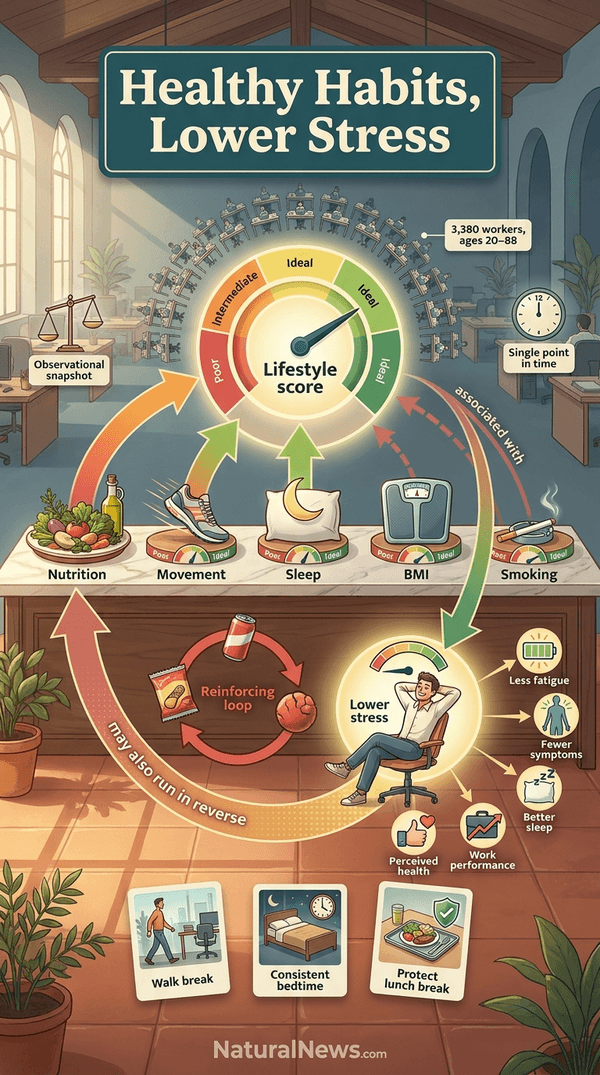
The study assessed five lifestyle areas and assigned each participant a poor, intermediate or ideal rating, researchers said. The findings were described as observational and drawn from a single point in time, meaning causation was not established.
The summary noted that the study linked healthier habits across nutrition, movement, and sleep to lower stress [1]. People with higher lifestyle scores tended to report less stress than those with lower scores.
What the Researchers Measured
Each of the five factors was scored as poor, intermediate or ideal, and combined into an overall lifestyle score.
The report stated that participants received an overall lifestyle score based on whether these factors fell into poor, intermediate or ideal categories, and that the design allowed researchers to look at how people's overall lifestyle scores compared with how they felt day to day.
The body mass index measurement was described as a measure of weight relative to height. The design allowed researchers to compare overall lifestyle scores with day-to-day reported outcomes.
Higher Overall Scores Tied to Lower Reported Stress
Participants with higher lifestyle scores tended to report less stress than those with lower scores, according to the study [1]. When individual habits were examined separately, nutrition, physical activity and sleep duration were each associated with lower reported stress.
Body mass index and smoking status showed weaker and less consistent associations, according to the findings.
The article also noted that getting enough nutrients gives the body the resources it needs to function well. The summary said these factors may help explain why people with healthier habits across multiple areas reported lower stress.
Researchers Note Limits of One-Time Survey
It said the relationship could work in the other direction, and that when stress is lower, it may be easier to make time for exercise, prepare nourishing meals and get enough rest.
The report advised that the findings be read with this context in mind.
Researchers Suggest Practical Starting Points
It recommended breaking up long stretches of sitting with a walk around the block, a few minutes of stretching or a quick strength workout. It advised setting a realistic bedtime and sticking to it, and protecting time that work regularly displaces, such as lunch breaks.
It said how well a person eats, how often a person moves and how much sleep a person gets can all influence how the body functions throughout the day. The article advised noticing what gets pushed aside and looking for one way to protect that time.
Conclusion
Nutrition, movement and sleep were identified as factors in the overall association, while smoking status and body mass index were less consistent.
Researchers collected information at only one point in time, meaning they cannot establish that healthier habits caused people to feel less stressed. The summary stated that sometimes looking after physical health is another way of looking after mental well-being.
References
- Why Managing Stress Requires More Than One Healthy Habit | mindbodygreen. https://www.mindbodygreen.com/articles/want-to-lower-your-stress-research-suggests-one-habit-isnt-enough
Explainer Infographic










Please contact us for more information.


