



Lead author Luca Verroest, a doctoral researcher at the University of Oulu, told Medical News Today that the findings suggest body mass index (BMI) alone may not capture differences in body composition associated with coffee consumption [2]. The study examined fat distribution and muscle mass rather than relying solely on BMI, which measures weight relative to height without distinguishing between fat and lean tissue.
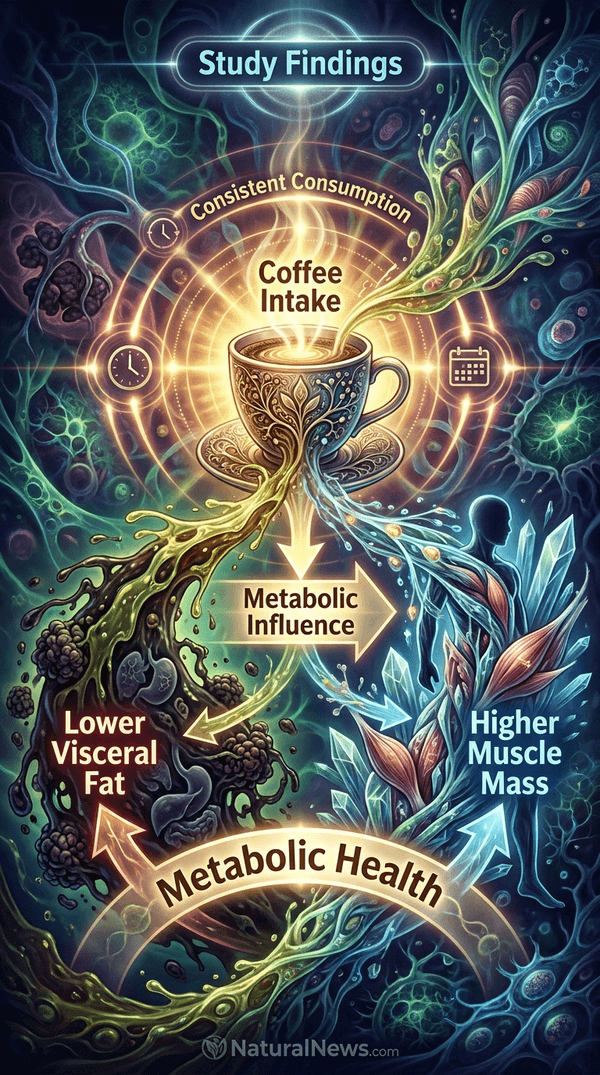
The results add to a body of research suggesting that how the body stores fat and preserves muscle may matter as much as overall weight when assessing metabolic health. The study's focus on visceral fat, which surrounds internal organs and is considered more metabolically harmful than fat stored under the skin, makes the findings particularly relevant to discussions of cardiometabolic risk.
Study Design and Background
Participants in the Northern Finland Birth Cohort 1966 were asked about their habitual coffee consumption and underwent assessments including BMI, waist-to-hip ratio, body fat percentage, and skeletal muscle mass. The cohort, which enrolled 12,058 children born in 1966 in northern Finland, has been followed for decades, providing a rich dataset for examining long-term health associations. The 46-year follow-up included 2,264 participants with complete data on coffee intake and body composition measures.
Verroest told Medical News Today that Finland has the highest per-capita coffee consumption in the world, making it a relevant exposure to study in a Finnish cohort [2]. The high baseline consumption in Finland means the study could capture a wide range of intake levels, from non-drinkers to heavy consumers.
According to Verroest, coffee contains more than 1,000 bioactive compounds, and many may have biological effects of their own. The complexity of coffee's chemical composition makes it difficult to isolate which components might drive the observed associations.
Body Composition and BCAA Findings
The study reported that higher coffee intake was linked to lower circulating levels of branched-chain amino acids, or BCAAs, a biomarker associated with cardiometabolic health, obesity, Type 2 diabetes, and heart disease. BCAAs are essential amino acids that the body cannot produce on its own and must obtain from dietary protein. Elevated circulating BCAAs have been observed in people with insulin resistance and obesity, making them a marker of metabolic dysfunction.
Verroest told Medical News Today that coffee is not a meaningful source of BCAAs, so the finding is not about coffee adding or displacing amino acids in the diet. The association therefore likely reflects differences in metabolism rather than direct dietary intake [2].
Verroest said that as a correlational finding, the BCAA result cannot determine whether coffee directly improves clearance of these amino acids or tracks alongside better metabolic health for other reasons. The study design does not allow researchers to rule out confounding factors, such as other lifestyle behaviors that may differ between coffee drinkers and non-drinkers.
Sex-Specific Hormone Patterns
Among male participants, higher coffee intake was associated with a more favorable glucose-insulin profile and increased total and bioavailable testosterone and sex hormone-binding globulin. Sex hormone-binding globulin is a protein that binds to testosterone and other sex hormones, affecting their availability to tissues. The findings suggest that coffee consumption may interact with hormonal pathways differently in men and women.
Verroest told Medical News Today that this was one of the most distinct findings and that the hormonal pattern fits with the more favorable glucose-insulin profile observed in the same men. The study also reported that women who drank more coffee showed different patterns, though the details were not fully elaborated in the available sources.
Verroest said the study is observational and shows associations rather than proof that coffee causes these changes. The cross-sectional nature of the analysis means researchers cannot determine whether coffee consumption preceded or followed the observed hormonal differences.
Limitations and Expert Perspectives
Mir Ali, a bariatric surgeon and medical director at MemorialCare Surgical Weight Loss Center at Orange Coast Medical Center, told Medical News Today that caffeine has shown some benefit for weight loss and overall health, though the mechanism is not clearly understood. He noted that the study's observational design limits the conclusions that can be drawn.
Monique Richard, a registered dietitian nutritionist and owner of Nutrition-In-Sight, told Medical News Today that because the study was cross-sectional and observational, it cannot establish that coffee caused lower visceral fat or more muscle. She emphasized that many factors could influence both coffee consumption and body composition.
Richard said coffee may be one part of a larger metabolic picture and that plain brewed coffee is metabolically different from coffee beverages with added sugar, syrups, and saturated fat. The study did not distinguish between different types of coffee preparation, which could affect the interpretation of the findings. Despite these limitations, the research adds to the evidence suggesting that coffee consumption may be associated with favorable metabolic markers, though experts caution against drawing causal conclusions.
References:
- Associations of habitual coffee intake with testosterone and cardiometabolic markers: the Northern Finland birth cohort 1966 study. European Journal of Nutrition, July 16, 2026. https://link.springer.com/article/10.1007/s00394-026-04038-z
- Coffee drinking linked to less abdominal fat, more muscle, better hormone balance. https://www.medicalnewstoday.com/articles/coffee-drinking-linked-less-abdominal-fat-more-muscle-better-hormone-balance
Explainer Infographic











Please contact us for more information.


