


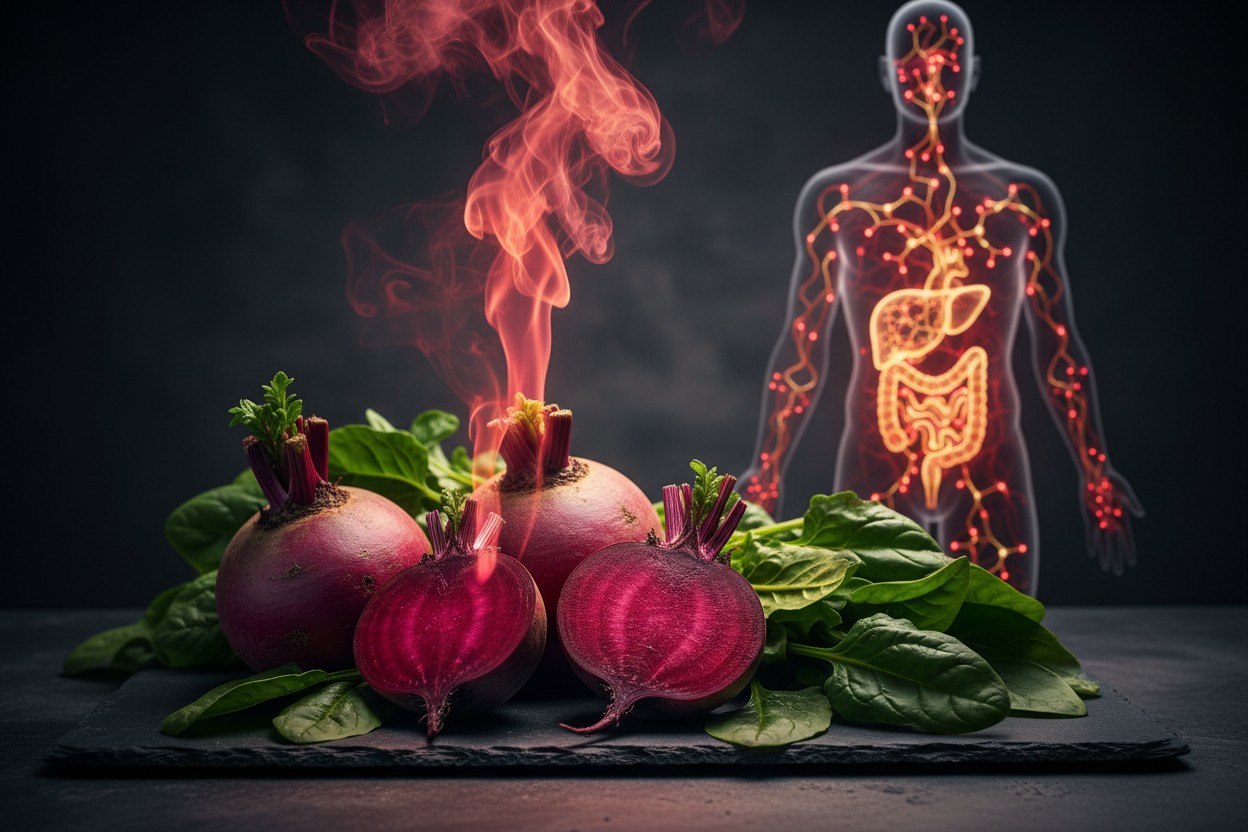
Nitrate is found naturally in many vegetables, particularly beetroot and leafy greens such as spinach, rocket, and lettuce. Non-haem iron — the form of iron present in plant-based foods such as beans, whole grains, and green vegetables — is also a common dietary component. According to the researchers, gut bacteria combine these two components to produce DNICs, which are then absorbed into the body and transported to organs including the liver and kidneys. The study detected DNICs in several types of tissue, but found they were completely absent in germ-free mice, indicating that gut microbes are essential for the process.
Mechanism of DNIC Formation
The formation of DNICs depends on the interaction between dietary nitrate and non-haem iron within the gut environment. According to the study, gut bacteria act as biological catalysts to produce these complexes. Andrei L. Kleschyov, Senior Researcher at the Department of Physiology and Pharmacology at Karolinska Institutet and the study's first and co-corresponding author, stated, 'Our results show that gut bacteria can convert components in food into biologically active molecules that influence important bodily functions.'
The researchers observed that DNICs were undetectable in germ-free mice, confirming that the gut microbiota are required for their production. The molecules were found in various tissues after absorption, suggesting a systemic effect. This mechanism adds to the growing body of evidence that the gut microbiome plays a critical role in mediating the health benefits of a vegetable-rich diet, as noted in other research highlighting how gut microbes convert dietary components into biologically active compounds [3]. [4] also discusses how the intestinal microflora metabolizes dietary flavonoids, further demonstrating the importance of gut bacteria in processing plant-derived nutrients.
Health Effects Observed in Animal Models
The researchers tested the effects of increasing DNIC levels by providing dietary supplements containing nitrate and iron, as well as by administering synthetically produced DNIC. In an animal model of cardiovascular and metabolic disease, higher DNIC levels were associated with improvements in several health markers. Mattias Carlström, Professor of Cardiorenal Physiology at the Department of Physiology and Pharmacology at Karolinska Institutet and one of the study's shared last authors, noted that 'the results help to explain why a diet rich in vegetables, which contain both nitrate and iron, is linked to a lower risk of several diseases.'
According to the report, observations included lower blood pressure, improved vascular function, better blood sugar control, and reduced fat accumulation in the liver. These findings align with earlier research on vegetables and heart health. For example, it has been reported that leafy greens contain high amounts of nitrates that naturally boost nitric oxide levels, and that different types of vegetables protect the heart through various mechanisms [1]. Similarly, a diet rich in vegetables has been shown to lower the risk of heart disease [2]. The current study provides a potential molecular explanation for these long-observed associations.
Implications and Next Steps
The findings suggest a previously unknown mechanism linking vegetable consumption to disease protection, but the researchers caution that most of the work was carried out in experimental models. According to the study, additional research will be necessary to determine exactly how the process operates in humans. The next goals include developing reliable ways to measure DNIC levels in people and investigating whether diet or changes to the gut microbiota could be used to alter DNIC levels and potentially help prevent disease.
The study was funded by groups including the Swedish Research Council, the Swedish Heart-Lung Foundation, the Novo Nordisk Foundation, the European Research Council (ERC), the Knut and Alice Wallenberg Foundation, Diabetes Wellness Sweden, and the Karolinska Institute. The researchers reported no conflicts of interest. These findings contribute to a broader understanding of how the gut microbiome influences health. As noted in other sources, the importance of the gut — often referred to as the 'second brain' — cannot be overstated, and the gut's bacterial spectrum plays a critical role in breaking down nutrients and transforming them into forms the body can utilize [5].
How the Study Was Conducted
The research involved experiments with mice, cells, bacteria, and human samples, using advanced analytical techniques to detect DNIC in tissues. The team used a combination of germ-free mice and conventional models to isolate the role of gut bacteria. Collaboration included the University Medical Centre Hamburg-Eppendorf and the Johannes Gutenberg University Medical Centre Mainz in Germany.
According to the release, the study drew on both dietary supplementation and synthetic administration of DNICs to test the effects of increased molecule levels. The research funding was provided by the Swedish Research Council, the Swedish Heart-Lung Foundation, and other organizations. The researchers stated they have no conflicts of interest. This study adds to the growing literature on the microbiome's role in health, highlighting how specific food components can influence bodily functions through microbial transformation.
References
- Mercola.com. "Best Vegetables for Your Heart". April 16, 2018.
- Mercola.com. "Best Vegetables for Your Heart". April 16, 2018.
- NaturalNews.com. "Study: Dietary Choline Fuels Gut Bacteria to Boost Intestinal Immune Defenses". June 18, 2026.
- 3B2 Total Publishing System 7.51n/W. "Metabolism of quercetin and rutin by the pig caecal microflora prepared by freeze-preservation". Mol. Nutr. Food Res. 2006.
- David Morgan - TheMorganReport.com. "Special Webinar with SURVIVAL MODE".






Please contact us for more information.


