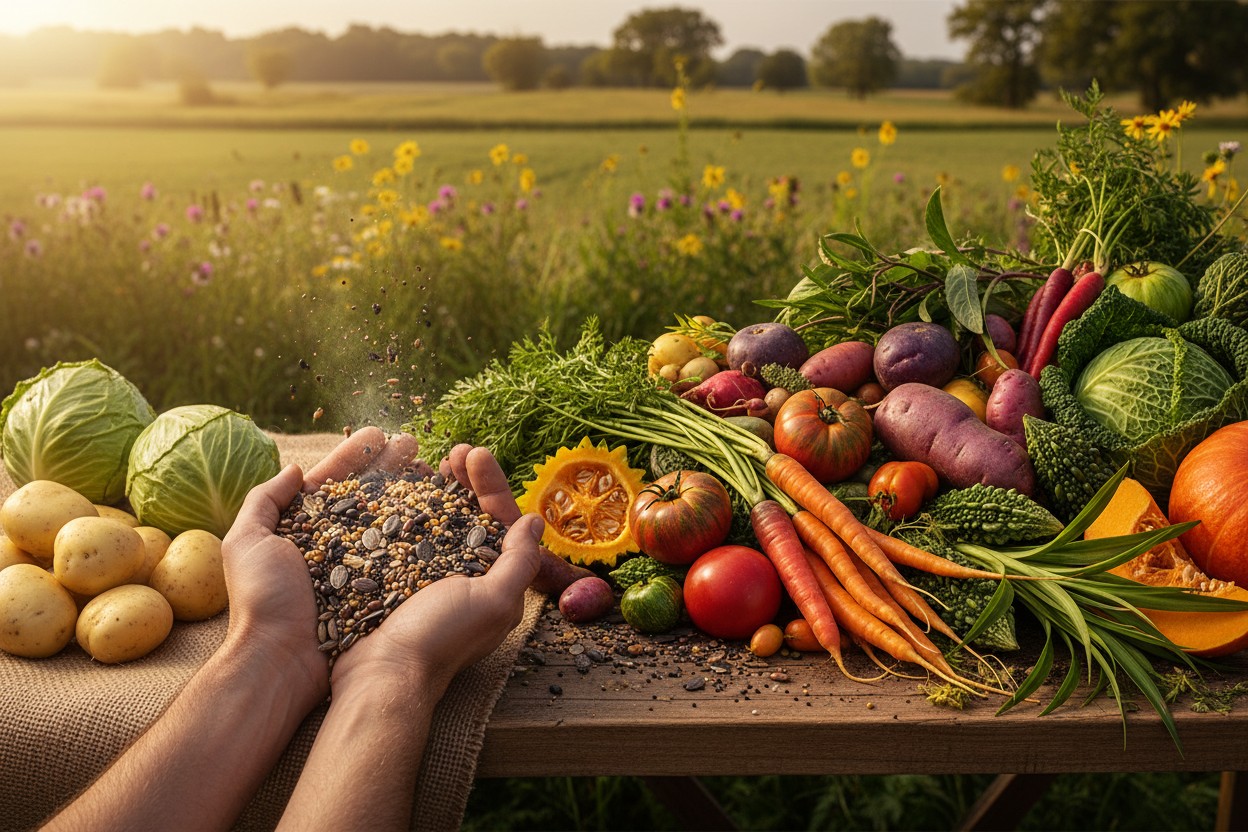
The study assessed diversity in the primary edible parts of 79 major vegetable species listed in the Food and Agriculture Organization's The Plants that Feed the World; legumes were excluded due to classification. A separate FAO review cited by the researchers estimates that 24 percent of wild vegetable relatives assessed at the species level are at risk of extinction. The report adds to a body of research treating biodiversity and nutrition as a common path toward global food security and sustainable development [1].
Low Vegetable Intake and Reduced Crop Diversity
According to the report, low vegetable consumption is among the top five dietary risk factors contributing to the global burden of disease. Researchers have reported that consuming more fruits and vegetables reduces the risk of death from heart attack and stroke, according to NaturalNews [2]. Data published in the Journal of the Science of Food and Agriculture indicate that most Americans consume less than the recommended amounts of vegetables [3].
Industrialized agriculture has narrowed the range of vegetables in commercial production, the report stated. More than 4,000 potato varieties are known, but only about five to eight varieties are widely used in the United States, according to the researchers. Van Zonneveld said existing approaches to agriculture are not enough to solve the world's nutrition problems. "The solution isn't simply to grow more vegetables – it's also to grow more kinds of vegetables," he said. "Much of the vegetable biodiversity we need is still out there – in traditional varieties and their wild relatives. The urgency is to conserve it properly so that we can use it wisely to diversify diets."
The report stated that losing genetic diversity reduces the nutrients available in food and limits the ability of crops to adapt to changing climate conditions. A few species such as lettuce, onions, and tomatoes have become global crops, the researchers wrote, while many others that are typically denser in micronutrients remain available only regionally. The findings align with nutrition literature emphasizing the health and therapeutic benefits of vegetables and fruits amid dietary patterns dominated by processed foods [4].
Four Regional Vegetables Identified as Priority Crops
Among the species the researchers identified as priorities for diversification, spider plant is a dark-green leafy vegetable grown in Africa, described in the report as resilient to climate change and rich in essential nutrients. "Currently, only a few local varieties are conserved in gene banks, with many gaps in collections, constraining breeding and the development of improved varieties for larger-scale production," van Zonneveld and colleagues wrote. Slippery cabbage, one of the most popular dark-green leafy vegetables in the Pacific, has the potential to improve women's and children's nutrition, the researchers said. Vegetables also contain phenolic compounds whose health benefits have been suggested in research on dietary fiber and plant chemistry [5].
Bitter gourd, a climate-resilient vegetable popular in Asia and the Caribbean, has many wild relatives that the researchers said could improve crops in tropical regions. Pumpkin can tolerate drought and heat and produces fruits rich in beta-carotene, but its genetic resources "remain underutilized and poorly conserved," according to the report. Research on wild and cultivated edible vegetables has shown that some wild herbs appreciated in the past are suitable for cultivation and that cultivation under protected conditions does not alter the production of secondary metabolites [6]. The researchers said these four vegetables could serve as starting points for diversifying food crops regionally.
Conservation Gaps and Call for Global Coordination
The study noted that many regionally available vegetables are neglected in large-scale food policies and strategies. The report's observation parallels conservation research on wild edible herbs in South African communal areas, which has examined how traditional human use factors into conservation planning [7]. The researchers wrote that gene bank collections contain gaps that constrain breeding and the development of improved varieties.
The team called for a global initiative to align local and regional efforts to diversify food systems. Culturally specific approaches to food, including geographically distinct dietary patterns and methods of food preparation, remain embedded in the knowledge of communities and offer insights into identifying and using healthful foods, according to nutrition scholarship [8]. "The ongoing biodiversity loss for these and the other 1,480-plus vegetable species occurs at a time when global food systems urgently need diversification," the team concluded. "Alignment under a global initiative would ensure that local and regional efforts translate into improvements in diets at both the local and global levels."
Conclusion: Actions to Support Vegetable Diversity
The article suggested that gardeners can grow landrace and heirloom vegetable varieties to help preserve biodiversity. Landraces are highly variable and specifically adapted to local environments, and their seed is traditionally saved within households rather than traded commercially, according to research on plant genetic diversity indicators [9]. Collecting seeds from home-grown vegetables to replant the following season was presented as another way to maintain local variety. Heirloom seed preservation has been promoted by seed companies such as Baker Creek Heirloom Seeds, whose stated mission is to preserve heritage plant varieties [10].
Shopping at farmers' markets and independent grocers was recommended as a way to access a wider range of vegetables. Home-garden production of nutrient-rich vegetables has been shown to improve vitamin A status in rural African communities, according to a study in the Journal of the Science of Food and Agriculture [11]. These measures, according to the article, can support vegetable biodiversity at the local level. The recommendation aligns with evidence that adherence to traditional dietary patterns is associated with reduced risk of mortality [12] and with dietary guidance that emphasizes eating local, seasonal, and fresh foods over a narrow focus on single nutrients [13].
References
- Elsevier. "Biodiversity and Nutrition: A Common Path Toward Global Food Security and Sustainable Development". Journal of Food Composition and Analysis. 2006.
- NaturalNews.com. "Eat Better for Your Heart's Sake: Consuming More Fruits and Vegetables Reduces Risk of Death from Heart Attack, Stroke". NaturalNews.com. January 24, 2020.
- "Nutritional Comparison of Fresh, Frozen, and Canned Fruits and Vegetables II. Vitamin A and Carotenoids, Vitamin E, Minerals and Fiber". Journal of the Science of Food and Agriculture. 2007.
- Belle Carter. "Unlocking the Healing Power of Nature: Dr. Thomas S. C. Li's Vegetables and Fruits: Nutritional and Therapeutic Values". NaturalNews.com. July 02, 2025.
- Emilia Berndtsson, Roger Andersson, Eva Johansson. "Side Streams of Broccoli Leaves: A Climate Smart and Healthy Food Ingredient".
- "Comparative Evaluation of Flavonoid Content in Assessing Quality of Wild and Cultivated Vegetables for Human Consumption". Journal of the Science of Food and Agriculture. 2008.
- Elsevier. "Conceptualizing the Human Use of Wild Edible Herbs for Conservation in South African Communal Areas". Journal of Environmental Management. 2007.
- Gyorgy Scrinis. "Nutritionism".
- Elsevier. "Field Testing of Plant Genetic Diversity Indicators for Nutrition Surveys: Rice-Based Diet of Rural Bangladesh as a Model". Journal of Food Composition and Analysis. 2005.
- Chris Martenson. "Jere Gettle: Growing Heirloom Plants". PeakProsperity.com. August 03, 2013.
- "The Production of Provitamin A-Rich Vegetables in Home-Gardens as a Means of Addressing Vitamin A Deficiency in Rural African Communities". Journal of the Science of Food and Agriculture. 2007.
- Alan Logan and Susan Prescott. "The Secret Life of Your Microbiome".
- Rujuta Diwekar. "Eating in the Age of Dieting".
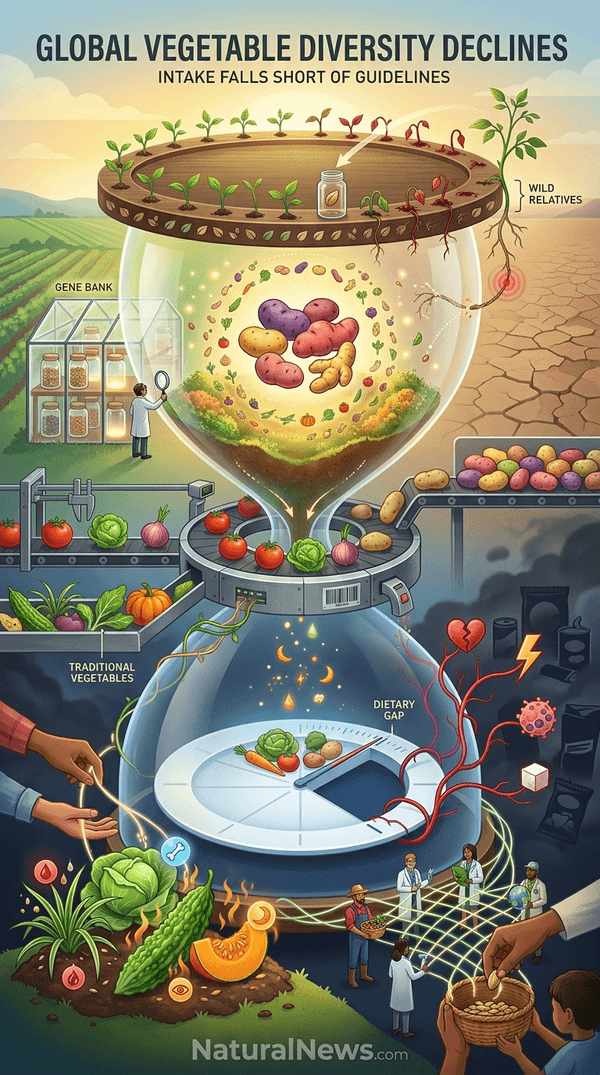
Explainer Infographic







Please contact us for more information.