



Avocados and Cardiovascular Outcomes
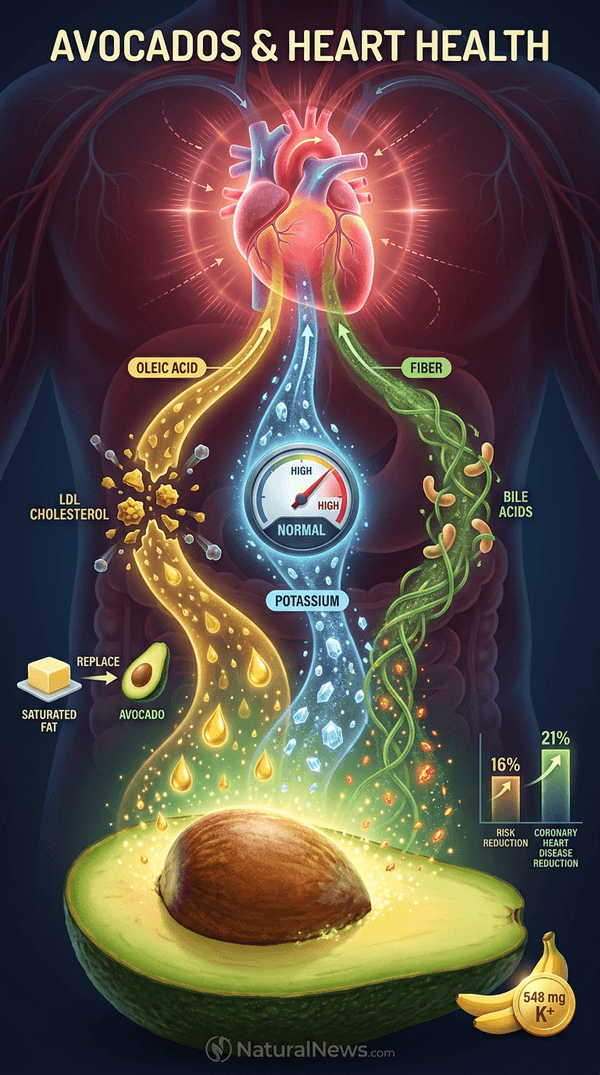
A growing body of evidence indicates that regular avocado consumption is associated with improvements in several markers of cardiovascular health. Avocados are nutrient-dense botanical fruits rich in monounsaturated fats, fiber, potassium, and magnesium, according to Olivia Cook in an article for NaturalNews.com [1]. Belle Carter, writing for the same outlet, reported that half an avocado provides 548 mg of potassium, more than a banana [2]. Potassium counteracts sodium and relaxes blood vessels, officials said.
Registered dietitians have noted that multiple observational studies and clinical trials link avocado intake to reductions in low-density lipoprotein (LDL) cholesterol, blood pressure, inflammatory markers, and triglyceride levels. Most research examines avocados as a replacement for saturated fat sources such as butter and margarine, the report stated. When substituted for less healthy fats, avocados may contribute to a lower risk of cardiovascular disease.
LDL Cholesterol Reduction
A meta-analysis of clinical studies found that consuming at least one avocado per day was associated with lower LDL cholesterol levels. According to D. Enette Larson-Meyer and Matt Ruscigno in the book "Plant-Based Sports Nutrition," monounsaturated fats, when substituted for saturated fats in the diet, lower LDL cholesterol and favorably influence other cardiovascular risk factors [3]. Replacing saturated fats with avocados may lower LDL, the study indicated.
Another review of randomized controlled trials reported an average LDL reduction of 9.4 mg/dL in individuals with hypercholesterolemia, according to Cook's article [1]. The effect was most pronounced when avocados replaced sources of saturated fat. Researchers emphasized that the benefit appears to be dose-dependent, with greater reductions seen at higher intakes.
Blood Pressure and Inflammation
A cohort study of more than 67,000 women linked eating five or more servings of avocado per week to a 17 percent decrease in hypertension risk, Carter reported [2]. The potassium, magnesium, and fiber content of avocados may contribute to blood pressure management, researchers said. Whitney and Rolfes noted in "Understanding Nutrition" that omega-3 fatty acids, along with other dietary components, can lower blood pressure and defend against inflammation [4]. While avocados are not rich in omega-3s, their monounsaturated fat profile has been shown to reduce inflammatory markers such as C-reactive protein.
A recent study from the Illinois Institute of Technology found that adults with prediabetes who consumed one avocado and one cup of mango daily for eight weeks showed improved vascular function and lower diastolic blood pressure, according to NaturalNews.com [5]. The study involved 82 participants and was published in the Journal of the American Heart Association. These findings add to a growing body of literature supporting avocados as part of a heart-healthy diet.
Triglycerides and Usage Recommendations
Some research indicates that substituting other dietary fats with avocados may lower triglyceride levels, though results have been mixed. Whitney and Rolfes wrote that dietary changes including increased monounsaturated fat intake can help reduce blood triglycerides [4]. Researchers believe avocados may aid in breaking down triglycerides within lipoproteins, but more study is needed to confirm these effects.
For heart benefits, experts recommend replacing other fats with avocados rather than simply adding them to the diet. According to Carter, eating two or more avocados per week is linked to a 16 percent lower risk of cardiovascular disease and a 21 percent lower risk of coronary heart disease [2]. Cook noted that two servings per week is the threshold associated with these risk reductions [1]. Avocado oil, which retains the fruit's healthy fat profile, can also be used in cooking as a substitute for less stable oils [6].
Implications and Summary
Daily avocado consumption over 26 weeks was associated with improved overall diet quality, including increased intake of vegetables and healthy fats, and reduced intake of sodium and added sugars, Cook reported [1]. The findings suggest that incorporating avocados into a balanced diet may help individuals shift away from processed foods high in saturated and trans fats.
Current evidence supports avocados as part of a heart-healthy diet when used to replace less healthy fats. Officials said further research is required to confirm long-term cardiovascular outcomes in diverse populations. Avocados remain a widely accessible whole food that can be incorporated into meals in place of margarine, butter, or processed spreads.
References
- Olivia Cook. "What happens if you eat one avocado a day? Science-backed benefits of nature's creamiest superfood." NaturalNews.com. August 6, 2025.
- Belle Carter. "The heart-healthy power of avocados: How this superfood supports blood pressure control." NaturalNews.com. March 17, 2026.
- Enette Larson-Meyer, Matt Ruscigno. "Plant-Based Sports Nutrition."
- Whitney, Rolfes. "Understanding Nutrition."
- "Eight-Week Study Finds Avocado and Mango Combo Linked to Improved Vascular Function in Prediabetic Adults." NaturalNews.com. April 30, 2026.
- Laura Harris. "Avocado oil: A nutrient powerhouse for health and cooking." NaturalNews.com. May 3, 2025.
Explainer Infographic










Please contact us for more information.


