


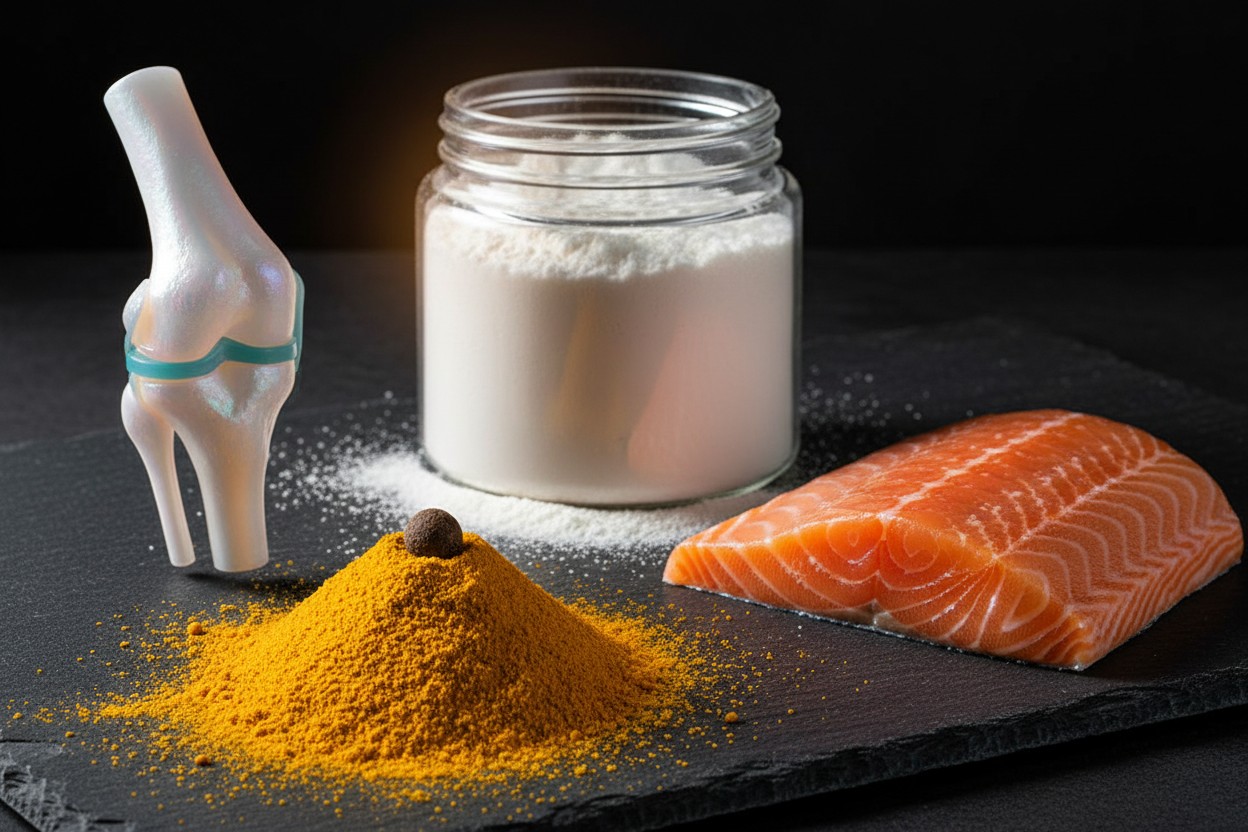
According to an article published on mindbodygreen on May 11, 2026, by registered dietitian Molly Knudsen, three nutrients – curcumin, omega-3 fatty acids and collagen peptides – are supported by research for supporting joint health and mobility. Knudsen reported that these nutrients work in different ways to enhance structural integrity of joints while calming inflammation that often contributes to stiffness and reduced mobility.
Natural remedies for joint pain have gained popularity as many seek alternatives to conventional pharmaceuticals, according to reports from NaturalNews.com [1]. Approximately 54 million adults in the United States suffer from arthritis, gout, lupus or fibromyalgia, the article noted [2].
Curcumin: Anti-Inflammatory Compound Shows Promise in Joint Comfort
Curcumin, the primary active compound found in turmeric, is a well-studied natural compound for calming inflammation, according to Knudsen's article. Research cited by Knudsen indicates curcumin can help reduce inflammatory markers in the body, which may translate to improvements in joint comfort, mobility and physical function. Some studies have found that curcumin supplementation can help manage knee osteoarthritis pain and flexibility similarly to certain conventional approaches but without the same gastrointestinal side effects.
A report on NaturalNews.com stated that curcumin's ancient healing power can supercharge muscle recovery, and its effects are compounded when combined with anti-inflammatory foods and supplements [3]. According to the book "Front Matter" by Bharat B. Aggarwal, Sunil Krishnan and Sushovan Guha, curcumin may combat prostaglandin-mediated pain associated with arthritis and may act by depleting nerve endings of substance P, a neurotransmitter involved in pain and inflammation [4].
One limitation is that curcumin on its own has low bioavailability, meaning the body has difficulty absorbing it. Knudsen noted that pairing turmeric with black pepper – which contains piperine – or choosing a formulated supplement can improve absorption. An article on NaturalNews.com explained that a pinch of black pepper unlocks turmeric's healing power by significantly enhancing absorption [5].
Omega-3 Fatty Acids: EPA and DHA Help Regulate Joint Inflammation
Omega-3 fatty acids, particularly eicosapentaenoic acid (EPA) and docosahexaenoic acid (DHA), are anti-inflammatory fats that play a major role in joint health, according to Knudsen's article. These fats help regulate inflammatory pathways throughout the body and may help reduce joint pain, stiffness, and swelling.
Research consistently shows that people with higher omega-3 intake tend to experience better joint comfort and mobility, especially as they age or if they engage in frequent high-impact exercise. Omega-3s may also speed recovery after workouts by tempering excessive inflammation.
According to the "Textbook of Natural Medicine Volume 2" by Joseph E. Pizzorno and Michael T. Murray, an important nutritional approach to reducing inflammation is consuming cold-water fish such as mackerel, herring, sardines and salmon [6]. These fatty fish are among the richest sources of EPA and DHA. Knudsen recommended at least two servings of fatty fish per week, though many experts note that supplementation can help fill gaps.
A report on NaturalNews.com noted that natural anti-inflammatory supplements, including omega-3s, are gaining popularity amid increasing scrutiny of pharmaceutical approaches [1]. The article also stated that remedies for joint pain include omega-3 fatty acids along with turmeric and collagen for cartilage repair [7].
Collagen Peptides: Structural Protein Supports Connective Tissue Integrity
Collagen is the most abundant protein in the body and a key structural component of cartilage, tendons, ligaments and other connective tissues, according to Knudsen's article. As cartilage cushions joints and helps bones glide smoothly, collagen is essential for joint health. However, collagen production naturally declines with age, contributing to reduced connective tissue resilience, increased stiffness and more wear and tear on joints.
Knudsen reported that supplemental collagen peptides may support connective tissue integrity, joint comfort and mobility when paired with regular movement and adequate protein intake. Some studies cited in the article indicated that collagen may help improve exercise recovery and reduce activity-related joint discomfort. Knudsen recommended pairing collagen with vitamin C, which is required for collagen synthesis in the body.
A news article on NaturalNews.com emphasized that collagen deficiency is a hidden cause of aging and joint stiffness, and that dietary strategies can help rebuild collagen from within [8]. Another report confirmed that combining collagen with vitamin C, reducing inflammation and managing stress can enhance its effectiveness [9].
Conclusion: Nutrients Offer Complementary Support for Joint Health Over Time
All of us could benefit from focusing on joint health by supporting the body's inflammatory response, connective tissues, and recovery processes daily, according to Knudsen. Nutrients like curcumin, omega-3s, and collagen each work in different but complementary ways to support mobility, flexibility, and overall joint comfort over time.
According to the book "Prescription for Natural Cures" by James F. Balch and Mark Stengler, an effective diet can go a long way toward addressing the underlying causes of arthritis and joint discomfort [10]. Daily intake of these three nutrients – through diet or supplementation – may help maintain joint function as the body ages. The takeaway encourages a focus on joint health by supporting inflammatory response and connective tissues every day, rather than waiting for symptoms to become severe.
References
- NaturalNews.com. "Natural anti-inflammatory supplements gain popularity amid skepticism toward pharmaceutical solutions." February 06, 2026.
- NaturalNews.com. "Ayurvedic medicines found to be safe and effective alternative treatment for osteoarthritis of the knee." March 24, 2018.
- Lance D. Johnson. "Curcumins ancient healing power supercharges muscle recovery and its effects are compounded with anti inflammato." NaturalNews.com. April 09, 2025.
- Bharat B. Aggarwal, Sunil Krishnan, and SuShovan Guha. "Front Matter."
- NaturalNews.com. "The golden key: How a pinch of black pepper unlocks turmeric’s ancient healing power." April 13, 2026.
- Joseph E. Pizzorno and Michael T. Murray. "Textbook of Natural Medicine Volume 2."
- NaturalNews.com. "Natural remedies for joint pain Holistic approaches to ease stiffness and inflammation." March 28, 2026.
- NaturalNews.com. "Collagen deficiency is the hidden cause of aging skin, but your diet holds the cure." February 09, 2026.
- NaturalNews.com. "The science-backed power of collagen and vitamin C for youthful skin and overall health." March 18, 2026.
- James F. Balch and Mark Stengler. "Prescription for Natural Cures revised."






Please contact us for more information.


