



The report described the case of Magdel van Vuuren, who said her doctor advised her to finish dinner by about 6 p.m. She reported sleeping through the night more easily and losing weight over subsequent months.
Researchers interviewed by the news outlet said the timing of meals relative to the circadian clock may matter independently of what or how much is eaten. The findings add to a growing body of research on chrononutrition, the study of how when people eat affects metabolic health.
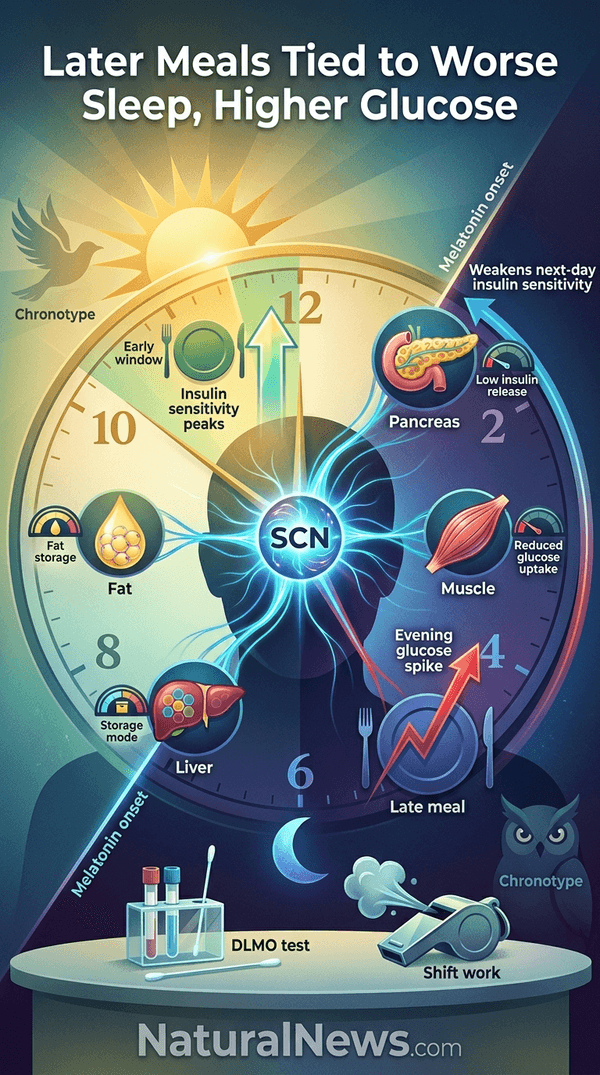
Circadian Rhythm and Meal Timing
Beta-cell responsiveness, insulin sensitivity and the thermic effect of food are higher in the morning than in the afternoon or evening, according to research cited in the report. That daily pattern means the same meal may be processed differently depending on the hour it is eaten.
Jerome Menet, an associate professor of biology at Texas A&M University, told The Epoch Times that eating at times that conflict with the circadian rhythm may disrupt metabolic processes and contribute to adverse health outcomes.
Jamie Zeitzer, a circadian rhythm researcher at Stanford University, told the newspaper that consistency of meal timing matters as much as the timing itself.
Separate research has examined how circadian clocks operate in organs throughout the body.
Reported Effects on Sleep and Reflux
A University of Michigan-led study found that eating within an hour of bedtime was associated with more than twice the odds of being awake for at least 30 minutes during the night, compared with those who did not eat that close to sleep, according to the report. By contrast, eating around four to six hours before bed was associated with a greater likelihood of obtaining an optimal amount of sleep [1].
Dr. Sunil Kumar, a board-certified lifestyle medicine physician, told The Epoch Times that eating early stops the body from being asked to do two jobs at once, namely lowering insulin for sleep while using insulin for digestion.
Research links later dinners to worse reflux symptoms, according to the report. Lying down with a full stomach makes it easier for stomach contents to move back into the esophagus. Kumar said people with reflux or disturbed sleep often see changes within one to two weeks after moving dinner earlier.
Blood Sugar and Weight Findings
A study comparing dinner four hours before bedtime with dinner one hour before bed found that those who ate later had 8.3% higher glucose levels. The finding is consistent with research on time-restricted eating, which has reported weight loss and reductions in risk factors for conditions such as heart disease and diabetes when eating is confined to a 10-hour window [2].
A study of men with prediabetes found early time-restricted eating increased insulin sensitivity, which researchers described as a possible strategy for improving the condition and potentially prehypertension. A separate analysis associated meal timing with mortality risk in U.S. adults ages 40 and older [3], while another long-term study found that delaying breakfast was associated with a higher risk of mortality in older adults, with each hour of delay increasing the risk of death by 8% to 11% [4].
Kumar told The Epoch Times that meal timing is one of the cheapest levers available for improving glucose control. The report also cited a small controlled study indicating earlier eaters burned a greater proportion of fat, though not more total calories, and a 14-week study in adults with obesity in which early eaters lost more weight and more trunk fat than those who spread eating over a longer period.
Research on metabolic flexibility has described how the body's ability to shift between carbohydrate and fat burning can affect energy levels and long-term metabolic health [5]. Other work has examined the relationship between sleep hygiene and metabolic function, noting that poor sleep can significantly impact disorders such as insulin resistance and diabetes [6].
Digestion and Brain-Health Claims
Stomach and intestinal motility, digestive enzyme activity, nutrient absorption and the gut microbiome all follow daily rhythms shaped by when food is eaten, according to the report. The digestive system winds down as night approaches, meaning a late meal arrives when the machinery for processing it is operating at reduced capacity.
Jason Nelson, a personal trainer, told The Epoch Times that finishing his last meal around 6 p.m. gives his body a longer window to digest before a 10 p.m. bedtime. His account matches the report's framing of late eating as a mismatch between food intake and the body's nightly transition to repair and recovery.
Some research suggests fasting may help delay cognitive decline and slow progression of Alzheimer's disease, according to the report. One proposed mechanism is overnight support for production of BDNF, or brain-derived neurotrophic factor. A separate line of research has linked cognitive decline to metabolic and inflammatory factors, with low neuronal metabolism identified as a common feature [7].
Jaz Robbins, a holistic nutritionist and psychologist, told The Epoch Times that BDNF supports growth and health of brain cells and that higher levels may mean less brain fog and greater resistance to neurodegenerative disease over time. She also cited a possible psychological effect and called the benefit her favorite of overnight fasting.
Groups Advised to Individualize the Approach
An earlier dinner may not be suitable for everyone, according to the report. The article names shift workers, pregnant women, athletes in heavy training and people with a history of disordered eating as groups that may need individualized guidance rather than a fixed cutoff time.
Kumar told The Epoch Times that an earlier dinner is a rhythm, not a rule, and that overly rigid eating windows can do more harm than good. He framed the habit as having dinner earlier rather than skipping it, and said long-term adherence is typically anchored to a desired outcome such as better sleep.
The report offered practical guidance: work backward from bedtime rather than the clock, aim for consistency over precision, and adjust for seasonal changes in light and circadian rhythm. An occasional late dinner does not undo the benefits, according to the report.
Summary of the Reported Findings
The source article described six reported effects of moving the last meal earlier: better sleep, less reflux, better blood sugar, weight loss, easier digestion and potential brain-health benefits. The findings were drawn from a range of studies and expert interviews, with researchers emphasizing the role of circadian timing.
Kumar's summary statement, as quoted in the report, was that it is the same food, placed better in the day. The practice was presented as a rhythm rather than a restriction.
The report did not present the approach as a treatment for any condition, and readers with medical concerns were not advised in the article to change prescribed care.
References
- 6 Surprising Things Happen When You Stop Eating Before You Sleep. https://cmsapi.theepochtimes.com/health/6-surprising-things-happen-when-you-stop-eating-before-you-sleep-6081505
- Intermittent fasting can help lower your risk of diabetes and heart disease advise experts - NaturalNews.com, January 22, 2022.
- Study Associates Meal Timing With Mortality Risk in Adults 40 and Older - NaturalNews.com, August 18, 2026.
- The breakfast clock Early morning meal could be the key to longevity for seniors - NaturalNews.com, September 10, 2025.
- Good Energy: The Surprising Connection Between Metabolism and Limitless Health by Casey Means, MD
- Synchronizing Your Body Clocks May Help Shed - Mercola.com, June 18, 2015.
- BBN Interview with Cohen vs Habib BU by Mike Adams
Explainer Infographic










Please contact us for more information.


