


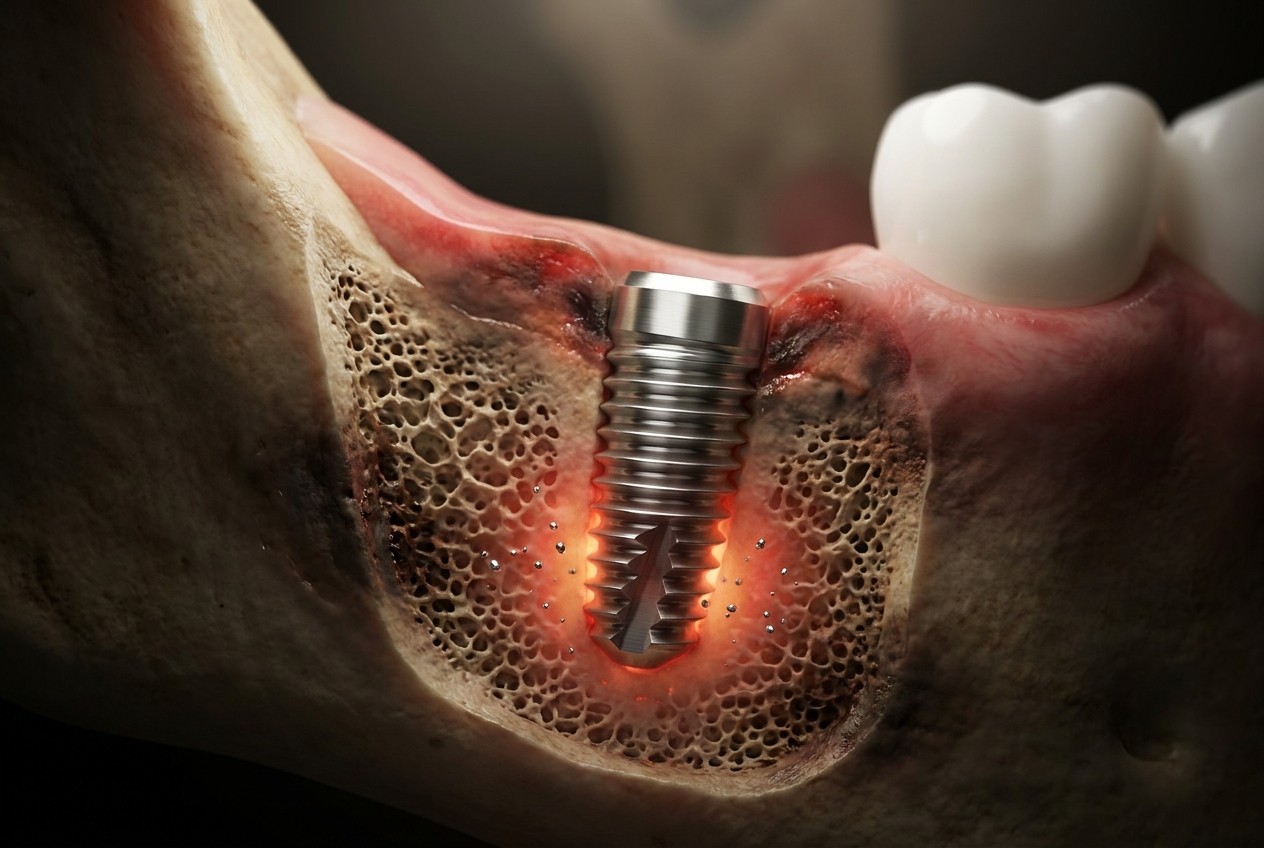
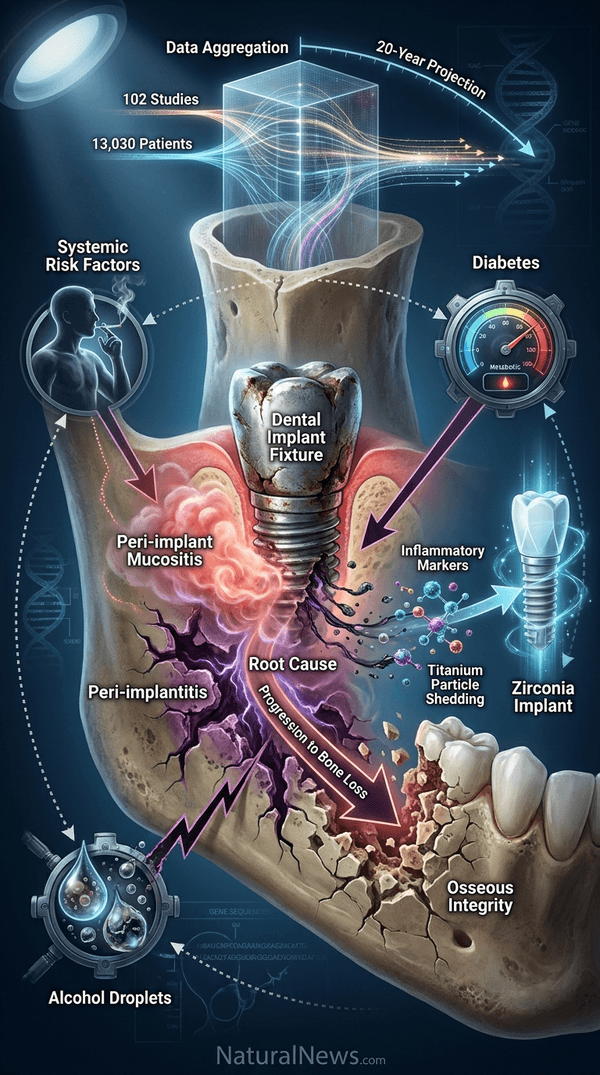
The analysis pooled data from 102 clinical studies following 13,030 implant patients, the review stated [1]. Researchers from Harvard University, Tufts University and the University of Pennsylvania conducted the review, which examined complications following a procedure often presented as a permanent tooth replacement.
The same review reported that about 46% of patients developed peri-implant mucositis, described as gum inflammation around the implant that can be reversed. Over 20 years with an implant, the share of patients with peri-implantitis reached about 22%, according to the review. The findings were presented as pooled estimates from existing research rather than results from a single new clinical trial [1].
The review's results place the burden of implant-related infection within a range that researchers have reported for years. A 2019 University of Southern California article stated that nearly 15% of patients with implants develop peri-implantitis [3]. The Journal of Periodontology review's 21% figure sits at the upper end of those earlier estimates, while its 20-year projection of about 22% suggests the risk accumulates with time.
Study Findings: Mucositis and Peri-Implantitis Rates
The review attributed the findings to data from 102 clinical studies and stated that the 20-year peri-implantitis rate was about 22%. The findings were presented as pooled estimates from existing research rather than results from a single new clinical trial. As a review of previously published studies, the analysis did not enroll new patients or follow them prospectively.
The distinction between the two conditions matters for how patients are monitored. Mucositis is confined to soft tissue and is considered reversible with treatment, while peri-implantitis involves bone loss and is associated with a less predictable course. The review's pooled figures indicate that the reversible form was more than twice as common as the bone-destroying form across the studies examined.
Risk Factors Identified in the Review
A history of gum disease was the most consistent risk factor for both peri-implant mucositis and peri-implantitis, according to the review. Smoking was associated with higher risk for both conditions, while diabetes was tied to the bone-destroying form of infection. Obesity was associated with more gum inflammation, and alcohol was associated with more peri-implantitis, the review stated.
The review described several of these factors as modifiable and reported that healthy gums before surgery and steady blood sugar may provide a better foundation for an implant. The source article stated that treating bleeding or receding gums before implant surgery should be considered.
The review's emphasis on gum disease history aligns with clinical guidance on implant placement. A 2020 paper in the Journal of Clinical Medicine noted that periodontitis and peri-implantitis can induce systemic low-grade inflammation associated with increased risk for some systemic medical diseases such as cardiovascular disease [4]. That paper's authors reported that host modulation therapy together with traditional treatment approaches has been studied in this context.
Titanium Particles and Zirconia Alternatives
A 2025 study published in Communications Medicine examined gum tissue from around the implants of 21 patients, according to the study. Swedish researchers found tiny titanium particles at every implant examined, including healthy implants, the study stated.
Tissue with more titanium particles showed changes in 14 genes tied to inflammation and wound healing, according to the study. Particle levels did not differ between healthy and infected sites in the same person, and the study stated it did not prove that the particles cause infection.
Zirconia implants were described as a metal-free ceramic alternative that does not corrode and shed metal particles the way titanium can, according to the source article. Two randomized trials published in 2026 reported that all zirconia implants in a 122-implant multicenter trial survived the first year, compared with 96.5% of titanium implants, with similar bone loss. A three-year trial of 50 patients reported nearly identical bone levels, and patients with zirconia gave higher ratings for gum color, according to the source article.
The zirconia evidence base remains smaller than the evidence base for titanium. A 2008 review noted that clinical trials using zirconia oxides in the context of osseointegration were very scarce and that the majority of published human clinical trials dealt with zirconia use as crowns or fixed partial dentures [3]. The review also cited a 2004 human study by Glauser and coworkers that analyzed a self-made zirconia abutment over four years and observed no fractures, with a mean plaque index nearly identical to that of titanium.
Guidance and Questions Before Implant Surgery
An article by NaturalHealth365 on the study listed steps including treating gum disease before surgery, asking a dentist to check gum health, keeping blood sugar steady, avoiding tobacco and limiting alcohol [2]. It stated that professional cleanings every three to six months and home cleaning around the implant base may help catch problems early.
The NaturalHealth365 article stated that patients should ask what an implant post is made of before surgery and whether a zirconia implant fits their situation [2]. The review and material studies were presented with stated limitations, and the findings did not establish that any implant material causes infection in every case.
Clinical guidance on implant maintenance describes similar monitoring. A consumer guide to dental implants states that at routine follow-up appointments, the implant posts, bar, and attachments are professionally cleaned by the doctor or hygienist, and the doctor checks the bone, gums, soft tissues, and implant components for changes [5]. The same guide notes that even the best home care cannot remove all the plaque that a trained professional can remove.
References
- Prevalence, incidence, systemic, behavioral, and patient-related risk factors and indicators for peri-implant diseases: An AO/AAP systematic review and meta-analysis. https://aap.onlinelibrary.wiley.com/doi/10.1002/JPER.24-0154
- Tooth implant warning linked to a bone-destroying infection in 1 in 5 patients. https://www.naturalhealth365.com/popular-tooth-replacement-linked-to-a-bone-destroying-infection-in-1-in-5-patients.html
- Unknown. Journal of Biomedical Materials Research B: Applied Biomaterials 2008
- Host-Modulation Therapy and Chair-Side Diagnostics in the Treatment of... by Timo Sorsa Joseph Bacigalupo Mauno Könönen Pirjo Pärnänen
- As good as new a consumers guide to dental implants by Babbush Charles A
- USC researchers tackle a growing problem: dental implant. https://dentistry.usc.edu/usc-researchers-tackle-a-growing-problem-dental-implant-disease-3/
Explainer Infographic








Please contact us for more information.


