


- Bodyweight exercises like push-ups, pull-ups, squats, split squats and dead bugs can build and maintain muscle mass in adults over 50 without weights.
- Progressive overload—gradually increasing reps, sets, or difficulty—is essential for continued muscle growth without external resistance.
- Mechanical tension and muscle damage drive hypertrophy, and both can be manipulated through bodyweight training variables.
- Research shows muscle growth depends more on challenging muscles consistently than on using heavy weights specifically.
- Consistency matters more than intensity, with ACSM recommending resistance training twice per week for all major muscle groups.
The new science of strength without weights
For decades, conventional wisdom held that building muscle required barbells, dumbbells and gym memberships. A growing body of evidence now challenges that assumption, showing that bodyweight exercises can effectively stimulate muscle growth—particularly for adults over 50 seeking to maintain strength, balance and independence.
Published research from September 2026 by health and fitness professionals indicates that push-ups, pull-ups, squats, split squats and dead bugs provide sufficient resistance to build muscle when performed with proper progression. The key, experts say, lies not in the equipment but in the principle of progressive overload: consistently challenging muscles to do more over time.
Why this matters now
The findings arrive as a growing segment of the population seeks alternatives to traditional weight training. With gym memberships costing an average of $40 to $70 per month and home gym equipment requiring significant space and investment, bodyweight training removes financial and logistical barriers to strength maintenance.
For adults over 50 specifically, this research carries particular significance. Age-related muscle loss, or sarcopenia, affects approximately 10 to 16 percent of older adults worldwide. Bodyweight exercises offer a practical solution for preserving muscle mass without the joint stress that heavy lifting can sometimes cause.
How muscle growth actually works
Understanding why bodyweight training works requires examining the physiology of muscle growth. Hypertrophy—the scientific term for muscle enlargement—occurs when muscle protein synthesis exceeds protein breakdown. This process is initiated by two primary factors: mechanical tension and muscle damage.
Mechanical tension refers to the physical stress muscles endure during exercise. Every contraction against gravity creates tension, and this tension must continually increase for continued growth. Muscle damage involves microscopic trauma to muscle fibers during unfamiliar or intense exercise, triggering repair mechanisms that build stronger tissue.
Bodyweight exercises generate both stimuli when performed correctly. The critical variable is not the absolute load but whether the muscles face sufficient challenge to trigger adaptation.
Five exercises that deliver results
The exercises recommended by multiple fitness professionals target all major muscle groups without requiring equipment.
Push-ups strengthen the chest, shoulders, triceps and core. They can be modified by elevating hands against a wall or countertop for easier versions, or by slowing the lowering phase or elevating feet for increased difficulty.
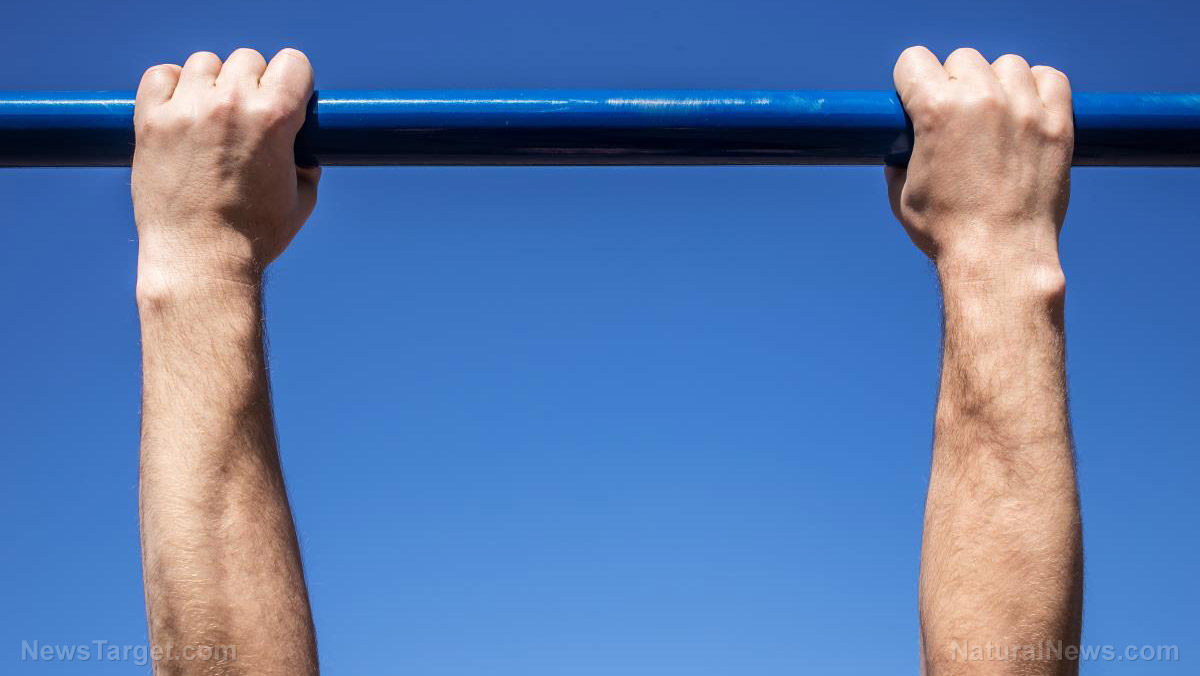
Pull-ups, performed with resistance band assistance for beginners, build back, shoulder, arm and grip strength. The assisted version allows gradual progression toward unassisted pull-ups as strength improves.
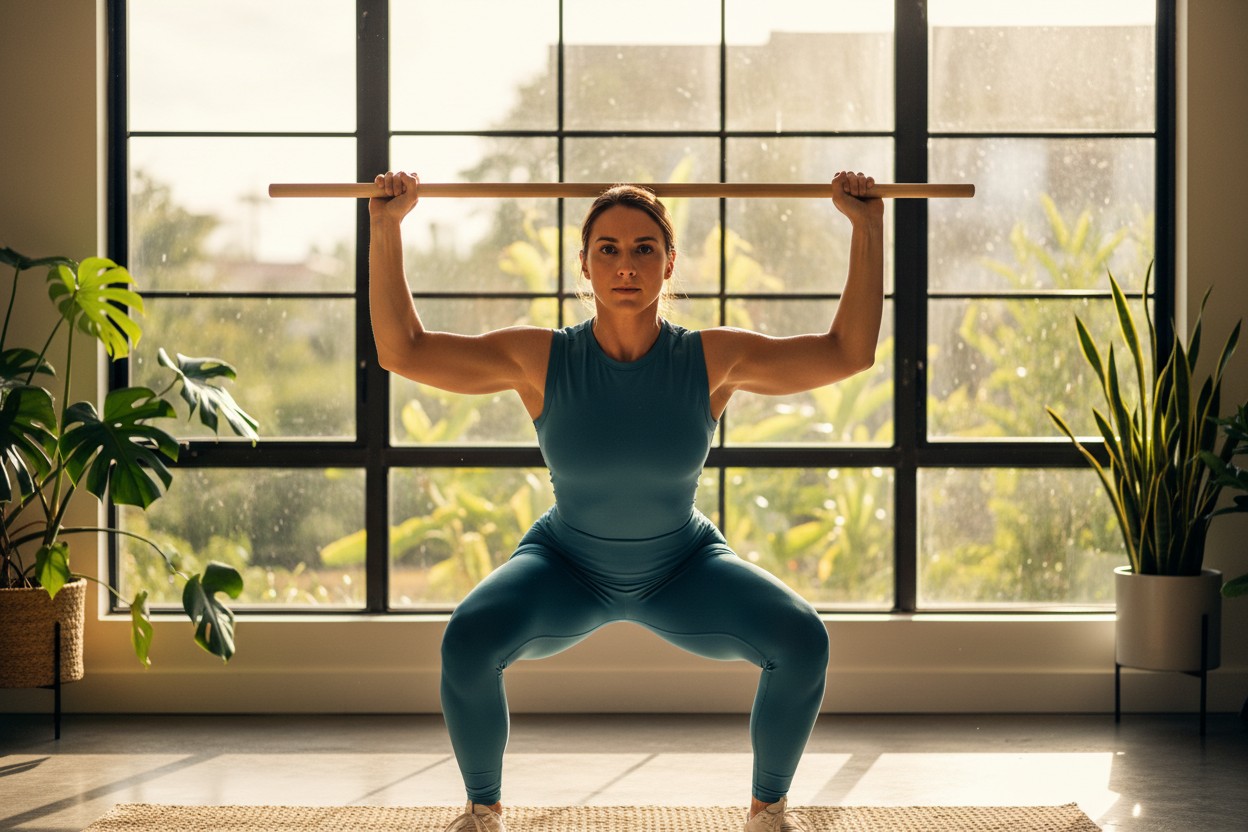
Squats reinforce the fundamental movement of sitting and standing, strengthening legs, glutes, hips and core. Adding depth, slower tempos, or progressing to single-leg variations increases challenge without weights.
Split squats, aka lunges, target the glutes, quadriceps and hamstrings while challenging balance and stability. This unilateral work increases load by requiring one leg to support full body weight.
Dead bugs train core stability by teaching spinal control during arm and leg movement. This exercise supports proper form in other strength movements and everyday activities.
Progressive overload without adding weight
The challenge of bodyweight training lies in continuing to progress after initial strength gains. Experts identify several strategies for increasing difficulty without adding external resistance.
Increasing repetitions or sets provides the simplest progression. Slowing movement tempo increases time under tension, which research has shown can boost muscle protein synthesis. Expanding range of motion recruits additional muscle fibers, as does altering joint angles through exercise variations.
Unilateral training, where one limb performs work normally done by two, effectively increases load. Plyometric movements like jump squats introduce power training, recruiting fast-twitch muscle fibers that have greater growth potential.
The bottom line for building muscle
The research points to a clear conclusion: building muscle without weights is not only possible but practical, particularly for those over 50 or anyone beginning a strength training journey.
The American College of Sports Medicine recommends training all major muscle groups at least twice per week. Consistency, rather than intensity alone, determines long-term results. Sharp or persistent joint pain signals the need to stop or modify an exercise, while muscle fatigue is a normal part of the training response.
Bodyweight exercises may eventually reach a point of diminishing returns for highly trained individuals. But for the vast majority of adults seeking to maintain strength, independence and quality of life as they age, these five exercises offer an accessible, effective path forward—no gym membership required.
Sources for this article include:











Please contact us for more information.


