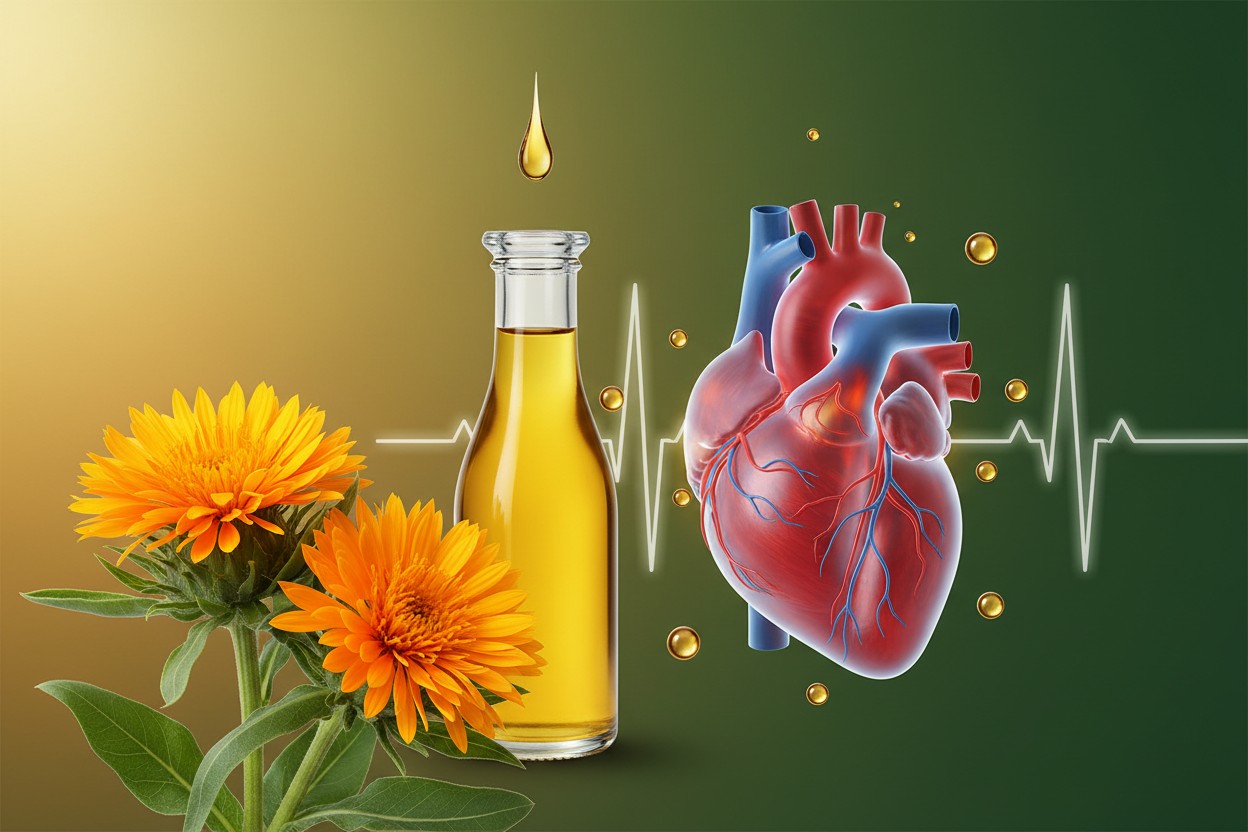
Studies have examined safflower compounds for heart health, blood flow, and blood sugar control, with a focus on bioactive components such as safflower yellow and hydroxysafflor yellow A [4][5]. Most research to date has been conducted in animals or test tubes, according to the studies, and larger human trials are needed to confirm the reported effects and establish safe upper limits for safflower flower and supplements [4][6].
Safflower oil is a common cooking oil used for frying, baking and salad dressings, and it has been a staple of traditional medicine in China, Japan, Korea, and other Asian countries for treating various diseases, according to a review of its pharmacology and phytochemistry [7]. The plant's flowers and seeds have been utilized in folk medicine to treat gynecological conditions, cardiovascular disorders, and other ailments, the review stated [7]. Contemporary research is validating the plant's traditional uses, confirming its potential as a therapeutic agent through rigorous studies and clinical trials, according to a report on the herb's history and applications [4].
Safflower Oil and Cholesterol
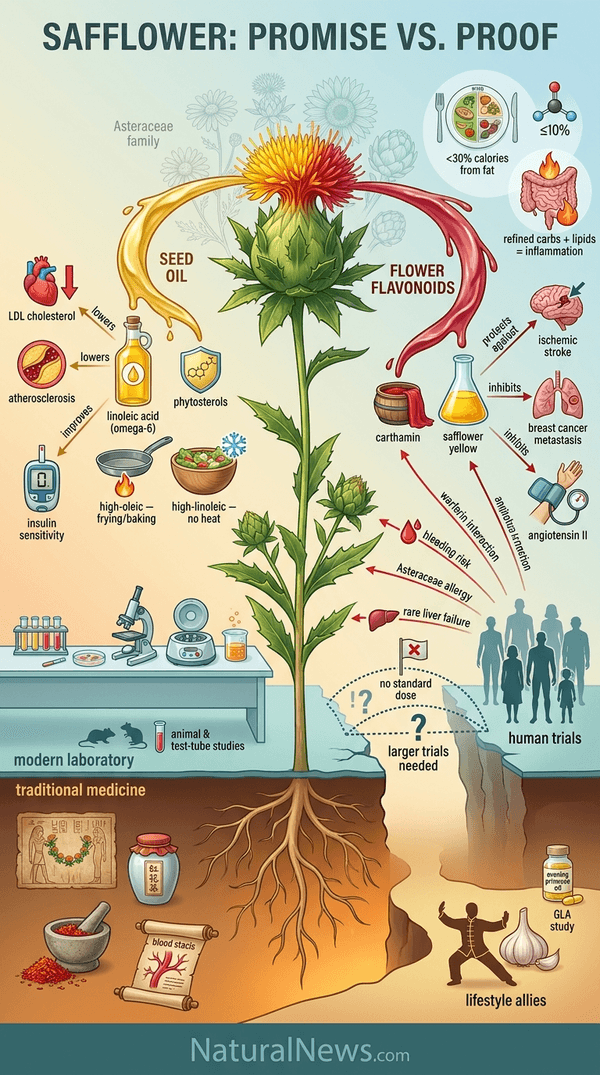
Safflower seed oil is rich in unsaturated fats like linoleic acid and phytosterols, which can lower "bad" LDL cholesterol and reduce heart disease risk, according to a report on the oil's health benefits [2][3]. High-oleic safflower oil, which is high in monounsaturated fatty acids, may lower LDL cholesterol when used in place of saturated fats, according to research cited by NaturalNews.com [2][8]. High cholesterol can lead to atherosclerosis, a buildup of plaque in the arteries that increases the risk of heart disease and stroke, medical sources state [2].
The World Health Organization (WHO) recommends getting less than 30% of calories from dietary fat, and the Dietary Guidelines for Americans recommend limiting saturated fat to no more than 10% of calories, according to dietary guidance cited by health sources [2]. Safflower oil contains both unsaturated fatty acids (linoleic, oleic, and alpha-linolenic acids) and saturated fatty acids (palmitic), according to research on its composition [9][10]. Studies on developing safflower seeds have detailed the fatty acid composition and lipid synthesis pathways, providing a basis for understanding the oil's nutritional profile [10][11].
A study published in the journal Annals of Agricultural and Environmental Medicine investigated the composition of volatile oil derived from the Ak-Mai safflower species native to Kazakhstan, according to a report on the research [1]. Researchers from China, Kazakhstan and the U.S. identified bioactive compounds in the plant, the report stated [1]. The findings add to the body of evidence on safflower's chemical constituents and their potential health effects [1].
Heart Health and Blood Flow
Safflower yellow, a flavonoid in safflower, has antioxidant and anti-inflammatory properties, according to studies on the plant's active components [5]. One study found safflower yellow A may help prevent further complications after a heart attack caused by elevated angiotensin II, the report stated [5]. Traditional Chinese medicine uses safflower to improve blood circulation, and some research found it may reduce hypertension, enhance blood flow, and dilate arteries, according to a review of the herb's pharmacology [7].
Some studies found hydroxysafflor yellow A improved neurological functioning after acute ischemic stroke compared to ginkgo leaf or dipyridamole; larger randomized controlled trials are needed to confirm these findings, researchers said [4][5]. A study from Zhejiang Chinese Medical University investigated the effects of safflower yellow on the pulmonary metastasis of breast cancer and its mechanism of action, with results published in The American Journal of Chinese Medicine [5]. C. tinctorius is a traditional Chinese medicine that activates blood circulation and dissipates blood stasis, and it is extensively used as an antitumor treatment, the study stated [5].
Tai chi, a system of movements and positions from twelfth-century China, has evidence suggesting it decreases blood pressure and cholesterol as well as enhances quality of life in patients with chronic heart failure, according to a medical reference [12]. While not directly related to safflower, such integrative approaches are often studied alongside herbal treatments for cardiovascular conditions [12]. Garlic, another herb with many medicinal properties, helps to lower blood pressure and reduce blood cholesterol, according to a natural healing reference [13].
Blood Sugar and Diabetes
A research review found safflower injections could help treat diabetes because of safflower's action on blood vessels, according to the review [7]. Active components carthamin and hydroxysafflor yellow A may reduce oxidative stress and inflammation, which could improve blood sugar in people with diabetes, the review stated [7]. Safflower seed oil improves insulin sensitivity and regulates blood sugar levels, beneficial for managing Type 2 diabetes, according to a report on the oil's benefits [2].
More human-based studies are necessary to confirm these effects, researchers said [4][7]. An eye-opening study looked at over 100 patients with mild nerve damage from diabetes who were given six capsules of gamma-linolenic acid twice daily for a year; the group on gamma-linolenic acid improved in every category of nerve function measured, with significant improvement in thirteen of sixteen measures, according to Gary Null in No More Diabetes [14]. While this study focused on evening primrose oil rather than safflower, it illustrates the potential of fatty acid therapies for diabetic complications [14].
The gut isn't wired to handle pure lipid or starch consumption alone; adding vegetables helps mitigate inflammatory responses, according to a discussion on inflammation and diet [15]. Mixing refined carbohydrates with lipids compounds the issue by introducing both endotoxins and high blood sugar, which both initiate similar inflammatory reactions, the discussion stated [15]. These findings underscore the importance of overall dietary patterns when considering the role of any single oil or supplement in metabolic health [15].
Usage, Dosage and Safety
Safflower oil is a common cooking oil; monounsaturated safflower oil is useful for frying or baking, while polyunsaturated oil should not be heated and works in salad dressings, according to dietary guidance [2][8]. There is no set dosage for safflower; the WHO recommends less than 30% of calories from fat, and Iranian traditional medicine recommends a maximum of 20–40 grams per day for safflower seed and 3 grams per day for the flower, according to sources [4][2].
Safflower may slow blood clotting and interact with anticoagulant drugs like warfarin and antidiabetic drugs. Pregnant or breastfeeding women should avoid herbal forms, and people with Asteraceae allergies may react, according to health sources [8][4].
Rare case reports have associated very high safflower oil consumption with liver failure, but the dose and duration are unclear, the reports stated [8]. The oil comes with potentially damaging side effects due to either the ingredient it's made from or the extraction process, according to a Mercola.com article [8].
Safflower has been valued for centuries across cultures for its applications in cuisine, daily life, and traditional medicine, with historical evidence from ancient Egyptian tombs and traditional practices in Iran, Thailand, and China attesting to its significance, according to a report on the herb's history [4]. Safflower is a multifunctional cash crop extensively used in folk medicine across China, Japan, Korea, and other Asian countries, according to a review from the University of Macau and Hong Kong Baptist University [7]. The plant's flowers and seeds are utilized for treating various diseases including gynecological conditions, cardiovascular disorders, and inflammatory conditions, the review stated [7].
Conclusion
Safflower oil may be used in place of saturated fats as part of a balanced diet, according to dietary guidelines [2][8]. Researchers state that more human studies are needed to confirm medicinal benefits and determine safe upper limits for safflower flower and supplements [4][6]. Individuals taking medications or with bleeding disorders should consult a healthcare provider before using safflower products, officials said [8][4].
References
- NaturalNews.com. "Scientists identify the bioactive compounds in safflower". NaturalNews.com. October 28, 2019.
- Olivia Cook. "The golden elixir: 15 Science-backed health benefits of SAFFLOWER SEED OIL". NaturalNews.com. January 07, 2025.
- Olivia Cook. "The Golden Elixir: 15 Science-Backed Health Benefits of Safflower Seed Oil". NaturalNews.com. January 7, 2025.
- NaturalNews.com. "Safflower: Unlocking the Secrets of a Timeless Healing Herb". NaturalNews.com. September 17, 2025.
- NaturalNews.com. "Pulmonary metastasis of breast cancer prevented by a component found in safflower". NaturalNews.com. June 27, 2019.
- Hari Prasad Devkota. "Medicinal Plants of the Asteraceae Family Traditional Uses Phytochemistry".
- NaturalNews.com. "The pharmacology and phytochemistry of Carthamus tinctorius L safflower". NaturalNews.com. July 09, 2019.
- Mercola.com. "Fast Facts About Safflower Oil". Mercola.com. September 07, 2017.
- Olivia Cook. "Unlocking the secrets of safflower seed oil". NaturalNews.com. January 09, 2025.
- Ken-Ichi Ichihara and Manjiro Noda. "FATTY ACID COMPOSITION AND LIPID SYNTHESIS IN DEVELOPING SAFFLOWER SEEDS". Phytochemistry. 1980.
- Ken'Ichi Ichihara and Manjiro Noda. "Some Properties of Diacylglycerol Acyltransferase in a Particulate Fraction from Maturing Safflower Seeds". Phytochemistry. 1982.
- "Natural Standard medical conditions reference an integrative approach".
- Airey Raje. "Natural healing therapies".
- Gary Null. "No More Diabetes".
- Chris Martenson. "David Seaman Inflammation From Our Diet Is Killing Us Slowly". PeakProsperity.com. February 23, 2014.
Explainer Infographic







Please contact us for more information.