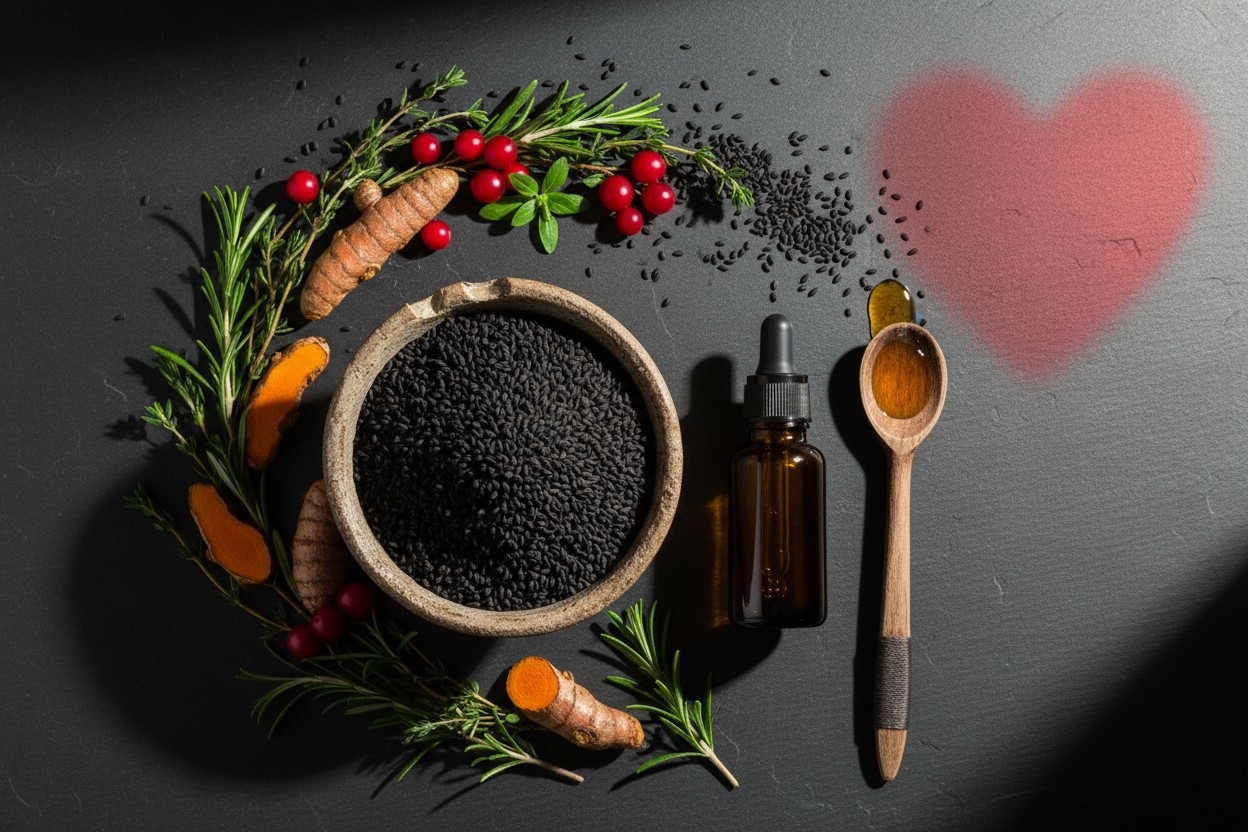
The analysis was conducted by researchers from multiple Iranian universities in collaboration with the Universal Scientific Education and Research Network, according to the report. It covered 5,026 participants and trials published between 2008 and 2024, with daily black seed doses ranging from 200 milligrams to 4,600 milligrams. The review used a GRADE-assessed, dose-response method to rate the certainty of every outcome, the report stated. The analysis also reported significant reductions in body weight, body mass index, and waist circumference, according to the report.[1]
Black seed, also known as black cumin or kalonji, has been used in traditional medicine for thousands of years, according to historical accounts.[2] The Nigella sativa plant is native to Eastern Europe, Western Asia, and the Middle East, and its seeds have appeared in culinary and medicinal use across those regions.[3] The Paleovedic Diet describes black cumin, despite the name, as unrelated to cumin and as a spice with tremendous healing potential.[4]
Cholesterol and Blood Pressure Changes
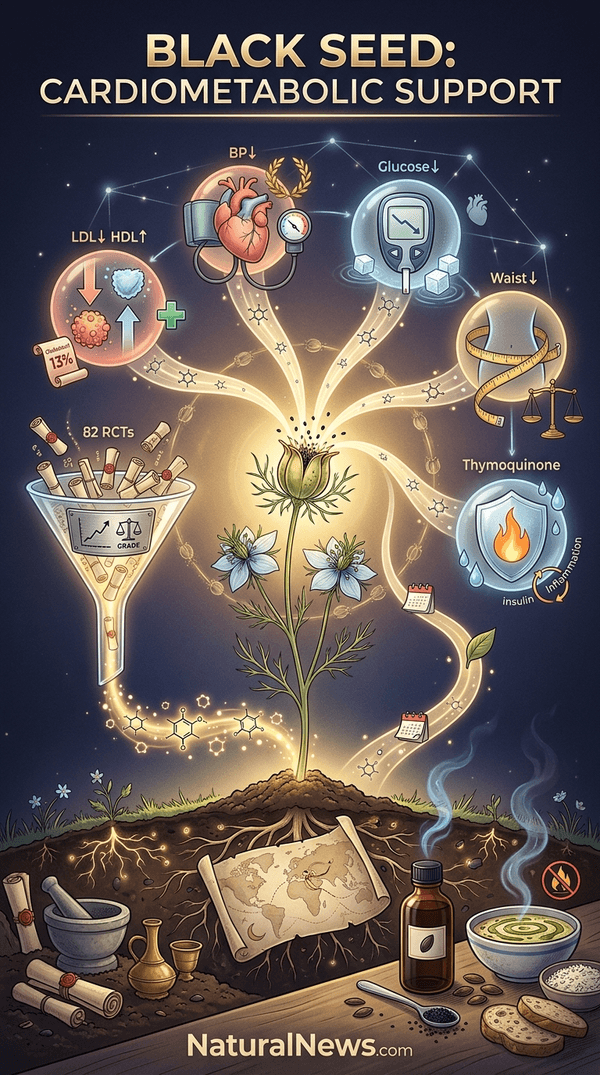
According to the pooled review, black seed supplementation was associated with lower total cholesterol and lower low-density lipoprotein (LDL) cholesterol, while high-density lipoprotein (HDL) cholesterol increased. The strongest lipid effects appeared at higher doses and with longer durations, according to the report.[1] Earlier research also reported lipid-related benefits; a review published by GreenMedInfo noted that black seed oil has beneficial effects on blood lipids and that elevated cholesterol affects 13 percent of American adults.[5]
Blood pressure changes were observed alongside the lipid changes, according to the same pooled data. Researchers described black seed as a promising adjunct for supporting heart health, the report stated.[1] Blood pressure benefits have appeared in earlier studies as well; a 2013 report stated that Nigella sativa seed extract helped lower blood pressure in a study conducted by researchers from Shahrekord University.[6]
The pooled review covered 16 years of published trials, according to the report. A related study from Osaka Metropolitan University, published in the journal Food Science and Nutrition, reported that black cumin seed powder was associated with lower bad cholesterol and reduced fat cell formation, according to an article on NaturalNews.com.[7]
Blood Sugar and Additional Trial Data
A separate 2025 review focused on people with type 2 diabetes found that black seed improved fasting blood sugar and lipid markers, according to the source article. A 2025 pediatric study also reported cardioprotective effects in children with type 1 diabetes, the same account stated.
Earlier meta-analytic evidence is consistent with those findings. A systematic review and meta-analysis cited in Michael Greger's book 'How Not to Diet' reported that Nigella sativa improved glucose homeostasis and serum lipids in type 2 diabetes.[8]
An earlier crossover trial in overweight and obese women found that black seed supplementation significantly reduced an inflammatory marker tied to insulin resistance, according to the source article. Reduced inflammation and steadier blood sugar were reported together in that line of research.
Black seed contains thymoquinone, a compound that has been a focus of research on the seed's metabolic effects.[7]
Reported Usage and Administration
Practical guidance in the source article recommends starting with black seed oil stirred into food rather than taken directly, in part because the oil has a strong, slightly bitter flavor. A teaspoon can be mixed into salad dressing, hummus, or a smoothie. Black cumin oil has also been recommended as an addition to salad dressings in published health guidance.[9] Cold applications are recommended over high-heat cooking to preserve thymoquinone, according to the source article.
Cold-pressed oil in dark glass bottles is often recommended, and refrigeration after opening extends freshness, according to the source article. Whole black seeds can be toasted lightly and sprinkled over bread, rice, or roasted vegetables for a peppery, oregano-like flavor. Black seed oil has been used historically for cooking and cosmetic purposes, according to a 2019 report.[10]
Most trials that showed meaningful cholesterol and blood sugar improvements ran eight weeks or longer, with some extending to a full year, according to the source article. Consistent daily intake over several weeks was described as necessary before changes appear.
Limitations and Broader Context
The pooled trials show associations from controlled studies, according to the report. Heart disease has multiple contributing factors, and the source article states that no single seed fully addresses long-term cardiovascular strain. Diet, gut health, toxin exposure, and stress all feed the same cardiovascular burden that black seed only partly addresses, the source article stated.
The report does not indicate that black seed should replace prescribed medical treatments. Elevated cholesterol can be caused by factors such as high-fat diets, sedentary lifestyles, and genetics, according to a review on GreenMedInfo.[5]
References
- NaturalNews.com. "Analysis of 82 Trials Shows Black Seed May Improve Cardiovascular Risk Markers". NaturalNews.com. July 21, 2026.
- Ava Grace. "Black cumin: The ancient superfood with modern healing powers". NaturalNews.com. March 20, 2025.
- NaturalNews.com. "Black cumin seed, a traditional folk remedy is becoming popular for its health benefits and synergistic effects". NaturalNews.com. January 28, 2020.
- Akil Palanisamy. "The Paleovedic Diet: A Complete Program to Burn Fat Increase Energy and Reverse Disease".
- GreenMedInfo.com. "Lipid Lowering Effects of Black Seed".
- NaturalNews.com. "Research: Nigella sativa seed extract reduces...". NaturalNews.com. May 20, 2013.
- NaturalNews.com. "Black cumin seed offers a dual action approach in the fight against obesity and heart disease". NaturalNews.com. November 19, 2025.
- Michael Greger MD FACLM. "How Not to Diet".
- Mercola.com. "Try Apple Cider Vinegar and Black Cumin Oil as Your Go-To Salad Dressing". January 1, 2018.
- NaturalNews.com. "Good for your skin and more: 8 Benefits of Black Cumin Seed Oil". NaturalNews.com. December 16, 2019.
Explainer Infographic










Please contact us for more information.