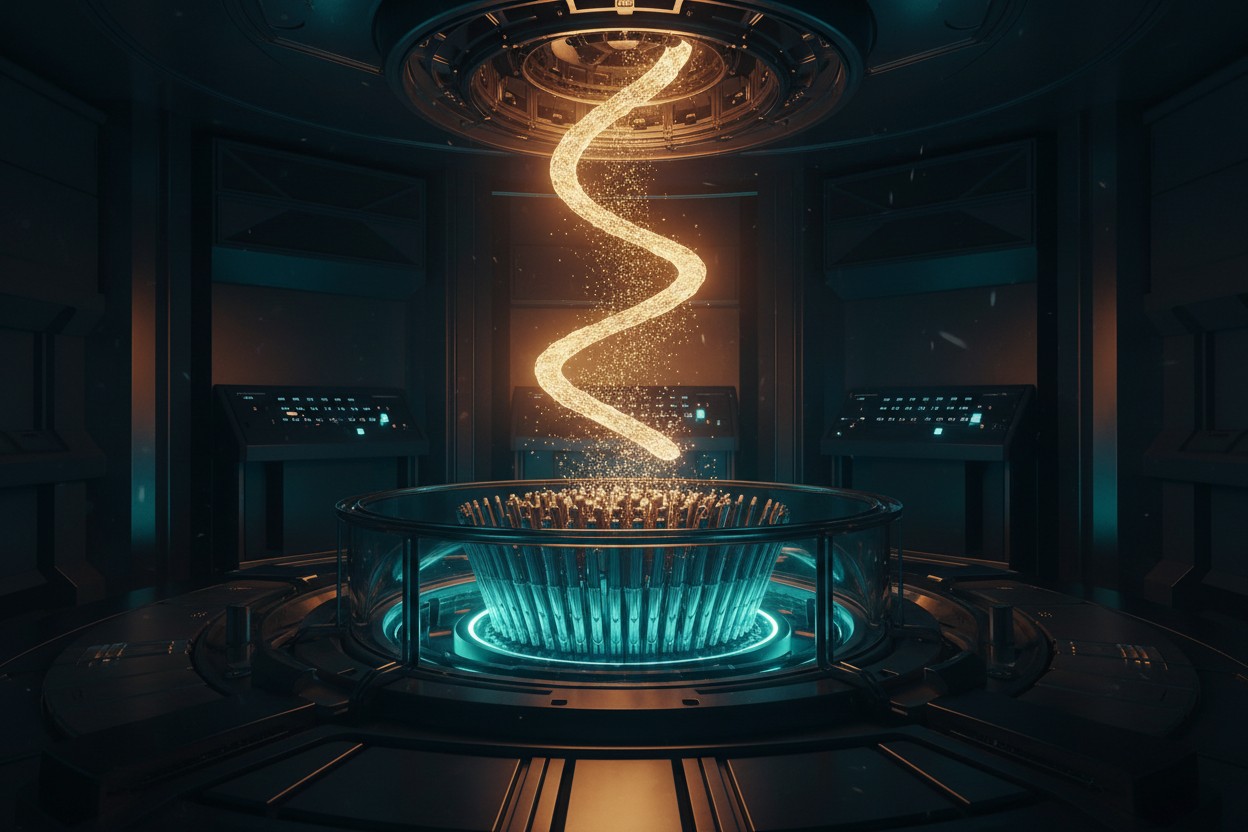
The award is part of the Energy Department's broader research into spent fuel management.
The award follows a period of expanded federal support for nuclear energy. In May 2025, President Donald Trump signed executive orders calling for streamlined Nuclear Regulatory Commission oversight and faster reactor development [1].
Background: The U.S. Spent Fuel Inventory
According to a report cited by Utility Dive, the United States has accumulated about 94,000 metric tons of used nuclear fuel and adds about 2,000 metric tons each year [2]. Most of that material is stored in cooling pools or dry casks at both active and decommissioned reactor sites, the report stated [2].
Federal law created a deep geologic repository program under the Nuclear Waste Policy Act in 1982, and by 1987 the program's resources were focused on Yucca Mountain, Nevada [3]. No permanent disposal site is in operation.
The Energy Department has described recycling as one option for reducing the volume of material that would require disposal [4].
Technology and Company
Curio says its process uses a chemical separation technique to extract usable uranium and other elements from spent fuel. According to the company, the method can cut the amount of waste requiring geologic disposal by more than 90% [12].
Curio officials said in an announcement that the funding will support pilot-scale testing and bring the technology closer to commercial use.
Chemical separation methods have been studied for decades. Scientists at Argonne National Laboratory working on the Integral Fast Reactor program examined pyrochemical processes for recycling actinides from light-water reactor spent fuel in the 1990s [5].
Other companies are pursuing similar work; BLSK Energy announced in May 2026 that it had signed a research agreement with Argonne to recycle spent fuel using pyroprocessing [6].
Perspectives and Oversight
Company executives say recycling can extend the nation's fuel supply. Caroline DeWitte, chief operating officer of Oklo, said recycling spent nuclear fuel could power U.S. reactors for 150 years [7].
Oklo CEO Jacob DeWitte said, "Fuel supply constraints are a key throttle to advanced reactor development" [7].
Some analysts have cautioned that recycling carries economic and proliferation risks. According to Maxwell Irvine, after India demonstrated that an independent nuclear weapons program could be based on recycled waste from a commercial reactor, the United States banned commercial reprocessing and plutonium extraction; the ban was lifted in 1981 [8].
One reference work describes "not in my back yard" opposition to waste facilities, a factor that has complicated siting efforts [9].
In October 2025, Senators Ted Cruz and Martin Heinrich introduced legislation requiring the Energy Department to analyze the costs, benefits, and risks of recycling spent nuclear fuel versus interim storage [10]. DOE officials said the agency will review project milestones and require safety and security assessments before commercial deployment.
Outlook
Curio expects to complete initial demonstration phases within two years, according to the company's announcement. The award supports research and development, not commercial-scale deployment, and further awards would depend on performance, officials said [13].
The project's outcome may inform future federal decisions on managing the nation's spent fuel inventory, according to the agency. The department has begun discussions with states about nuclear lifecycle innovation campuses; in July 2026, it selected Utah, Tennessee, Oklahoma, Louisiana, and Idaho as the first five potential hosts [11].
The DOE's Defense Production Act Nuclear Fuel Cycle Consortium has also released a seven-year plan to strengthen the domestic fuel supply chain [12].
References
- NaturalNews.com. "Trump's nuclear renaissance: Push for energy dominance sparks debate over safety and speed". May 27, 2025.
- Utility Dive. "Commercial nuclear fuel recycling key to a sustainable supply: report". April 7, 2026.
- Arjun Makhijani. "Carbon-Free and Nuclear-Free: A Roadmap for US Energy Policy".
- Utility Dive. "Will DOE's 'nuclear lifecycle innovation campuses' solve the US nuclear waste problem?". May 14, 2026.
- C. C. McPheeters, R. D. Pierce, and T. P. Mulcahey. "Application of the Pyrochemical Process to Recycle of Actinides from LWR Spent Fuel". Progress in Nuclear Energy. 1997.
- Zero Hedge. Georgina Jedikovska. "US Nuclear Recycling Plant Could Extract 100 Times More Energy From Uranium Fuel". May 29, 2026.
- Zero Hedge. "Oklo COO Says Nuclear Waste Could Power America For 150 Years". May 28, 2026.
- Maxwell Irvine. "Nuclear Power: A Very Short Introduction".
- "The Handy Science Answer Book".
- Just The News. "Cruz introduces bill to advance nuclear fuel recycling, research, safety". October 19, 2025.
- Zero Hedge. "Five States Make The Cut For $50 Billion Nuclear Campuses". July 31, 2026.
- Zero Hedge. "DOE's Nuclear Fuel Consortium Announces Seven-Year Plan". April 24, 2026.
- InterestingEngineering.com. "US targets 4,000 tons of nuclear fuel recycling with new $2.5 million funding push". August 13, 2026.







Please contact us for more information.