


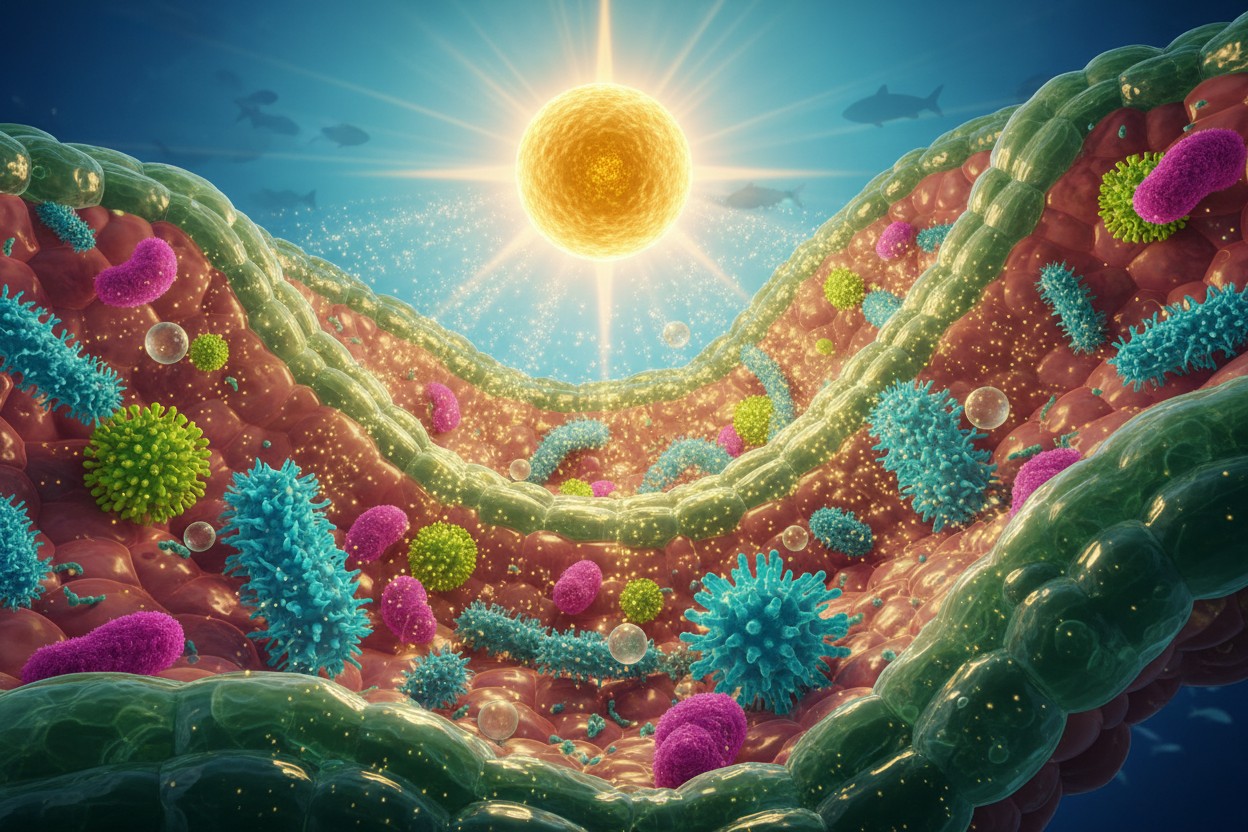
Research has expanded beyond bone health to examine vitamin D’s effects on the gastrointestinal tract. A Mayo Clinic-led study published in Cell Reports Medicine mapped a mechanism explaining how vitamin D supplementation improves symptoms in patients with inflammatory bowel disease (IBD), according to a report [3]. The 48-patient study demonstrated that vitamin D reprograms immune cells, instructing them to stop attacking beneficial gut bacteria, the report stated [3].
Vitamin D’s Role in Digestive Health
Vitamin D’s role in digestive health begins with the immune tissue lining the gut. A significant proportion of the immune system resides in the gastrointestinal tract, according to a Mercola.com report [4]. In people with IBD, vitamin D supplementation may help rebalance the immune system’s response to gut bacteria, according to NaturalNews.com [5]. Studies indicate that vitamin D can reduce pro-inflammatory immune cells and antibodies while boosting protective, regulatory ones, the report stated [5].
Alternative strategies to limit intestinal inflammation are of interest to IBD researchers and patients, according to "Vitamin D Volume 2: Health, Disease and Therapeutics." "IBD researchers and patients are interested in exploring alternative strategies to limit intestinal inflammation," the book states [6]. One strategy involves modifying the bacteria found in the intestine [6].
Vitamin D status has also been tied to specific digestive infections. A cross-sectional study found that participants with insufficient vitamin D levels (20–30 ng/mL) had approximately 89% lower odds of being infected with H. pylori compared with those who were deficient, and participants with sufficient vitamin D (30 ng/mL or above) had roughly 98% lower odds, according to a report [7].
Microbiome and the Intestinal Barrier
Microbial diversity is one marker that researchers associate with gut health. "Again, it’s how well are you seeded with a robust diversity?" one report quoted [8]. Vitamin D appears to support a healthier gut microbiome by promoting bacteria that produce anti-inflammatory compounds, according to a NaturalNews.com report [5].
The intestinal lining acts as a barrier against microbes. "Although composed of only a single cell layer, the intestinal epithelium forms a barrier against the penetration of microbes," according to "Empower Your Immunity" [9]. Defects in barrier function contribute to the development and perpetuation of inflammation in IBD, the book states [9].
Antimicrobial peptides are part of this defense system. Epithelial cells of the small intestine are coated in a glycocalyx of mucins and other glycoproteins that can interact with and trap bacteria in mucus, and antimicrobial peptides such as defensins are secreted by Paneth cells, according to the book [9].
Immune Regulation and Antimicrobial Peptides
Vitamin D may reshape the immune landscape of the gut, according to a report on recent IBD research. In IBD, the immune system mistakenly attacks the digestive tract; converging research points to vitamin D as a potential key to restoring balance [5]. Studies suggest that vitamin D can reduce pro-inflammatory immune cells and antibodies while boosting protective, regulatory ones, the report stated [5].
A robust microbiome also contributes to immune defense. "The more robust the microbiome with its anti-pathogen metabolites, the better the colonization resistance against these pathogens," according to a Mercola.com report [8]. This includes protection from secondary bacterial infections that can arise when tissues shift to a pro-inflammatory state, the report stated [8].
Antimicrobial peptides such as defensins, produced by Paneth cells, form part of the gut’s natural defense system [9]. These peptides are among the mechanisms that help maintain a balanced microbial environment [9].
Deficiency and Gastrointestinal Conditions
Researchers have examined the relationship between vitamin D status and inflammatory bowel disease. A Mayo Clinic-led study demonstrated that vitamin D reprograms immune cells to stop attacking beneficial gut bacteria, offering a mechanistic explanation for clinical observations [3].
Three lines of research published in April 2026 examined the relationship between vitamin D supplementation and chronic diseases, including Type 2 diabetes, Alzheimer’s disease, and IBD, according to a report [1]. Each study pointed to potential benefits for certain populations, but researchers and medical experts emphasized the need for larger trials and cautioned against unsupervised high-dose use, the report stated [1].
Higher vitamin D levels have also been associated with lower colorectal cancer risk. A review of 50 studies encompassing data from more than 1.3 million participants found that high vitamin D levels were linked to a 58% lower risk of colorectal cancer, according to a report [10].
How to Support Healthy Vitamin D Levels
Most people in the U.S. get vitamin D primarily from skin exposure to sunlight, according to a Children’s Health Defense report [11]. Dietary sources also matter: participants who ate fish at least twice per week had significantly higher bone mineral density compared with those who consumed fish less than once per month, according to a study [12]. Over 90% of Americans fall short on vitamin D, according to a separate analysis cited in the report [12].
Blood testing can identify deficiency; a simple blood test can uncover vitamin D shortfall, according to a report [2]. Supplementation is an option. Emerging research suggests that combining vitamin D with specific companion supplements, including magnesium, omega-3s, and vitamin K2, may significantly enhance its effectiveness, according to a report [13].
Magnesium may also play a role in vitamin D activity. A clinical trial from Vanderbilt University Medical Center found that magnesium supplements can boost beneficial gut bacteria that produce vitamin D and may help protect against colorectal cancer, according to a report [14].
Conclusion
Current evidence supports vitamin D’s role in intestinal barrier function and immune regulation, according to researchers [9][5]. The nutrient has been linked to microbial diversity, antimicrobial peptide activity, and lower odds of H. pylori infection [9][7]. Researchers have stated that larger human trials are needed to clarify whether vitamin D supplementation directly improves microbiome balance and disease outcomes [1].
People seeking to support healthy vitamin D levels can consider sun exposure, dietary sources such as fish, and supplementation, with laboratory testing to identify deficiency [11][12][2]. As with any supplement, reports caution against unsupervised high-dose use [1].
References
- NaturalNews.com. "Recent Studies Examine Vitamin D’s Role in Diabetes, Alzheimer’s and IBD Treatment". NaturalNews.com. May 13, 2026.
- NaturalNews.com. "Constant Fatigue May Signal Vitamin D Deficiency". NaturalNews.com. July 27, 2026.
- NaturalNews.com. "Mayo Clinic-Led Study Maps Mechanism for Vitamin D’s Effect on IBD Symptoms". NaturalNews.com. April 14, 2026.
- Mercola.com. "Where Disease Truly Begins, Most Medical Experts Ignore It". Mercola.com. November 04, 2021.
- NaturalNews.com. "The Gut’s Peacekeeper: How Vitamin D May Calm a Misdirected Immune System". NaturalNews.com. April 02, 2026.
- "Vitamin D Volume 2: Health, Disease and Therapeutics".
- NaturalNews.com. "Study Links Low Vitamin D Levels to Higher Likelihood of H. Pylori Infection". NaturalNews.com. June 12, 2026.
- Mercola.com. "How Your Microbiome Influences Your Immune System". Mercola.com. February 07, 2021.
- Larry Keshmiri and Becky Keshmiri. "Empower Your Immunity: Simple Steps to Boosting Your Immune System".
- NaturalNews.com. "Major Review Links High Vitamin D Levels to 58% Lower Colorectal Cancer Risk". NaturalNews.com. April 20, 2026.
- Jacqueline Hernandez, Ph.D., and Cristina Palacios, Ph.D. "Many Kids Don’t Get Enough Vitamin D — Here’s Why It Matters". Children’s Health Defense.
- NaturalNews.com. "Study Links Vitamin D from Fish to Improved Bone Health". NaturalNews.com. June 21, 2026.
- NaturalNews.com. "Vitamin D Supplementation: Why Magnesium, Omega-3s and Vitamin K2 May Boost Benefits". NaturalNews.com. June 12, 2026.
- NaturalNews.com. "Magnesium’s Hidden Power: How a Simple Mineral Reshapes the Gut to Fight Cancer". NaturalNews.com. May 04, 2026.
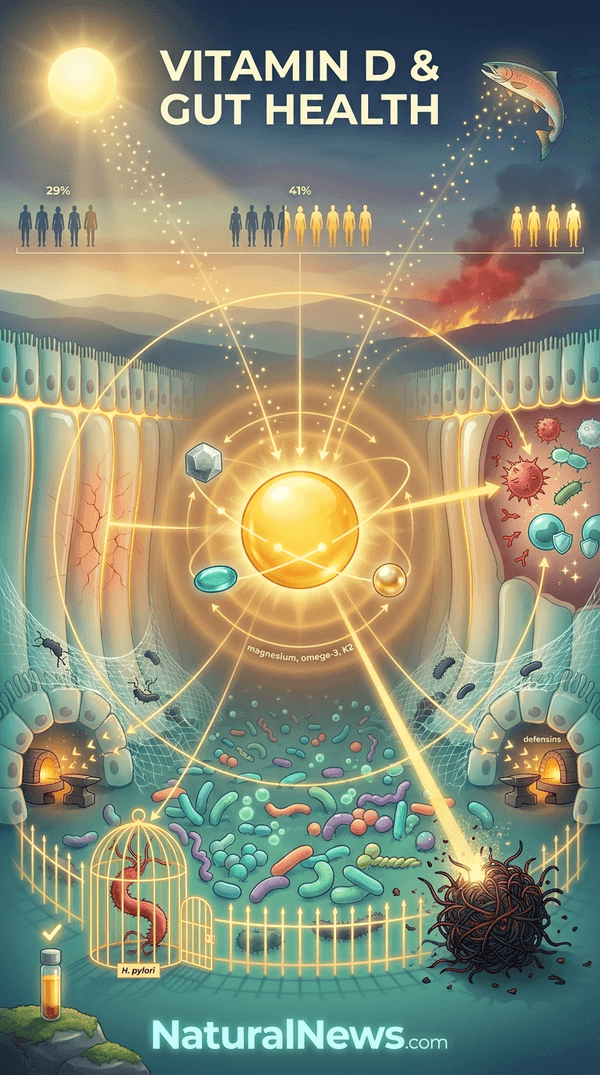
Explainer Infographic










Please contact us for more information.


