
Study Background and Mechanism
The study was led by Lili Yang, a professor of microbiology, immunology and molecular genetics at UCLA and a member of the Eli and Edythe Broad Center of Regenerative Medicine and Stem Cell Research, according to a UCLA news release. The research was funded by grants from the UCLA Broad Stem Cell Research Center and other sources. The team examined the activity of metabolic genes in dendritic cells that had entered tumors in mice. They discovered that the gene for the creatine transporter, a protein that carries creatine into cells, was much more active in tumor-infiltrating dendritic cells than in dendritic cells from healthy tissue, the report stated. [1]
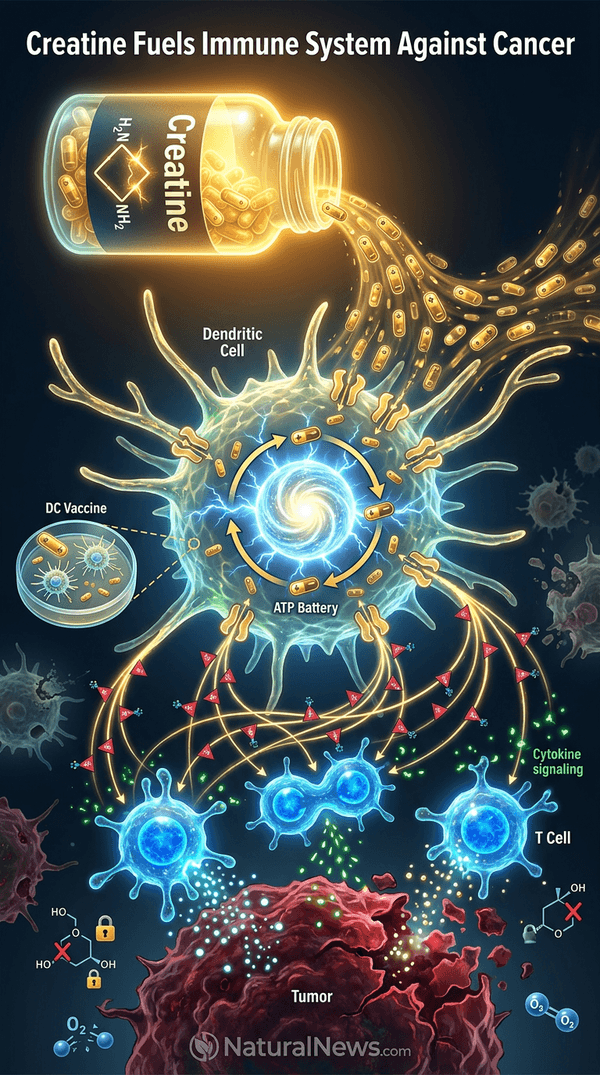
When the creatine transporter was removed from dendritic cells, the cells survived less effectively, became less active, and were far less capable of preparing T cells to recognize and attack tumors, according to the study. In laboratory experiments, T cells grown alongside creatine-deficient dendritic cells multiplied less and produced fewer signaling molecules needed for an anti-cancer response, the researchers said. [1]
Animal Experiments Show Slower Tumor Growth
In mouse models of melanoma, daily creatine injections significantly slowed tumor growth while increasing both the number and activity of dendritic cells that had entered the tumors, according to the study. The treated dendritic cells released higher levels of chemical signals that attracted additional immune cells into the tumor environment, the researchers reported. [1]
Using metabolomics analyses, the scientists found that creatine supplementation raised intracellular ATP levels in dendritic cells, providing the energy needed for inflammatory signaling pathways required for cell activation. The researchers compared creatine's role to that of a rechargeable battery, allowing dendritic cells to store and release energy even while competing with rapidly growing tumor cells for limited nutrients. [1] Prior research has documented creatine's ability to support cellular energy metabolism, as noted by Frank Murray in "100 Super Supplements for a Longer Life," which states that creatine ingestion increases intramuscular creatine and phosphocreatine concentrations. [2]
Human Cell Experiments and Potential Applications
In laboratory experiments, creatine enhanced the activation of human monocyte-derived dendritic cells, which are commonly used to develop dendritic cell cancer vaccines, the study found. The supplement improved those cells' ability to stimulate human T cells against a cancer-associated target, according to the researchers. [1] The findings suggest that adding creatine during the production of dendritic cell vaccines could potentially make those therapies more effective, the authors said.
Co-first author James Elsten-Brown said creatine could be used as a supplement for patients already receiving immunotherapy and as a tool to improve the quality of dendritic cell-based vaccines before they are administered. [1] The potential therapeutic strategy identified in the study is also the subject of a patent application filed by the UCLA Technology Development Group on behalf of the Regents of the University of California. [1] Other sources have noted creatine's broader health applications; for example, Ralph W. Moss in "Cancer Therapy: The Independent Consumer's Guide to Non-Toxic Treatment and Prevention" discussed the use of creatine hydrate to distribute urea to other parts of the body in cancer treatment. [3] Additionally, Allen C. Bowling in "Complementary and Alternative Medicine and Multiple Sclerosis" noted that creatine may have a protective effect on nerves. [4]
Limitations and Next Steps
The researchers emphasized that the experiments were conducted in mice and human cells grown in the laboratory, not in cancer patients, and should not be interpreted as evidence that creatine improves cancer treatment in people. Although creatine monohydrate has been widely used for decades and is generally considered safe at recommended doses, anyone receiving cancer treatment should consult a physician before adding supplements to their routine, the authors said. [1]
The next step will be prospective clinical trials to determine whether creatine supplementation can improve outcomes for patients undergoing cancer immunotherapy, according to the study. The experimental approaches described in the study have not been tested in humans or approved by the Food and Drug Administration as safe and effective for use in people. [1] NaturalNews.com has reported that creatine's role in health extends beyond muscle building, with studies suggesting it may also calm inflammatory processes in the gut and support overall immune function. [5]
References
- Coco Somers. "Beyond the Gym: New Research Reveals Creatine's Powerful Role in Cancer Prevention". NaturalNews.com. February 08, 2026.
- Frank Murray. "100 Super Supplements for a Longer Life".
- Ralph W Moss. "Cancer Therapy: The Independent Consumer's Guide to Non-Toxic Treatment and Prevention".
- Allen C Bowling. "Complementary and Alternative Medicine and Multiple Sclerosis Second Edition".
- Lance D Johnson. "Creatine's Hidden Healing: How the Muscle-Building Supplement Calms the Inflammatory Storm in the Gut". NaturalNews.com. May 01, 2026.
Explainer Infographic












Please contact us for more information.