


Gut Microbiome Diversity Tied to Heightened Cortisol Reactivity
Researchers at the University of Vienna recruited 74 healthy adults aged 18 to 34 for a study examining the relationship between gut microbiota composition and stress reactivity, according to a report published in Neurobiology of Stress on April 22, 2026.
Stool samples were collected from all participants, after which half were assigned to a stress group and the other half to a control group. The stress group underwent a modified version of the Montreal Imaging Stress Task, which combines mental arithmetic under time pressure with social evaluation, a procedure widely used to activate the body's stress response. Throughout the experiment, researchers tracked salivary cortisol levels and subjective stress ratings.
The study found that higher gut microbial diversity was associated with higher cortisol and subjective stress reactivity in the stress group, but not in the control group, according to the report. The authors indicated that moderate, time-limited cortisol reactivity is a marker of a flexible, adaptive stress response. The findings suggest that the composition of gut bacteria may influence how the body mounts a response to acute stressors, as noted in the study coverage [1].
Background: The Gut-Brain Axis and the HPA Axis
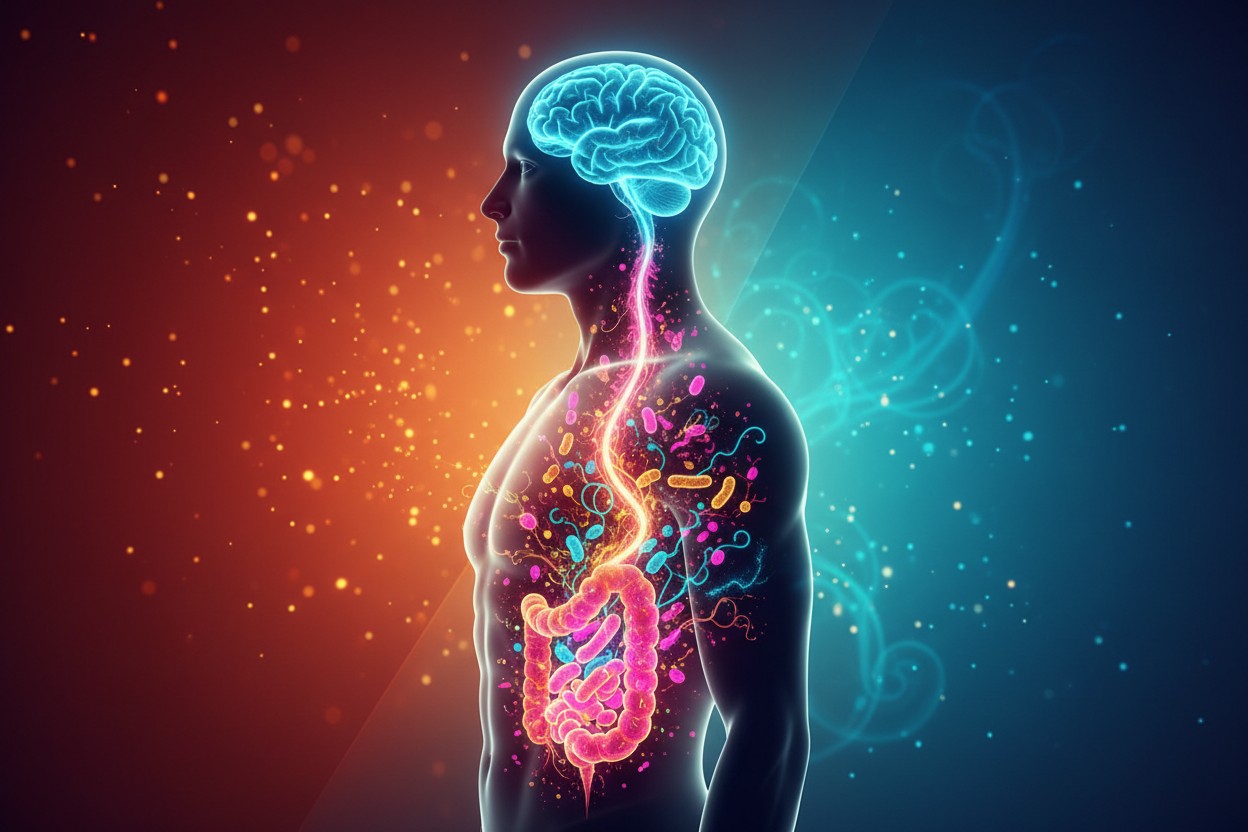
The gut and brain communicate continuously through the gut-brain axis, a bidirectional highway that includes the vagus nerve, immune signaling, and metabolites produced by gut bacteria. The gut microbiota, the community of microorganisms in the digestive tract, plays a central role in this communication.
These bacteria produce neurotransmitters, regulate inflammation, and influence the hypothalamic-pituitary-adrenal (HPA) axis, which controls cortisol release. According to Aviva Romm, M.D., in "Hormone Intelligence," "There isn't much going on in your body – and mind – that isn't influenced by the composition of your microbiome" [2].
Cortisol is released in response to stressors and ideally returns to baseline once the threat passes. However, some individuals exhibit higher cortisol levels and slower recovery. Emerging evidence indicates that gut microbes help calibrate the HPA axis response. Sara Gottfried, M.D., in "Brain Body Diet," notes that a healthy microbiome, rich in Lactobacillus and Bifidobacteria, may increase brain-derived neurotrophic factor (BDNF) and help prevent depression, supporting the idea that microbial composition shapes stress reactivity [3].
Findings: Stronger Stress Reactivity as a Marker of Flexibility
The study revealed that participants with higher gut microbial diversity produced stronger cortisol and subjective stress responses when challenged, compared to those with lower diversity. The researchers emphasized that a robust, time-limited stress response is a sign of an adaptive system, according to [1].
Blunted stress responses have been linked to depression and anxiety, while exaggerated or prolonged responses are associated with chronic stress and related disorders. A diverse gut microbiota may support the ability to mount an appropriate response and recover efficiently. Reduced microbial diversity, on the other hand, has been associated with depression, anxiety, and increased gut permeability.
According to an article on NaturalNews.com titled "Healing with Whole Foods: 6 Superfoods That Can Help Ease Anxiety," studies suggest that gut health is intimately connected to mental well-being [4]. The findings from the Vienna study add to a growing body of evidence indicating that the gut ecosystem helps calibrate the stress response system, reacting appropriately to acute challenges without becoming stuck in under- or over-reactivity.
Implications for Stress Resilience and Strategies to Support the Gut
A stress-resilient gut, based on this research, supports a flexible, well-calibrated stress response rather than a dampened one. The study does not prescribe specific interventions, but points toward strategies that support microbial diversity and short-chain fatty acid production.
Recommendations include eating fiber-rich foods such as vegetables, fruits, legumes, and whole grains; consuming fermented foods like yogurt, kimchi, sauerkraut, and kefir; managing chronic stress to avoid disrupting the microbiome; and avoiding unnecessary antibiotics and ultra-processed foods. According to NaturalNews.com, [4], dietary changes such as cutting out caffeine and incorporating whole foods can help relieve anxiety, which is closely tied to gut health.
The gut-brain axis is bidirectional, meaning chronic stress can disrupt the microbiome just as a disrupted microbiome can affect stress response. An article on NaturalNews.com quoted Dr. Basima Williams, who discussed how prolonged stress disrupts gut health, weakens immunity, and increases risks for autoimmune disorders [5]. Protecting the gut ecosystem through diet and lifestyle may therefore support both physical resilience and the ability to handle psychological stress effectively.
References
- NaturalNews.com. "Gut bacteria may shape how your body responds to stress, new study finds." April 24, 2026.
- Aviva Romm, M.D. "Hormone Intelligence."
- Sara Gottfried. "Brain Body Diet."
- NaturalNews.com. "Healing with Whole Foods: 6 Superfoods That Can Help Ease Anxiety." February 16, 2023.
- Jacob Thomas. "Feel G.O.O.D. Gut Health Program on BrightU: Dr. Basima Williams discusses how chronic stress fuels autoimmune disorders and more." NaturalNews.com. March 29, 2025.










Please contact us for more information.


