
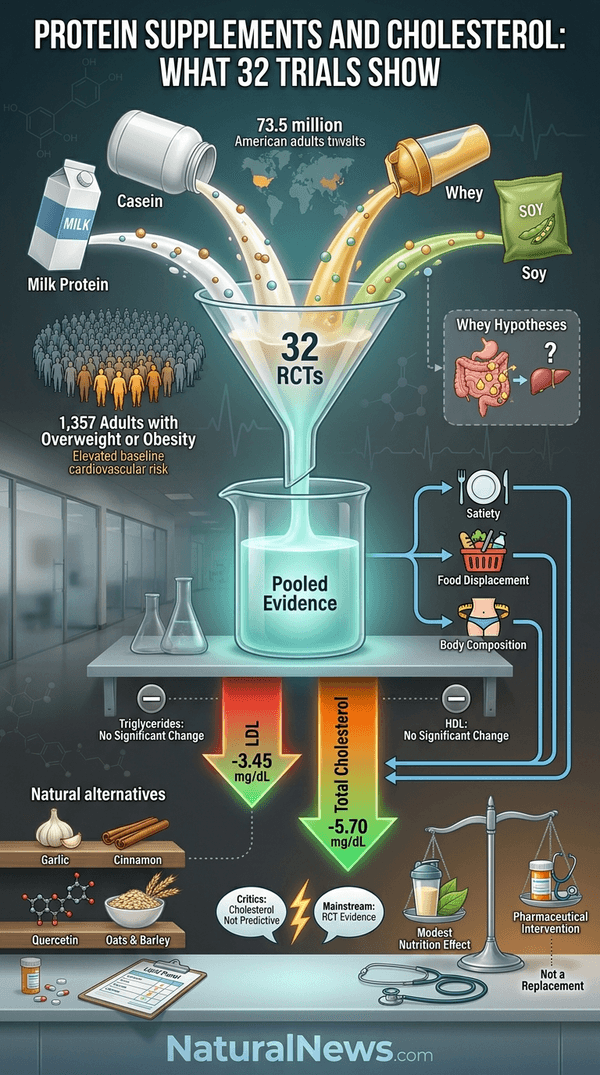
The analysis, which pooled data on milk protein, casein, whey, and soy protein supplements, found that LDL cholesterol decreased by an average of 3.45 mg/dL and total cholesterol decreased by an average of 5.70 mg/dL compared with control groups, the report stated. No significant changes were observed for triglycerides or HDL cholesterol.
The findings were reported in a study cited by mindbodygreen and published online, according to the source material. The meta-analysis examined the relationship between protein supplementation and lipid profiles in adults with overweight or obesity, a population already at elevated risk for cardiovascular conditions, according to the report.
Study Design and Participants
Researchers pooled data from 32 randomized controlled trials involving 1,357 adults with overweight or obesity, according to the meta-analysis cited by mindbodygreen. The trials compared high-quality protein supplementation with a control and measured changes in LDL cholesterol, total cholesterol, triglycerides, and HDL cholesterol.
The analysis considered factors including protein dose, intervention length, and participant characteristics when pooling results, the report stated. The study examined four protein sources: milk protein, casein, whey, and soy. Researchers compared protein supplementation against control conditions and looked specifically at changes in the four lipid markers.
The researchers noted that the study was designed to assess the overall relationship between protein supplementation and lipid levels, not to determine a specific mechanism, according to the report. This distinction is important because the meta-analysis cannot identify why the reductions occurred or rule out indirect effects, researchers said.
According to data from the Centers for Disease Control and Prevention cited by NaturalNews.com, 73.5 million American adults, or more than 31 percent of the total adult population in the United States, have elevated levels of low-density lipoprotein, or bad cholesterol [1]. Having high levels of bad cholesterol dramatically increases the risk of developing heart disease and other serious health issues, according to the same report [1]. The population examined in the meta-analysis -- adults with overweight or obesity -- represents a group that frequently presents with elevated LDL cholesterol and related metabolic markers.
Main Findings on Cholesterol
The meta-analysis found that high-quality protein supplementation was associated with small but significant reductions in LDL cholesterol and total cholesterol, according to the report. LDL cholesterol fell by an average of 3.45 mg/dL, and total cholesterol fell by an average of 5.70 mg/dL compared with control groups, researchers said.
No significant changes in triglycerides or HDL cholesterol were observed in the pooled analysis, the report stated. The researchers did not find significant changes in either marker across the 32 trials. Past research cited in the source material indicated that whey protein may have a positive effect on triglyceride levels, though the new meta-analysis did not find a significant impact on that marker.
The source material stated that one umbrella systematic review of whey protein supplementation did improve triglyceride levels. Whey protein in particular can help improve how the body manages fat -- whether it is burned for energy or stored, according to the report. Certain compounds in whey may limit how much cholesterol and fat the gut absorbs during digestion, while pulling in excess fat to be eliminated, the report stated.
The findings add to a growing body of research examining natural and nutritional approaches to lipid management. A separate meta-analysis of 108 randomized controlled trials published in Nutrition Reviews found that garlic consumption is associated with significant improvements in multiple cardiovascular risk markers, including LDL cholesterol, according to the study authors [2]. A pooled analysis of 21 meta-analyses, including 139 placebo-controlled comparisons, found cinnamon supplementation associated with lower HbA1c, total cholesterol, LDL cholesterol, and blood pressure, according to a report published in Frontiers in Nutrition [3].
Possible Mechanisms and Context
Different protein sources contain different combinations of amino acids and bioactive compounds that may influence metabolism, according to the report. These variations could potentially affect lipid processing in the body, though the meta-analysis was not designed to isolate specific pathways.
Protein supplementation may influence cholesterol indirectly by affecting satiety, body composition, or the types of foods someone eats throughout the day, researchers said. Because the study was designed to assess the overall relationship between protein supplementation and lipid levels, it cannot identify the exact mechanism responsible for the findings, the report stated.
The broader context of cholesterol management has been contested. A Mercola.com article argued that total cholesterol levels are generally not predictive of heart disease risk, often being absent or inverse in many studies, and that in one large U.S.-based study involving nearly 140,000 patients who suffered an acute myocardial infarction, LDL levels at the time of admission were lower than normal [4]. The same source stated that there was no association between total cholesterol levels and atherosclerosis severity [4].
Some critics of pharmaceutical approaches to cholesterol management have argued that lifestyle and nutritional strategies should be considered first, while mainstream researchers have continued to emphasize randomized trial evidence and clinical guidance. The meta-analysis cited by mindbodygreen represents a contribution to the nutritional side of that debate. Other natural compounds have also been studied for cardiovascular effects. Research indicates that quercetin, a common plant compound, acts on multiple pathways relevant to cardiovascular health, according to a report in NaturalNews.com [5]. A report on the Heart Foundation of New Zealand's list of seven foods that may lower cholesterol noted that oats and barley, vegetables and fruit, foods rich in heart-healthy fats, legumes and beans, nuts and seeds, and sources of plant sterols work in different ways and should be part of an overall eating pattern rather than a short-term fix [6].
Takeaway and Limitations
The researchers concluded that high-quality protein supplementation was associated with small improvements in LDL cholesterol and total cholesterol, according to the meta-analysis. No significant effect was found for HDL cholesterol or triglycerides, and the authors noted that further research is needed to clarify mechanisms and long-term outcomes.
The source material stated that a high-quality protein supplement can support muscle protein synthesis when it contains a complete amino acid profile with at least 2.5 grams of leucine. Whey protein is often considered the gold standard protein source for muscle health, according to the report. Protein supplements can also support satiety and weight management, the report stated.
Experts quoted in the source material said protein's benefits may extend beyond muscle health, while cautioning that the findings do not establish causation or replace medical advice. The meta-analysis observed associations between protein supplementation and lipid changes, but the study design cannot prove that protein supplementation directly caused the reductions. Consumers considering protein supplementation should evaluate product quality and consult healthcare providers regarding cholesterol management, according to the source material.
References
- NaturalNews.com. "Lower your cholesterol naturally with these foods and nutrients". NaturalNews.com. January 01, 2021.
- NaturalNews.com. "Study: Garlic Consumption May Lower Cholesterol, Blood Pressure and Blood Sugar". NaturalNews.com. August 19, 2026.
- NaturalNews.com. "Cinnamon Supplementation Associated With Lower Blood Sugar and Cholesterol in Review of 21 Meta-Analyses". NaturalNews.com. August 11, 2026.
- Mercola.com. "Why Your Doctor is Wrong About Cholesterol". Mercola.com. December 12, 2018.
- NaturalNews.com. "Research Identifies Plant Compound With Cardiovascular Benefits". NaturalNews.com. April 19, 2026.
- NaturalNews.com. "Heart Foundation of New Zealand Lists Seven Foods That May Lower Cholesterol". NaturalNews.com. August 17, 2026.
Explainer Infographic










Please contact us for more information.