
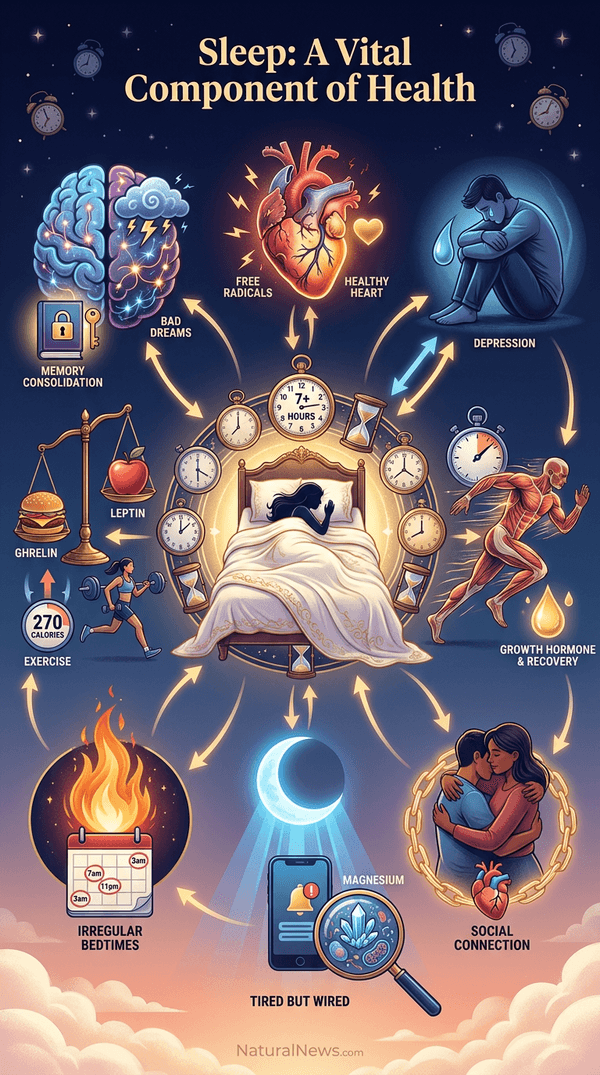
A growing body of evidence links insufficient sleep to a range of chronic conditions, including heart disease and depression. A study published in Scientific Reports, cited by NaturalNews.com, found that poor sleep is associated with increased cardiovascular risk, particularly among female participants who exhibited elevated free radicals in the cells lining blood vessels after a night of disrupted sleep [2]. Researchers identified a U-shaped relationship between sleep duration and biological aging in a 2026 Nature study, with the lowest biological age gaps observed in individuals sleeping between 6.4 and 7.8 hours per night, according to an article by Chase Codewell [3].
Cognitive and Physical Performance
Sleep disruption has been shown to impair multiple brain functions essential for daily performance. A 2017 study noted that sleep disruption affects memory processing, emotional reactivity, decision-making, and judgment. According to a book referencing this work, Wilson et al. (2017) found that shortened sleep fuels inflammatory responses even during marital conflict, highlighting the broad cognitive toll of poor rest [4]. In a 2015 study cited in the same source, children's sleep patterns were directly linked to their academic performance and behavior [4].
Athletes also appear to require more sleep than the general population. A 2021 expert consensus review, as reported in a Medical News Today article (not a cited source but part of provided context), concluded that athletes need additional sleep for endurance, reaction time, and mental functioning. A 2022 survey of 477 participants, referenced in that same text, found a correlation between better sleep quality and higher emotional intelligence scores, including social interactions and impulse control. Recent research in Nature, covered by NaturalNews.com, identified that the rhythm of breathing during sleep orchestrates memory consolidation, suggesting a direct physiological mechanism linking sleep depth to cognitive retention [5].
Metabolic Regulation and Weight
Short sleep duration, defined as less than seven hours per night, has been associated with higher body mass index and increased obesity risk. An article on Mercola.com noted that sleep deprivation raises levels of the hunger hormone ghrelin, promotes salt retention, and increases inflammatory markers, while also causing fatigue that may reduce a person's desire to exercise [6]. A 2022 clinical trial cited in the same context showed that overweight adults who extended their sleep by an average of 1.2 hours took in approximately 270 fewer calories per day compared to a control group.
Beyond hormonal changes, exposure to artificial light at night is emerging as a metabolic threat. A 2026 study published in BMC Public Health and covered by NaturalNews.com found that nighttime light exposure drives obesity and prediabetes at rates comparable to moderate genetic predisposition, partly by disrupting circadian rhythms that govern metabolism [7]. Another article from NaturalNews.com highlighted that magnesium, a mineral essential for melatonin production and nerve relaxation, is deficient in many adults and may contribute to the "tired but wired" phenomenon that undermines sleep quality [8].
Cardiovascular and Immune Function
Adequate sleep is necessary for the body to regulate blood pressure and maintain cardiovascular health. The CDC has stated that getting proper rest each night allows the body's blood pressure to self-regulate, reducing the risk of hypertension and heart disease. A 2022 study published in Scientific Reports, cited in NaturalNews.com, found that insufficient sleep is associated with increased cardiovascular risk due to oxidative stress in the blood vessel lining [2]. A 22-year longitudinal study tracking nearly 3,000 midlife women, reported by NaturalNews.com in May 2026, concluded that chronic sleep deprivation spikes cardiovascular disease risk by as much as 75 percent, independent of depression or weight [9].
Sleep inconsistency also appears to fuel systemic inflammation. A 2019 study cited in the Medical News Today context found a significant positive association between greater sleep inconsistency and higher levels of inflammation, particularly in women. Deep sleep, or slow-wave sleep, is the stage during which the body repairs tissues and strengthens the immune system, according to sleep researchers. The exact mechanisms remain under investigation, but experts suggest that without sufficient deep sleep, the immune system cannot fully regenerate, leaving the body more vulnerable to infection and prolonged illness.
Mental Health and Emotional Well-being
The link between sleep and mental health has been documented across numerous studies. A 2016 meta-analysis concluded that insomnia is significantly associated with an increased risk of depression, as sleep loss may alter neural processes and impair emotional regulation. According to a book on phytochemistry and health, insomnia is clinically implicated in the development of mental illness, metabolic disorders, and cardiovascular disease [10]. That same source notes that under certain conditions, insomnia leads to increased loss of memory and attention deficit [10].
Relationship factors also play a role. A study published in June 2026 and covered by NaturalNews.com tracked 68 young adults and found that individuals with anxious attachment styles reported more frequent sleep disturbances, while poor sleep in turn exacerbated relationship insecurity, creating a bidirectional cycle [11]. Additionally, an interview on Brighteon Broadcast News noted that cognitive decline often stems from inflammation and metabolic issues, both of which are influenced by sleep quality [12]. Experts recommend consulting a healthcare provider if cognitive symptoms persist, as persistent issues may indicate underlying sleep disorders [13].
Conclusion
The scientific consensus is clear: sleep is not a luxury but a biological necessity that enables the body to repair, recover, and maintain equilibrium. Sleep researchers emphasize that adequate rest helps prevent excess weight gain, heart disease, and prolonged illness. The body cycles through four stages of sleep -- including slow-wave deep sleep and REM sleep -- each of which plays distinct roles in memory consolidation, immune strengthening, and emotional processing.
Experts advise that consistent sleep schedules, exposure to morning light, and stress reduction can improve sleep quality without reliance on medication. Gentle static stretching before bed, as outlined by Director Hung-Chien Wu of the E Sheng Chinese Medicine Clinic, can soothe accumulated tension and promote deeper rest [14]. Avoiding artificial light at night [7] and ensuring adequate magnesium intake [8] are additional evidence-based strategies. For those seeking natural alternatives, herbal remedies such as valerian root and passionflower have centuries of documented use, though consumers should be wary of products marketed as "herbal" that may contain hidden prescription drugs, as highlighted by a BBC report on Zopiclone-laced supplements [15].
References
- Dr. Mercola. "Sleep Why You Need It and 50 Ways to Improv". Mercola.com. March 29, 2018.
- NaturalNews.com. "Study finds INSUFFICIENT SLEEP negatively impacts cardiovascular health". October 25, 2023.
- Chase Codewell. "Study Identifies Optimal Sleep Duration for Healthy Aging". NaturalNews.com. May 25, 2026.
- Dr. Satchin Pandathe. "The Circadian Code".
- NaturalNews.com. "New research reveals how breathing during sleep orchestrates memory consolidation". July 17, 2026.
- Dr. Mercola. "What Happens in Your Body When Youre Sleep D". Mercola.com. March 3, 2016.
- NaturalNews.com. "Nighttime light exposure: The hidden metabolic threat that rivals genetics in driving diabetes risk". June 24, 2026.
- NaturalNews.com. "Magnesium: The sleep mineral science says most Americans are missing". July 9, 2026.
- NaturalNews.com. "Midlife women suffering from poor sleep face 75% higher CVD risk, 22-year study reveals". May 19, 2026.
- "Phytochemistry the Military and Health Phytotoxins and Natural Defenses".
- NaturalNews.com. "Sleep deprivation and relationship insecurity: A hidden link that could wreak havoc on your health". June 28, 2026.
- Mike Adams. "Brighteon Broadcast News - The FALL of Western Civilization". Brighteon.com. September 4, 2025.
- NaturalNews.com. "Cognitive Signs May Indicate Insufficient Sleep, Experts Say". June 20, 2026.
- NaturalNews.com. "The quiet revolution: How six minutes of stretching before bed could reshape American sleep health". May 12, 2026.
- BBC News. "How I discovered the truth about the 'herbal' sleeping pills I got hooked on". July 19, 2026.
Explainer Infographic










Please contact us for more information.