



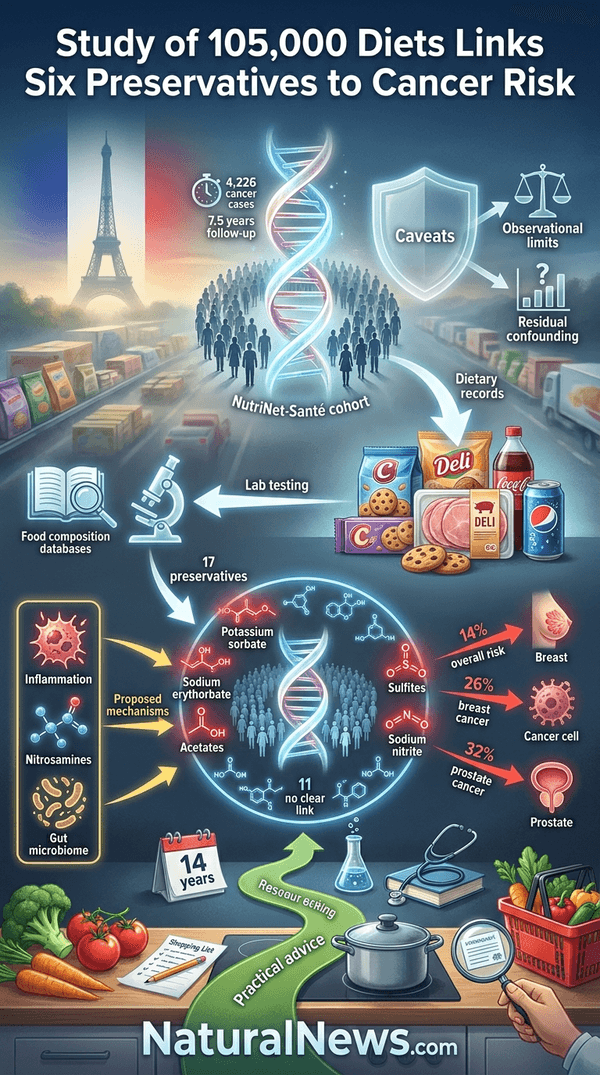
The researchers drew on data from the French NutriNet-Santé cohort, which has been collecting detailed dietary information since 2009, according to the report. Cancer diagnoses were tracked over an average follow-up of 7.5 years, and statistical models were adjusted for age, sex, education, smoking, alcohol, physical activity, family cancer history and overall diet quality, the researchers said.
The study is observational and does not establish that preservatives cause cancer, according to the researchers.
How Researchers Tracked Preservative Intake
The study spanned roughly 14 years and relied on repeated 24-hour dietary records in which participants specified brand names rather than generic food categories, according to the report. Participants completed multiple records over the course of the study, allowing researchers to estimate cumulative exposure over time.
Preservative content varies by brand, so the researchers cross-referenced the dietary records with food composition databases and conducted laboratory testing on frequently consumed products, according to the report.
The analysis covered 17 specific food preservatives, and researchers estimated cumulative intake over time, according to the study. The cohort design allows researchers to compare higher-intake groups with lower-intake groups while adjusting for potential confounders, the report stated. A summary published by mindbodygreen noted that a 14-year study of 105,000 adults found that 6 common food preservatives were associated with modestly increased cancer risk, while most showed no link [1].
Six Preservatives Showed Statistical Links
Potassium sorbate and sulfites were associated with a 14% higher risk of overall cancer and a 26% higher risk of breast cancer, according to the study. Sodium nitrite was associated with a 32% higher risk of prostate cancer among participants with the highest intake, researchers said.
Potassium nitrate, acetates and sodium erythorbate also appeared to increase risk modestly, according to the report. A separate NaturalNews.com report on the study stated that total preservative intake and 11 of the 17 preservatives studied showed no clear link to cancer [2].
The findings concern associations in the highest-intake groups, and the study did not demonstrate causation. A report published by ahealthiermichigan.org noted that the study described links between higher intake of these food additives, not how the additives may cause higher risk of cancers [3]. A McGill University review of the coverage stated that the data are derived from the NutriNet-Santé study, which since 2009 has followed some 105,000 people, of whom 4,226 were eventually diagnosed with cancer [4].
Potential Mechanisms and Study Limits
The researchers proposed several possible mechanisms, including disruption of immune and inflammatory pathways, promotion of carcinogen formation and effects on gut microbiome health, according to the report.
The researchers adjusted for numerous confounders but noted that residual confounding and the limits of observational research remain possible, according to the report. Dietary records can contain measurement error, although the brand-specific data and laboratory testing were intended to improve exposure estimates, the report stated. One review of the study stated plainly that the findings described links between intake and risk, not the mechanism by which additives might raise that risk [3].
The study population was French, and the findings may not generalize to other populations, according to the researchers. Coverage of the study by CNN quoted Mathilde Touvier, director of research at France's National Institute of Health and Medical Research in Paris, as saying the cancer and type 2 diabetes studies were the first in the world investigating associations between exposure to these food additives and the two diseases, "and so we must be very cautious about the message" [5].
Consumer Guidance and Context
The study authors suggested several practical steps: prioritize minimally processed foods, read labels selectively, balance convenience with choice, and cook at home when possible, according to the report.
Critics of the processed-food supply have argued that artificial additives are a concern and that fresh, whole foods are preferable.
Regulators and industry groups have said food additives are approved for use under established limits. The study authors said more research is needed on specific compounds. A review of the findings published by Earth.com stated that the research team from Sorbonne University argued the findings warrant a closer look at how certain additives are used and regulated, even as more research is needed to confirm what is driving the link [6]. The findings should be read as population-level associations rather than determinations about any single packaged food.
Conclusion
The study offers detailed estimates of preservative intake and reports associations between six additives and cancer risk, according to the report.
The researchers said the findings support further investigation and do not by themselves require consumers to avoid all packaged foods.
References
- What 105K People's Diets Revealed About Food Additives & Cancer | mindbodygreen. https://www.mindbodygreen.com/articles/what-105k-peoples-diets-revealed-about-food-additives-and-cancer-for-these-6-food
- Study links commonly used food preservatives to increased cancer risk - NaturalNews.com, January 11, 2026.
- Common Preservatives Linked to Higher Rates of Cancer, Study Finds. https://www.ahealthiermichigan.org/stories/food-and-recipes/common-preservatives-linked-to-higher-rates-of-cancer-study-finds
- “Food Preservative Linked to Cancer,” Shrieked Many a Headline | Office for Science and Society - McGill University. https://www.mcgill.ca/oss/article/critical-thinking-health-and-nutrition/food-preservative-linked-cancer-shrieked-many-headline
- Common food preservatives linked to cancer and type 2 diabetes | CNN. https://www.cnn.com/2026/01/07/health/food-preservatives-cancer-diabetes-wellness
- Disturbing study links very common food preservatives to cancer and diabetes. https://www.earth.com/science/common-food-preservatives-linked-to-cancer-and-diabetes-risk/
Explainer Infographic







Please contact us for more information.


