


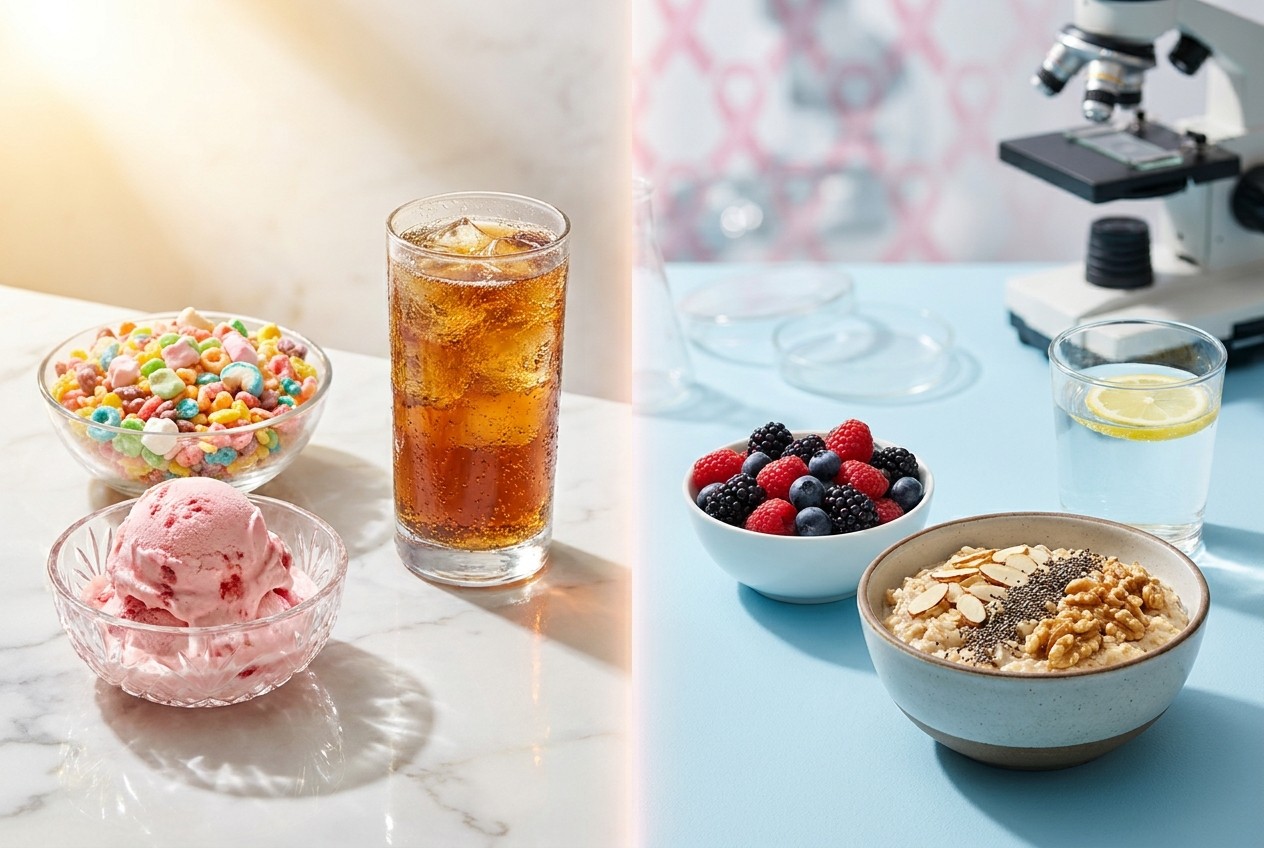
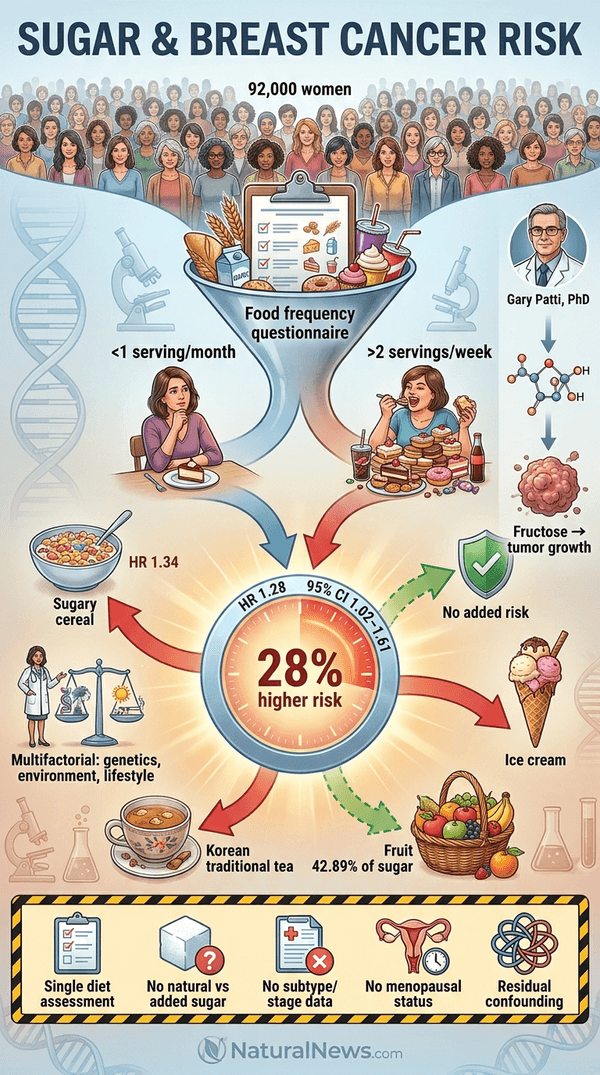
Researchers analyzed health data from more than 92,000 women aged 40 to 69 who participated in the Health Examinees-Gem (HEXA-G) study between 2004 and 2013, the study stated. A total of 713 breast cancer cases occurred over an average follow-up of 9.20 years, according to the journal article [1].
The Korean cohort was part of the Health Examinees-Gem (HEXA-G) study, according to the report, and high-sugar foods were defined as sugar-rich food groups identified from the food frequency questionnaire [1].
Study Methods and Main Findings
Participants completed food frequency questionnaires that included consumption of high-sugar foods, according to the study. The researchers compared women who consumed more than two servings per week of high-sugar foods with those who consumed less than one serving per month, the report stated [1].
Sugary cereals and ice cream showed particularly significant associations, according to the results. The analysis reported a hazard ratio of 1.28, with a 95% confidence interval of 1.02 to 1.61, and a P for trend of 0.05, the study said [1]. A companion abstract presented at the American Association for Cancer Research reported that increased consumption of sugary cereal was associated with increased risk of breast cancer, with a hazard ratio of 1.34 for consumption of more than one serving every two months compared with almost never [2].
Fruit accounted for 42.89% of total sugar intake in the population studied, yet fruit intake was not associated with an increase in breast cancer risk, the researchers reported [1]. The top three foods contributing to total sugar intake were fruits, Korean traditional tea, and ice cream, according to the study [1]. The researchers stated that the study was observational and showed an association, not proof that high-sugar foods cause breast cancer. Limitations cited in the coverage included a single baseline diet assessment, no distinction between natural and added sugars, no detailed cancer subtype or stage data, no menopausal status at diagnosis, and possible residual confounding [3].
Expert Describes Potential Mechanisms
Richard Reitherman, MD, PhD, a board-certified radiologist and medical director of breast imaging at MemorialCare Breast Center at Orange Coast Medical Center in Fountain Valley, California, said breast cancer is multifactorial, involving a complex interaction between genetics, environmental factors, and lifestyle choices.
He said high sucrose and fructose diets may activate multiple mechanisms within the body, including inflammation and sugar and lipid metabolism, that operate independently of obesity.
Reitherman said lifestyle changes, particularly diet, can be very challenging for individuals.
Natural vs. Added Sugars and Fruit
Richard said whole fruit provides fiber, vitamins, minerals, polyphenols, and other plant compounds in a food matrix that is quite different from a highly processed, sugar-rich product.
Richard said it should not be assumed that every food containing sugar has the same metabolic effect, and she said a food should not be labeled as inherently harmful. She said the overall dietary pattern, frequency, portions, what foods are replacing or being replaced, and a person's broader metabolic health all play a role.
The peer-reviewed literature has separately examined fructose's relationship to tumor growth. Consuming fructose boosts the growth of cancerous tumors, according to a peer-reviewed study reported by Children's Health Defense, whose corresponding author, Gary Patti, PhD, said that in some cases the growth rate of the tumors accelerated by two-fold or even higher [4]. Observations in large Asian populations whose diets include soybeans as a basic food group show a lower incidence of cardiovascular disease than populations consuming a traditional Western diet, according to the Women's Encyclopedia of Natural Medicine [5].
Dietary Guidance and Conclusions
Richard suggested starting the day with a more nourishing breakfast if sugary cereal is a regular choice, such as alternating with oatmeal, plain or lower-sugar yogurt, eggs, or whole-grain toast with nut butter, fruit, and cottage cheese.
She recommended including a variety of colorful vegetables, fruits, beans, lentils, nuts, seeds, and whole grains at every meal and being thoughtful about beverages, such as alternating sugar-sweetened drinks with water, sparkling water, or unsweetened tea.
Richard said pleasure belongs in a healthy dietary pattern and that food is nourishment but also culture, connection, celebration, comfort, and enjoyment.
The broader scientific literature has long examined the relationship between sugar and cancer risk. A summary of ten studies published by NaturalNews.com stated that a large volume of scientific evidence is available showing a link between sugar and increased cancer risk, including research conducted by Harvard Medical School [6]. A 2015-2020 U.S. Dietary Guidelines recommendation limits added sugars to a maximum of 10% of daily calories, according to Mercola.com [7].
References
- High-sugar foods and breast cancer risk from the Health Examinees study | European Journal of Nutrition | Springer Nature Link. https://link.springer.com/article/10.1007/s00394-026-04134-0
- Abstract 4242: High sugar food consumption and breast cancer risk in a prospective cohort study. https://doi.org/10.1158/1538-7445.am2023-4242
- Eating sugary foods more than twice a week was linked to 28% higher .... https://www.news-medical.net/news/20261102/Eating-sugary-foods-more-than-twice-a-week-was-linked-to-2825-higher-breast-cancer-risk.aspx
- High-fructose Corn Syrup is Everywhere — Scientists Say It May Make Cancerous Tumors Grow Faster. https://childrenshealthdefense.org/defender/high-fructose-corn-syrup-scientists-cancerous-tumors-grow-faster/
- Women's Encyclopedia of Natural Medicine Alternative Therapies Tori Hudson. Unknown
- Ten Studies Showing the Link Between Sugar and Increased Cancer Risk- NaturalNews.com, November 17, 2008.
- Common Food Found to Have Shockingly Strong L - Mercola.com, March 15, 2022.
Explainer Infographic








Please contact us for more information.


