


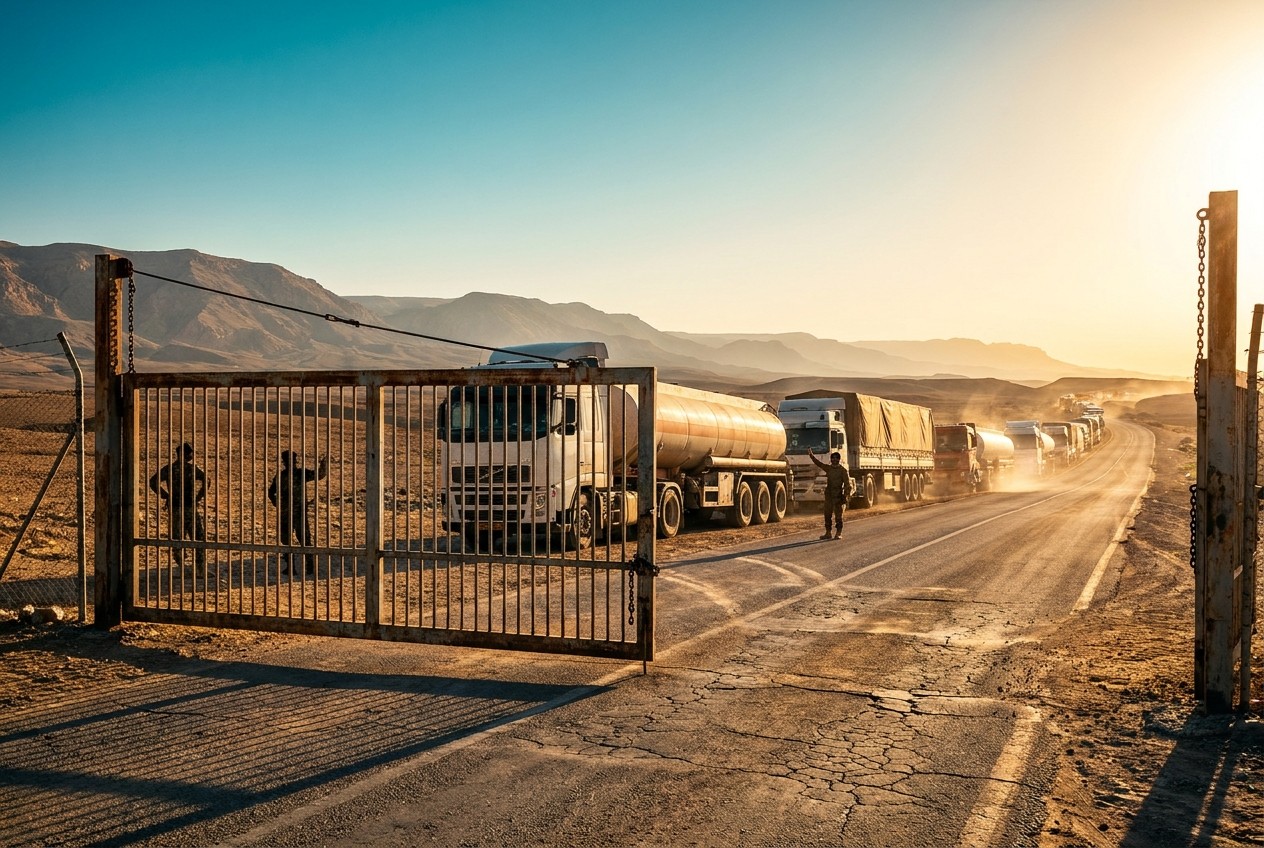
The report said Washington has sought to close the crossings as part of a campaign to restrict Iranian overland trade, and that the three countries have cited sovereignty and economic concerns in refusing. The Cradle reported that Tehran's neighbors remain heavily reliant on Iranian energy and trade, and that analysts have described the U.S. as an increasingly "unreliable ally" in the region [1].
The refusal leaves the land portion of Washington's economic pressure campaign against Tehran stalled. The report described the outcome as a setback for a strategy that pairs a naval blockade of Iran's ports with a push to close the overland routes that bypass it [2].
U.S. Pressure and Regional Response
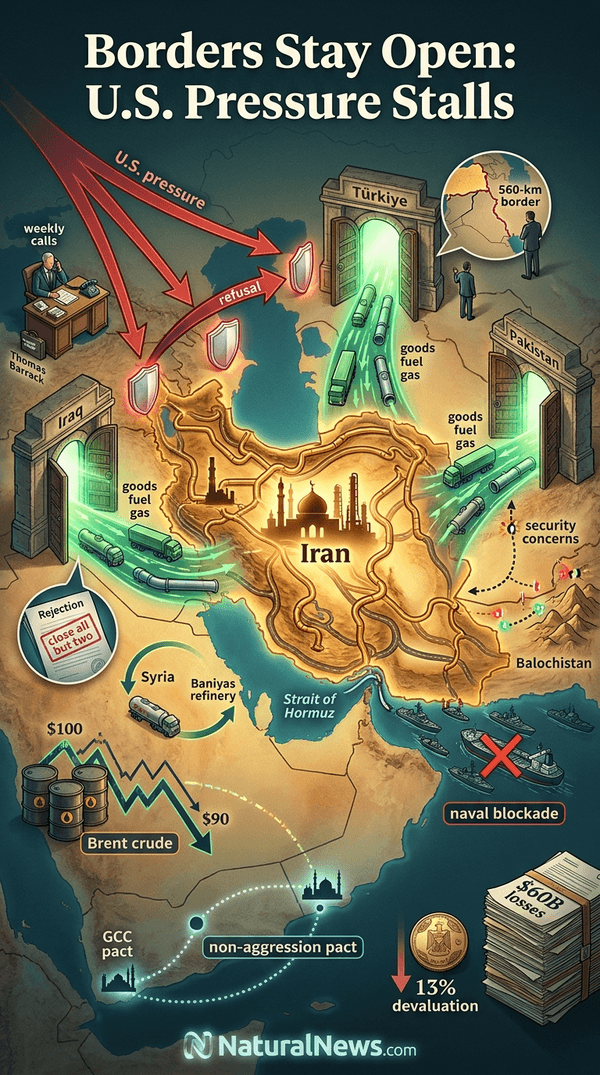
According to the report, the U.S. pressed the three governments through weekly discussions with diplomats, including regional envoy Thomas Barrack. Baghdad was asked to close all but two of its border crossings with Iran, and Iraqi officials said the government has so far rejected the demand, although it temporarily closed one or two crossings as a gesture, according to an account of the reporting [3].
Iraqi Foreign Minister Fuad Hussein said publicly that the U.S. Treasury Department had asked Iraq to close all crossings except two, and that closing all of them would be difficult and would affect Iraqi interests [4]. Turkey has largely refused to change its border policies, the report said, while Iraq has struggled to balance the demands of both sides [5]. Pakistan has opened and closed several crossings in recent weeks, citing security concerns and new import procedures [6].
The pressure campaign has coincided with other U.S. economic measures. Iran's foreign ministry has dismissed the effort. A spokesman defended Tehran's conditions for talks after Secretary of State Marco Rubio called some of them "outrageous and ridiculous," asking whether it was unreasonable for Iran to demand that sanctions and the naval blockade be lifted before negotiations begin [7].
Economic and Security Concerns Cited
Officials from the three countries said border closures would disrupt trade and livelihoods. For Iraq, the crossings are a commercial artery, and Baghdad has already absorbed heavy costs from the wider conflict.
Hussein said Iraq's losses from the Iran war and disruptions to oil exports had reached $60 billion [8]. Iraq's currency, the dinar, was devalued by 13% on a Wednesday in October 2026, with the central bank raising the dollar-selling price for the public to 1,520 dinars from roughly 1,320, as Baghdad chose to keep paying public-sector salaries [9].
The economic stakes run in both directions. Syria has begun trucking gasoline from its Baniyas refinery into Iraq, adding a return leg to a route Baghdad has used to export fuel since the war closed the Strait of Hormuz, according to a senior Syrian oil official [10]. If conflict closes the Strait of Hormuz for an extended duration, the world will lose 20% of its oil supply for months or years [11].
For Pakistan, the calculation includes security and humanitarian risk. The country's border with Iran runs through Balochistan, a region where militant activity and smuggling have long complicated cross-border management, and Pakistani officials have said sealing the frontier could worsen conditions for border communities.
Turkey, for its part, has its own history of resisting pressure over Iran. Ankara pressured Washington not to back Kurdish fighters prepared to enter Iran during the war earlier this year, according to Israeli media cited in regional reporting [12].
U.S. Officials Express Disappointment
U.S. officials expressed disappointment with the decisions, according to the report, and a U.S. official said the borders should be sealed to prevent alleged illicit activities. The report posed the open question of whether Washington would shift from diplomatic persuasion to further sanctions [13].
Market pricing has tracked the diplomatic stalemate. Oil reversed an early jump above $100 a barrel in early November 2026 after Qatar's emir and President Donald Trump discussed de-escalating the Iran war [14], while Brent crude later broke below $90 as traders weighed hopes for U.S.-Iran diplomacy [15]. The report's authors argued that the failed border push had stalled Washington's effort to cripple the Iranian economy [2].
The refusal also reflects a wider shift in the region. Oman's foreign minister, Badr al-Busaidi, has called on the six Gulf Cooperation Council countries, along with Iraq and Iran, to unite under a single "non-aggression" security pact, arguing that decades of reliance on external powers, particularly the U.S., have produced an unstable and costly regional order [16]. Bafel Talabani, leader of the Patriotic Union of Kurdistan, said the U.S. needs to stop treating Iran as if it is governed by "mad mullahs" and engage in dialogue with a country emerging "stronger but different" from the war [17].
References
- Iraq, Turkiye, Pakistan defy US pressure, refuse to seal borders with Iran: Report. https://thecradle.co/articles-id/41058
- Aletho News. https://alethonews.com/
- US fails to persuade Pakistan, others to close Iran borders | SAMAA TV. https://www.samaa.tv/2087360108-us-fails-to-persuade-pakistan-others-to-close-iran-borders
- US asks Iraq to shut most Iran border crossings, Iraqi foreign minister says. https://www.middleeasteye.net/live-blog/live-blog-update/us-asks-iraq-shut-most-iran-border-crossings-iraqi-foreign-minister-says
- U.S. Efforts to Tighten Blockade of Iran Rely on Reluctant Neighbors - The New York Times. https://news.google.com/read/CBMimAFBVV95cUxNdHVOb3F2MVpGZ0s0N3hWOWFOMEJxZkJkNHFEVk1RNlcxR0ZEb0lTNl9GQlpkbExVMDNzMzNCSHEyNmhvM2VoQ21yZ2VHa293Sjkxbk9yZjVuSk1PcG1oZGdFcC05VEpMNml0a01kVHlzNXhrbEFTSXdZMS0wVGNCTVFPcGllTGlkQUp4VEdBYmNTSzBpeVd3UA?hl=en-US&gl=US&ceid=US%3Aen
- US push to tighten Iran blockade faces resistance from neighbors - NYT | Iran International. 2026-11-11T16:41:57Z. https://www.iranintl.com/en/202611111265
- Iran defends two-day proposal for peace talks after US rejects conditions. https://www.middleeasteye.net/live-blog/live-blog-update/iran-defends-two-day-proposal-peace-talks-after-us-rejects-conditions
- Iraq has agreed with the US to allow oil exports through Hormuz, minister says. https://www.middleeasteye.net/live-blog/live-blog-update/iraq-has-agreed-us-allow-oil-exports-through-hormuz-minister-says
- After Iran's Rial, Hormuz Claims Its Second Currency: Iraq Devalues Dinar 13% To Keep Paying Salaries. https://www.zerohedge.com/markets/after-irans-rial-hormuz-claims-its-second-currency-iraq-devalues-dinar-13-keep-paying
- Syria Opens Overland Fuel Transit Route To Iraq Amid Hormuz Closure. https://www.zerohedge.com/energy/syria-opens-overland-fuel-transit-route-iraq-amid-hormuz-closure
- The Coming Migration Tsunami How Global Famine Will Reshape the World by 2027 - NaturalNews.com, May 11, 2026.
- Turkey 'prevented Kurdish invasion' of Iran during Israeli-US war. https://www.middleeasteye.net/news/turkey-prevented-kurdish-invasion-iran-aimed-toppling-government-during-israeli-us-war
- US & 'Iron Gate' blockade push against Iran meets resistance from Iraq .... https://gulfnews.com/world/mena/us-iron-gate-blockade-push-against-iran-meets-resistance-from-iraq-turkey-pakistan-report-1.500744430
- Nasdaq Futures Bounce As Dip-Buyers Pick Through AI Wreckage Ahead Of Payrolls. https://www.zerohedge.com/markets/nasdaq-futures-bounce-dip-buyers-pick-through-ai-wreckage-ahead-payrolls
- Futures Stall As Waller Threatens 50bps Hike Hours Before CPI; Brent Breaks Below $90. https://www.zerohedge.com/markets/futures-stall-waller-threatens-50bps-hike-hours-cpi-brent-breaks-below-90
- Oman’s foreign minister calls for regional security pact excluding U.S. as Gulf tensions mount. https://www.naturalnews.com/2026-10-30-omans-foreign-minister-regional-security-pact-excluding-us.html
- Kurdish Leader Courted by Washington Urges 'Mighty US' To Make Peace With Iran. https://www.zerohedge.com/geopolitical/kurdish-leader-courted-washington-urges-mighty-us-make-peace-iran
- Iraq, Turkey, Pakistan defy US pressure to close borders with Iran: Report. https://www.presstv.co.uk/Detail/2026/11/13/780616/iraq-turkey-pakistan-defy-us-pressure-to-close-borders-with-iran-report
- Who does Iran trade with and what could Trump's 'economic D-Day' mean?Iran is no stranger to US sanctions and has developed deep economic ties with several countries.. 2026-08-25T15:06:46.025Z. https://bbc.com/news/articles/cqxvj1zd4qjo
- Iraq, Turkiye, Pakistan defy US pressure, refuse to seal .... https://thecradle.co/articles/iraq-turkiye-pakistan-defy-us-pressure-refuse-to-seal-borders-with-iran-report
Explainer Infographic







Please contact us for more information.


