Measuring the antioxidant power of a food is difficult, researchers said. Values are typically expressed in millimoles per 100 grams, and results can vary depending on the assay method used [2].
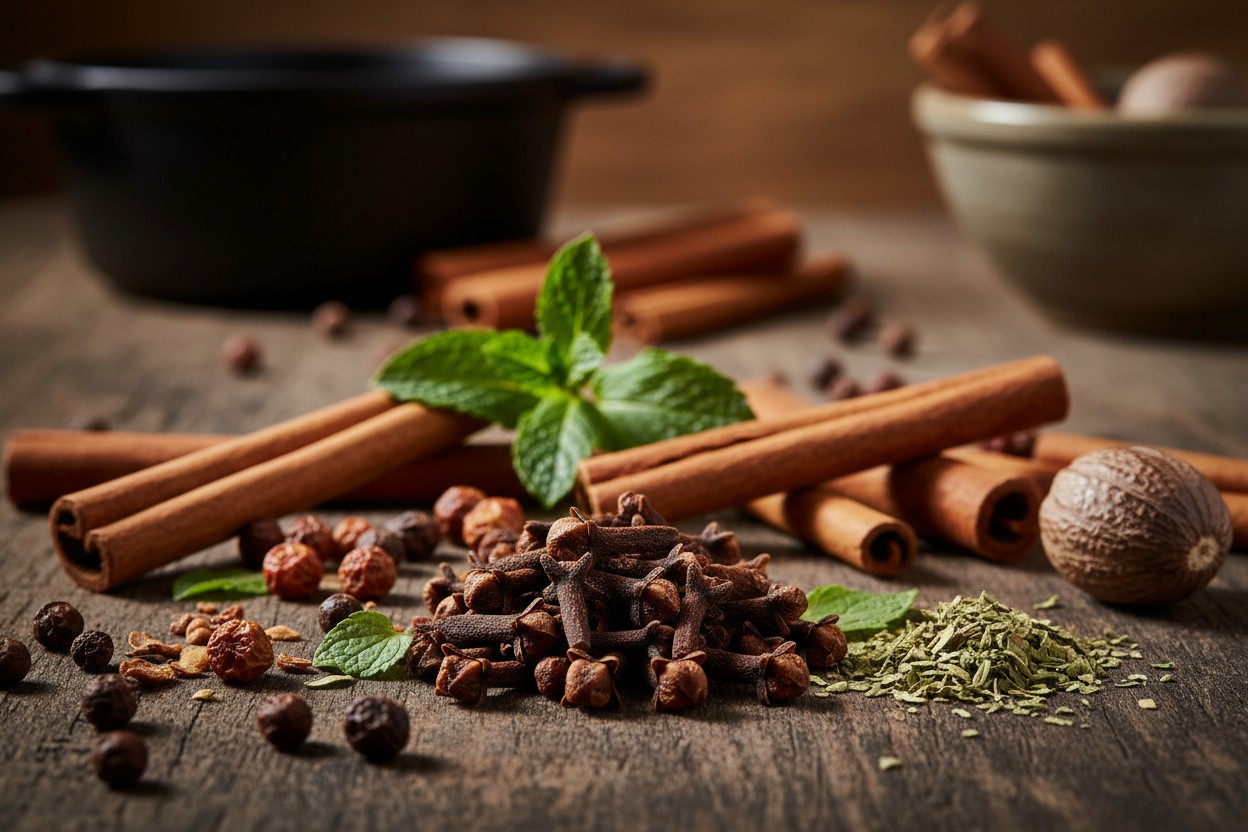
For people who do not prefer nutmeg -- a spice commonly used in holiday baked goods, eggnog, and ethnic cuisine [1] -- the following five spices offer alternatives with reported antioxidant capacity, according to the available data. The spices are cloves, allspice, mint leaves, oregano, and cinnamon.
Cloves and Allspice Rank Highest in Antioxidant Capacity
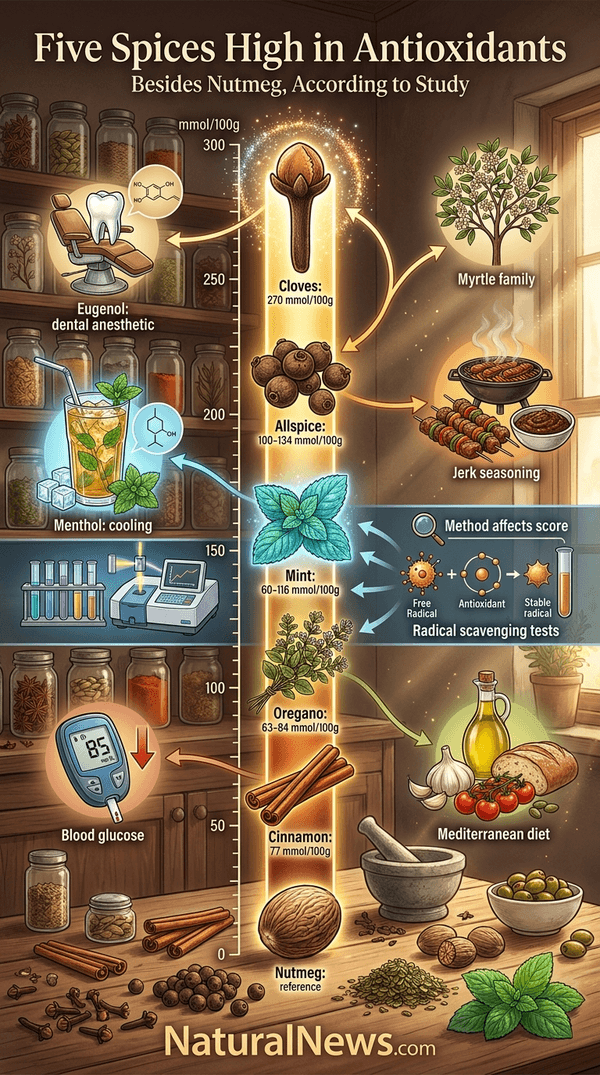
Cloves are the dried flower buds of the Syzygium aromaticum tree, an evergreen that can grow to about 30 feet tall, according to a Mercola.com report [3]. The spice is used in baked goods, savory meals, and teas. Cloves have an antioxidant capacity of about 270 millimoles per 100 grams, the highest among the 12 spices evaluated in the 2021 study, followed by allspice. Cloves and allspice, both members of the myrtle family, are noted for their antioxidant properties, and eugenol, the major aromatic component of clove, is also used as a dental anesthetic. A 2010 review of 3,100 foods published in the Nutrition Journal identified clove, peppermint, allspice, cinnamon, oregano, thyme, sage, rosemary, saffron, and tarragon as antioxidant all-stars [4].
Allspice is not a blend of spices, despite its name. It is made from the dried berries of a tree called Pimenta dioica. Allspice has an antioxidant capacity of about 100-134 millimoles per 100 grams. Because it tastes like a combination of cinnamon, cloves, and nutmeg, it is often used in baked goods, according to the report. It can also be added to teas and mulled wine.
Mint Leaves and Oregano Provide Moderate Antioxidant Levels
Mint leaves come from Mentha, the mint plant. They have an antioxidant capacity of about 60-116 millimoles per 100 grams, according to the report. Mint leaves are slightly sweet and have a cool, fresh taste, researchers said. They can be added to salads, yogurt, smoothies, and savory dishes, and some people drink mint tea to freshen their breath. A 2004 study on gamma irradiation and dessert spices, including mint, found that water extracts of irradiated samples did not show significant differences in antioxidant activity compared with non-irradiated samples in the radical-scavenging assay used [5].
Oregano is made from the leaves of Origanum vulgare. It has an antioxidant capacity of about 63-84 millimoles per 100 grams, the report stated. Oregano has a strong flavor with a slightly bitter, earthy taste. It is often used in soups, salad dressings, stews, pasta, and pizza, and it can also be brewed as oregano tea. In a separate ranking of herbs by antioxidant activity, Greek, Italian, and Mexican oregano varieties ranked highest. Oregano demonstrated 42 times the antioxidant activity of apples, and the herb may help with fat loss, which is one reason Okinawan cuisine emphasizes its use [6]. Studies of widely used spices have provided evidence of their high antioxidant capacity and a tendency to substitute synthetic antioxidants with natural ones [7].
Cinnamon Rounds Out List With About 77 Millimoles per 100 Grams
Cinnamon is a popular spice in baked goods. It is made from the inner bark of a tree. Cinnamon bark has an antioxidant capacity of about 77 millimoles per 100 grams, according to the data. Cinnamon has a warm, slightly spicy, and sweet taste. It can be added to baked foods, oatmeal, yogurt, stews, hot chocolate, and tea. Cinnamon also tops most lists of fat-burning spices, and its ability to stabilize blood glucose levels may be a factor in its effectiveness [8].
The antioxidant and antimutagenic activities of Cinnamomum zeylanicum fruit extracts have been documented in published research [9]. The scientific literature notes that spice antioxidant values can vary by measurement method, the report stated. Radical scavenging ability tests aim to simulate basic mechanisms involved in lipid oxidation by measuring either the reduction of stable radicals or radicals generated by radiolysis, photolysis, or other reactions, according to a 2006 review in the Journal of Food Composition and Analysis [2].
Context and Limitations of Antioxidant Rankings
Antioxidant capacity figures are based on specific assays and do not directly measure health outcomes, according to researchers. The values reported for spices are laboratory measurements and should not be interpreted as clinical results. Different extraction procedures -- including solvent extraction, solid-phase extraction, and supercritical extraction -- can affect the antioxidant concentration measured relative to the plant material, according to the available research [2].
The report stated that spices can be incorporated into a diet, but individual responses and serving sizes vary. Spices are typically consumed in small quantities, which may limit their overall antioxidant contribution compared with fruits and vegetables consumed in larger amounts. In Uganda, for example, the most important antioxidant source in one regional diet contributed 2.47 millimoles, or 27.5% of total intake, followed by grains at 2.13 millimoles, fruits at 1.77 millimoles, and legumes at 1.7 millimoles [10].
References
- NaturalNews.com. "The sweet spice: Health benefits of nutmeg and tips for proper storage". NaturalNews.com. November 16, 2023.
- Elsevier. "Spice antioxidants isolation and their antiradical activity: a review". Journal of Food Composition and Analysis 19. 2006.
- Mercola.com. "Cloves Can Help Improve Your Oral Health and...". Mercola.com. December 14, 2017.
- Elisa Zied. "Younger next week: your ultimate Rx to reverse the clock, boost energy, and look and feel younger in 7 days".
- Mónica B. Pérez. "Retention of antioxidant activity in gamma irradiated argentinian sage and oregano". Food Chemistry. 2010.
- Bradley J. Willcox, D. Craig Willcox, and Makoto Suzuki. "The Okinawa Diet Plan: Get Leaner, Live Longer, and Never Feel Hungry".
- Marcela Boroski. "Enhancement of pasta antioxidant activity with oregano and carrot leaf". Journal of Agricultural and Food Chemistry. 2011.
- NaturalNews.com. "Use these six amazing spices to burn fat fast". NaturalNews.com. March 29, 2013.
- G.K. Jayaprakasha, P.S. Negi, B.S. Jena, and L. Jagan Mohan Rao. "Antioxidant and antimutagenic activities of Cinnamomum zeylanicum fruit extracts". Journal of Food Composition and Analysis 20 (2007) 330–336. 2007.
- Torunn Stangeland, Siv F. Remberg, and Kåre A. Lye. "Total antioxidant activity in 35 Ugandan fruits and vegetables". Food Chemistry 117, 286-293. 2009.
Explainer Infographic








Please contact us for more information.