



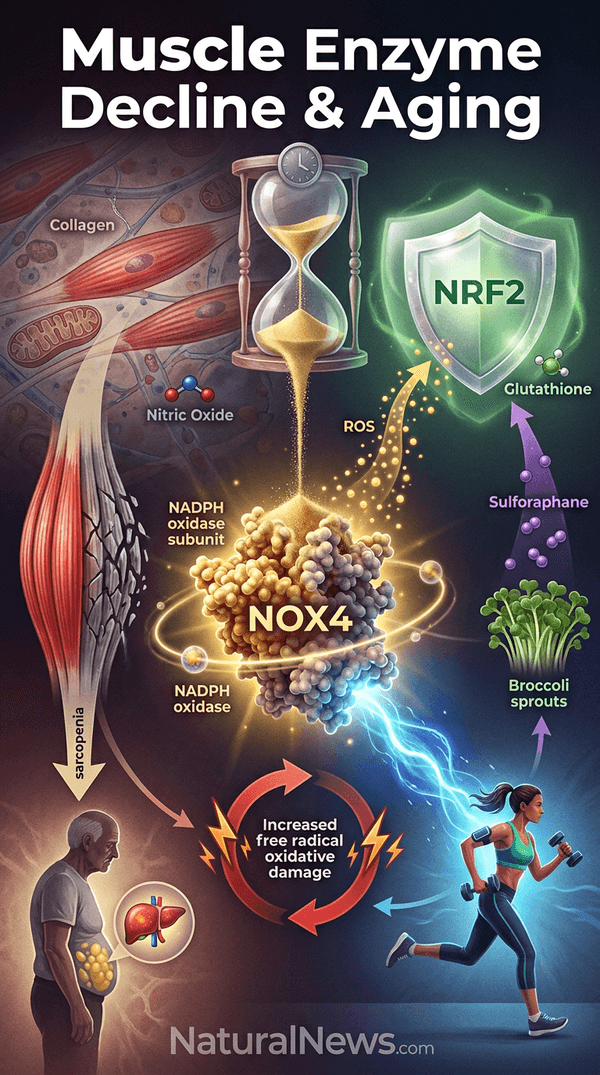
The condition known as sarcopenia affects an estimated 10% to 25% of adults under age 70 and half of those over age 80, according to a separate report citing Mercola.com [2]. The new findings on NOX4 may help explain why muscle loss accelerates with aging.
Study Methods and Findings
The team examined muscle tissue from mice and humans and analyzed the effects of removing NOX4 from skeletal muscle in aging mice, according to [1]. Without NOX4, mice experienced accelerated health decline including more severe muscle loss, frailty, increased body fat, inflammation, insulin resistance, and signs of liver disease, the report said.
Activation of NRF2 using sulforaphane, a compound found in cruciferous vegetables, improved many of these changes, according to the researchers [1]. NOX4 is a member of the NADPH oxidase family, which were initially assumed to be present only in phagocytes, according to literature reviewed in the book "Antioxidants in Sport Nutrition" [3]. The study was conducted by an international team led by Monash University with collaborators from Australia, Europe, and the United States, as noted in the report [1].
Mechanism of Action
NOX4 produces small amounts of reactive oxygen species (ROS) that act as signaling molecules, according to the study [1]. These ROS help activate NRF2, a protein that regulates antioxidant defenses and cellular repair.
The understanding of ROS has undergone a shift. The initial fears of the 1970s that the mere production of radical species was harmful have been replaced by an appreciation of their role in cell functions, according to "Antioxidants in Sport Nutrition" [3]. Excessive ROS can damage cells, but low levels serve as important signals for stress adaptation. Molecular hydrogen, for instance, acts as a selective antioxidant that uses the body's own biological systems to identify oxidative stress, according to an article on Mercola.com [4]. This contrasts with broad-spectrum antioxidants that may indiscriminately suppress free radicals.
Implications for Aging
According to the researchers, the NOX4/NRF2 pathway in skeletal muscle may be central to the body's ability to adapt to stress, as reported in [1]. Declining physical activity, rather than aging itself, appears to drive the decrease in NOX4, the study suggested.
Regular exercise temporarily increases ROS production, which may help maintain this protective pathway, the study stated [1]. This concept, known as hormesis, where low-dose stressors induce beneficial adaptations, is supported by research on ROS and aging, according to the book "Hormesis in Health and Disease" [5]. Other signaling molecules also decline with age; for example, the body's ability to produce nitric oxide declines with age, affecting muscle function, according to an article on Mercola.com [6].
Practical Recommendations
The study suggests that maintaining the body's stress-adaptation system is important for healthy aging, according to [1]. Exercise is highlighted as a key method to support NOX4 and NRF2 function, the report said.
Foods rich in sulforaphane, such as broccoli sprouts, broccoli, Brussels sprouts, and kale, may also help support cellular defense systems, the researchers noted [1]. Additionally, other interventions such as creatine supplementation combined with exercise have been linked to improved muscle and metabolic health in aging adults, according to a review published in the journal Nutrients [7]. The findings reinforce that dietary choices and physical activity can influence muscle health at the molecular level.
Conclusion
The preprint has not yet been peer reviewed, the researchers stated. The findings add to evidence that lifestyle factors like exercise and diet play a role in age-related muscle decline. The study suggests that maintaining the body's capacity to adapt to stress, rather than eliminating stress entirely, may be key to healthy aging, according to [1].
References
- NaturalNews.com. "Study Identifies Muscle Protein NOX4 as Missing Link Between Exercise and Healthy Aging". June 16, 2026.
- NaturalNews.com. "Meta-analysis of 235 trials identifies optimal strategy for preserving muscle mass in aging adults". June 14, 2026.
- Manfred Lamprecht. "Antioxidants in Sport Nutrition".
- Mercola.com. "Better Than an Antioxidant, It 'Changes' Your Genes". March 19, 2023.
- Rattan Suresh I S Le Bourg ric. "Hormesis in Health and Disease".
- Mercola.com. "3 Ways to Boost Your Resistance Against SARS". October 16, 2020.
- NaturalNews.com. "Exercise and Creatine Linked to Improved Muscle and Metabolic Health in Aging Adults". May 19, 2026.
Explainer Infographic










Please contact us for more information.


