
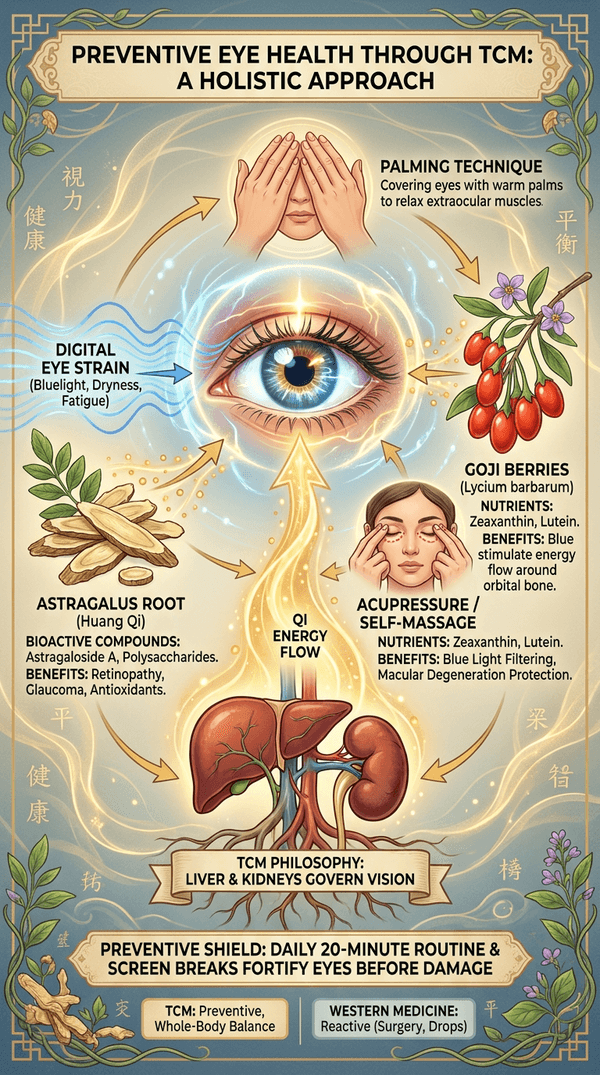
Hsin appeared on the "Health 1+1" program on NTD, a sister outlet of the Epoch Times, and outlined two herbal remedies and lifestyle habits to address eye health from the inside out. He explained that while Western medicine often focuses on structural treatment such as correcting vision or replacing damaged lenses, TCM emphasizes prevention and whole-body balance, according to the report. [1] The practitioner stated that the solution lies not in artificial drops or surgical intervention, but in ancient holistic approaches that address the root causes of eye dysfunction. [1]
Astragalus and Its Role in Eye Health
Astragalus, the dried root of a legume, is a commonly used tonic in TCM for replenishing qi, or vital energy, according to Hsin. [1] The practitioner noted that research shows astragalus polysaccharides can prevent and treat retinopathy, and that astragaloside A can lower intraocular pressure and improve glaucoma, the report stated. [1]
The herb has a documented history of use for eye problems in herbal medicine texts. For instance, in "Bottom Lines Prescription for Herbal Healing" by Phyllis A. Balch, astragalus tea is listed among treatments for eye conditions such as bloodshot eyes and blurred vision. [2] Similarly, Balch's other book "Prescription for Herbal Healing, 2nd Edition" includes astragalus in its index of remedies related to the kidneys and overall vitality, which TCM connects to ocular health. [3]
Second Herbal Remedy: Goji Berries
Hsin also mentioned goji berries, known botanically as Lycium barbarum, as another herb used in TCM for eye health, according to the report. [1] The berries are often consumed daily or brewed as a tea to nourish the liver and eyes, the practitioner explained. [1]
Research on L. barbarum provides supporting context for its traditional use. A scientific study on the effects of a glycoconjugate from L. barbarum found that the fruit significantly influenced mineral concentrations in growing mice, including increased levels of zinc and iron, which are essential for overall cellular function and eye health. [4] While direct eye-specific trials in humans are limited, the compound's impact on body composition aligns with TCM's holistic view that systemic health supports vision. [4]
Daily Habits and Self-Massage Techniques
To complement herbal remedies, Hsin recommended simple daily habits such as taking breaks from screens and practicing a technique called palming, according to the report. [1] He described self-massage around the eyes and acupressure points as methods to improve circulation and reduce strain. [1]
A holistic 20-minute daily eye care routine that includes these practices has emerged as a protective shield against digital strain, according to a report on NaturalNews.com. [5] The routine combines acupressure, palming and other exercises designed to improve blood flow and reduce intraocular pressure, which may help prevent conditions like glaucoma and cataracts. [5]
Conclusion: Integrating TCM With Modern Life
Hsin advised that consistent use of herbs and lifestyle changes can prevent long-term eye damage, according to the report. [1] The practitioner noted that early intervention is key, as damage often begins before symptoms appear. [1]
TCM’s preventive approach offers an alternative to what Hsin described as Western medicine's focus on structural treatment. [1] As screen use continues to rise, integrating ancient practices such as astragalus and goji berry supplementation, regular palming, and acupressure may provide individuals with accessible tools to protect vision without relying solely on pharmaceutical interventions or surgery.
References
- NaturalNews.com. “TCM practitioner warns: Screen time damages eyes long before symptoms appear—ancient remedies offer hope.” NaturalNews.com. May 6, 2026.
- Phyllis A. Balch. “Bottom Lines Prescription for Herbal Healing.”
- Phyllis A. Balch. “Prescription for Herbal Healing 2nd Edition.”
- Min Zhang and Haixia Chen. “Effects of a glycoconjugate from Lycium barbarum on body composition in growing mice.” Journal of the Science of Food and Agriculture. 2006.
- Willow Tohi. “Holistic 20 minute daily eye care routine emerges as shield against glaucoma cataracts and digital strain.” NaturalNews.com. June 23, 2025.
Explainer Infographic











Please contact us for more information.