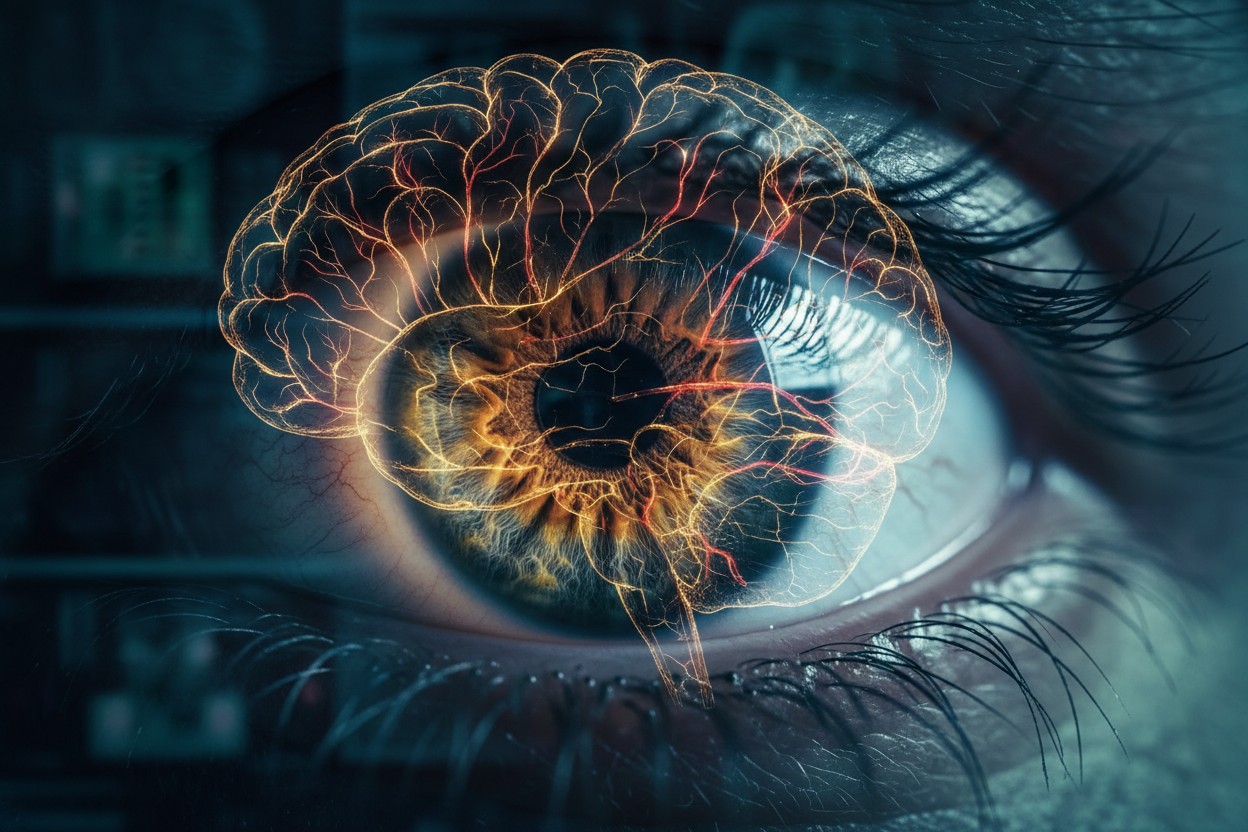
The eye and brain share similar small blood vessel structures, making the eye a potential window into brain health, according to researchers. Other research supports this connection. According to research published in JAMA Ophthalmology, as vision worsens with age, so too may cognitive abilities [2]. Additionally, McMaster University researchers found that retinal blood vessels reflect heart disease risk and biological aging [8]. The findings from Rutgers have not yet been peer-reviewed, the team noted.
Research Methodology and Preliminary Findings
The Rutgers team paired eye imaging with MRI scans in participants with varying cognitive function, officials said. Participants with mild cognitive impairment showed more signs of small vessel disease on MRI and lower brain volume in regions linked to neurodegeneration. Such small vessel disease is known to affect both cerebral and retinal vessels, as noted in studies of hereditary conditions like COL4A1 mutations [9].
Higher homocysteine levels were observed in those with cognitive impairment, the researchers reported. Elevated homocysteine has been linked to a greater risk of cognitive decline and heart disease. B vitamins, including folic acid, B12, and B6, help regulate homocysteine levels and are crucial to heart, brain, and eye health, according to a report [1]. The researchers said that these findings suggest a possible link between nutritional factors and vascular health.
Supporting Evidence from Retinal Imaging Studies
Other research teams have explored the same eye-brain connection using retinal imaging. A study on para-inflammatory markers found that levels of C-reactive protein and fibrinogen were associated with larger retinal venular diameters in patients with cerebrovascular disease [10]. McMaster University researchers reported that simpler, less-branched retinal vessels were linked to higher inflammation, shorter lifespan, and accelerated vascular aging [8].
Another review confirmed that retinal changes correlate with brain atrophy and cognitive problems, according to previous research [2]. Thomas Lewis, a microbiologist with a Ph.D. from MIT, has explored how retinal assessment can be used to stratify risk factors for chronic diseases, including dementia [3]. The consistent findings across multiple imaging modalities strengthen the case for the eye as a diagnostic window.
Current Limitations and Future Potential
Eye-based screening for dementia risk is not yet available for clinical use, the researchers noted. Current methods for detecting early brain changes rely on expensive MRI or PET scans. Small vessel disease, which can lead to lacunar infarction, is typically diagnosed through brain imaging [5].
If validated, eye imaging could provide a more accessible and lower-cost screening option, officials said. More research is required before routine eye exams can assess cognitive risk, according to the study authors. Researchers emphasized that the findings are preliminary and require further validation.
Lifestyle Factors Under Investigation
The Rutgers team highlighted that elevated homocysteine may be influenced by B vitamin levels. According to a report, B vitamins are crucial to heart health, brain health, and eye health [1]. Leafy green vegetables are rich in these vitamins and have been linked to preserved cognitive function [6].
Managing blood pressure, cholesterol, and blood sugar supports small blood vessel health in the eyes and brain, the researchers said. The Lancet's Commission on Dementia Prevention identified 14 modifiable risk factors that could delay or prevent dementia, including hypertension and diabetes [7]. Regular exercise and annual comprehensive eye exams were also mentioned as potential supportive measures, though not yet proven for dementia prevention, the researchers emphasized.
Conclusion
The ongoing Rutgers research aims to further clarify the relationship between eye health and cognitive decline. The findings add to a growing body of evidence linking retinal and eye vessel changes to brain health. Alzheimer's disease, the most common form of dementia, involves abnormal accumulation of protein tangles in the brain [4]. Researchers stated that while an eye exam cannot currently estimate dementia risk, the connection warrants continued investigation.
According to the report, further validation is needed before clinical application. The study underscores the potential of noninvasive screening tools for early detection of cognitive decline, officials concluded.
References
- NaturalNews.com. "B vitamins are CRUCIAL to heart health brain health and eye health". NaturalNews.com. August 20, 2019.
- Dr. Mercola. "Maintaining Healthy Eyesight Can Help Keep Your Brain in Shape". Mercola.com. July 19, 2018.
- Dr. Mercola. "Tests to Assess Your Risk for Chronic Disease and COVID-19". Mercola.com. January 3, 2021.
- Kerson Toba Schwaber. "Understanding chronic illness the medical and psychosocial dimensions of nine diseases".
- Mahinda Yogarajah. "Neurology".
- NaturalNews.com. "The green shield: Leafy vegetables are science's newest defense against decline". March 18, 2026.
- NaturalNews.com. "Research reveals lifestyle changes that can significantly lower DEMENTIA risk". January 24, 2026.
- NaturalNews.com. "EYEING LONGEVITY: Your Eyes Can Reveal How Fast You're Aging — New Research Links Retinal Blood Vessels to Heart Disease and Longevity". October 29, 2025.
- XPP. "COL4A1 Mutation in Axenfeld–Rieger Anomaly with Leukoencephalopathy and Stroke". Ann Neurol 2007;62:177–184.
- XPP. "Para-Inflammatory Markers and Retinal Vascular Caliber in Cerebrovascular Disease". Ann Neurol 2007;61:491–495.









Please contact us for more information.