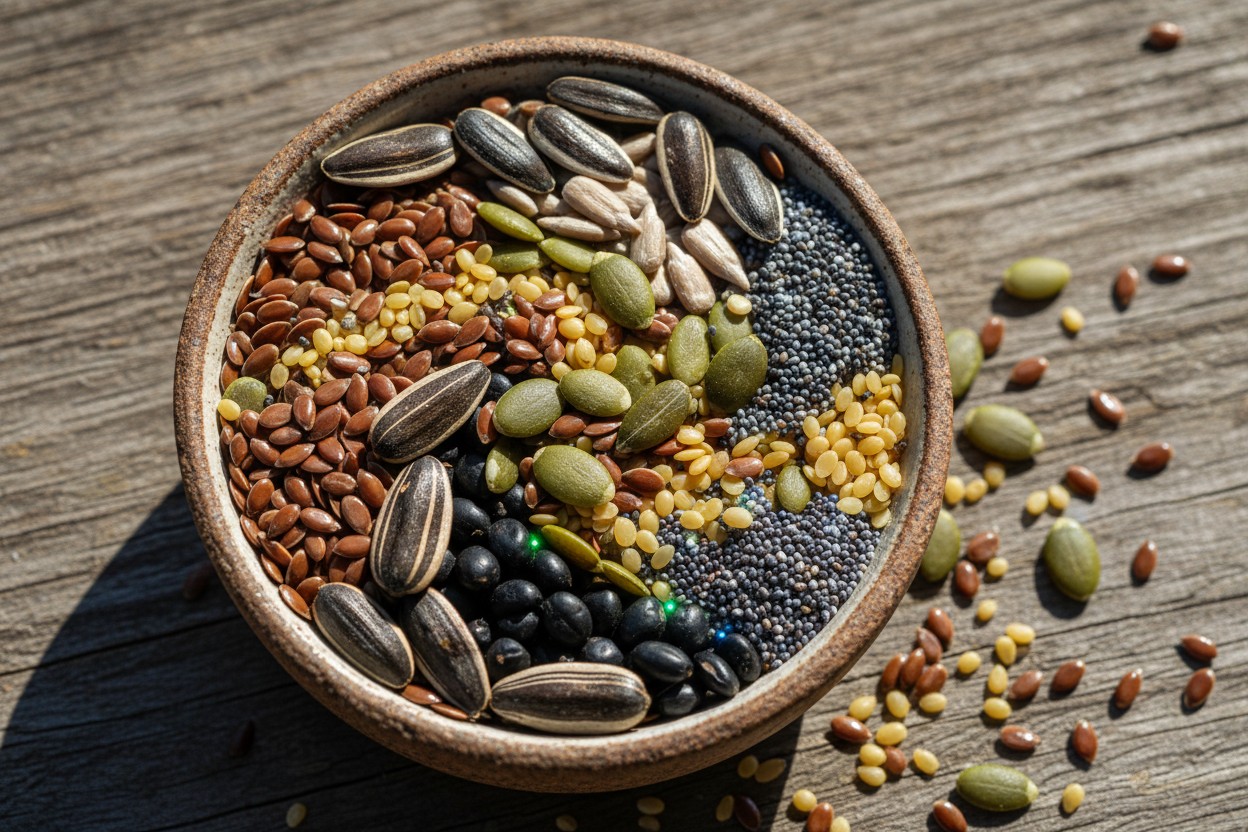
Introduction: Seeds Gaining Recognition for Nutritional Value
Nutrition experts report that seeds are nutrient-dense but often overlooked compared to nuts, according to recent commentary. Registered nutritionist Helen Johnston stated that everyone should be eating seeds and treating them like a dietary supplement for their health benefits. [1]
Seeds are described as a source of fiber, healthy fats, essential amino acids, and powerful antioxidants. These components are reported to aid digestion, support cardiovascular function, and protect against cellular damage. [1]
Flax and Chia Seeds Linked to Cardiovascular and Gut Health
Clinical research indicates flaxseed consumption can reduce cholesterol and blood pressure, according to a 2021 trial cited by nutritionists. People with high blood pressure who ate around four tablespoons of flax seeds daily experienced reductions in body mass index, total cholesterol and blood pressure. The seeds' high fiber and lignan content are cited as mechanisms for these effects. [1]
Chia seeds are cited as a source of omega-3 fatty acids, complete protein and antioxidants that may support skin and gut health. A 2020 study published in the journal Amino Acids suggested compounds in chia seeds, such as caffeic acid and kaempferol, may contribute to improved skin health by protecting against enzymes linked to fine lines and wrinkles. [1]
Nutritionists note that soaking chia seeds turns them into a gel, making them easier to digest and supporting bowel movements. Chia seeds are described as a complete protein, containing all nine essential amino acids, which is reported to be rare in the plant world. [1]
Sunflower and Pumpkin Seeds Offer Mineral and Vitamin Support
Sunflower seeds are noted as a source of vitamin E, which studies associate with reduced heart disease risk. Getting enough vitamin E, roughly the equivalent of a tablespoon of sunflower seeds, may help reduce this risk, according to research. Sunflower seeds also provide more than 40% of the daily recommended intake of selenium in one serving. [1]
Pumpkin seeds are highlighted for their zinc content, with nutritionists linking zinc deficiency to hair loss and impaired immunity. Johnston explained that since the body cannot produce zinc, it must be obtained from food, and pumpkin seeds are one of the richest plant sources. Zinc is reported to support the immune system and help fight off infection. [1]
One of the most notable symptoms of a zinc deficiency is hair loss, according to Johnston. Pumpkin seeds are also among nature's most concentrated sources of minerals like magnesium and selenium, which are reported to play key roles in immunity, gut health and hormone balance. [1]
Hemp, Poppy and Camelina Seeds Provide Additional Nutritional Profiles
Hemp seeds are described as a rare complete plant protein, with a 2018 review suggesting potential neuroprotective effects. The review found the seeds may have a neuroprotective effect, potentially helping delay the progression of Alzheimer's and Parkinson's disease. Hemp seeds contain around 5.5 grams of protein per tablespoon. [1]
Poppy seeds are noted for their calcium and magnesium content, which may support bone health and sleep regulation. A three-tablespoon serving contains over a third of an adult's daily magnesium, which helps calm the nervous system and regulate circadian rhythms. Poppy seeds are also reported to be a great source of calcium for people who do not eat many animal products. [1]
Camelina seeds are recognized for their omega-3 to omega-6 fatty acid ratio, which the American Heart Association states is beneficial for heart health. Johnston stated that camelina seeds are unique for their ideal fatty acid ratio, offering benefits for gut balance and cellular health. The seeds are also reported to be rich in omega-3s, fiber, vitamin E and magnesium. [1]
Emerging Interest in Seed Cycling for Hormonal Balance
Nutritionists report observational evidence that consuming specific seeds during menstrual cycle phases may help regulate hormones. The practice, known as seed cycling, typically involves flax and pumpkin seeds in the first half of the cycle to support estrogen metabolism, followed by sunflower and sesame seeds in the second half to help balance progesterone. [1]
Johnston stated the practice has helped some women with premenstrual syndrome (PMS) and perimenopause symptoms. Johnston said, "In practice, I’ve seen this approach help many women with symptoms linked to hormonal imbalance, including PMS, irregular periods and the mood and energy fluctuations that often accompany perimenopause." [1]
Conclusion: Accessibility and Dietary Integration
Experts emphasize seeds are a cost-effective dietary component that can be easily added to meals. Seeds can be sprinkled on yogurt and salads or blended into smoothies, according to reports. [1]
Nutritionists advocate for seed variety over organic labeling, noting they are not part of the 'dirty dozen' for pesticide residue. Johnston stated that while organic foods are always better as they are free from pesticides, seeds do not fall into the dirty dozen, so variety matters more than organic labels. [1]
References
- The astonishing benefits of seeds revealed: The cheap foods that lower cholesterol, boost hair growth and transform your health. - Daily Mail. Zoe Hardy. March 18, 2026.
- Flaxseed: The Nutrient-Packed Ancient Seed That Can Boost Modern Meals. - NaturalNews.com. Laura Harris. September 3, 2025.
- Sunflower Seeds: The Tiny Superfood with Big Health Benefits. - NaturalNews.com. Laura Harris. August 2, 2025.
- Pumpkin Seeds: The Nutritional Powerhouse You Shouldn't Miss Out On. - NaturalNews.com. Laura Harris. September 5, 2025.
- The 150 Healthiest Foods on Earth. Jonny Bowden.
- The Wahls Protocol: A Radical New Way to Treat All Chronic Autoimmune Conditions Using Paleo Principles. Terry Wahls, Eve Adamson.
- Hemp seeds: The powerful superfood that boosts brain health and fights inflammation. - NaturalNews.com. March 3, 2026.








Please contact us for more information.