


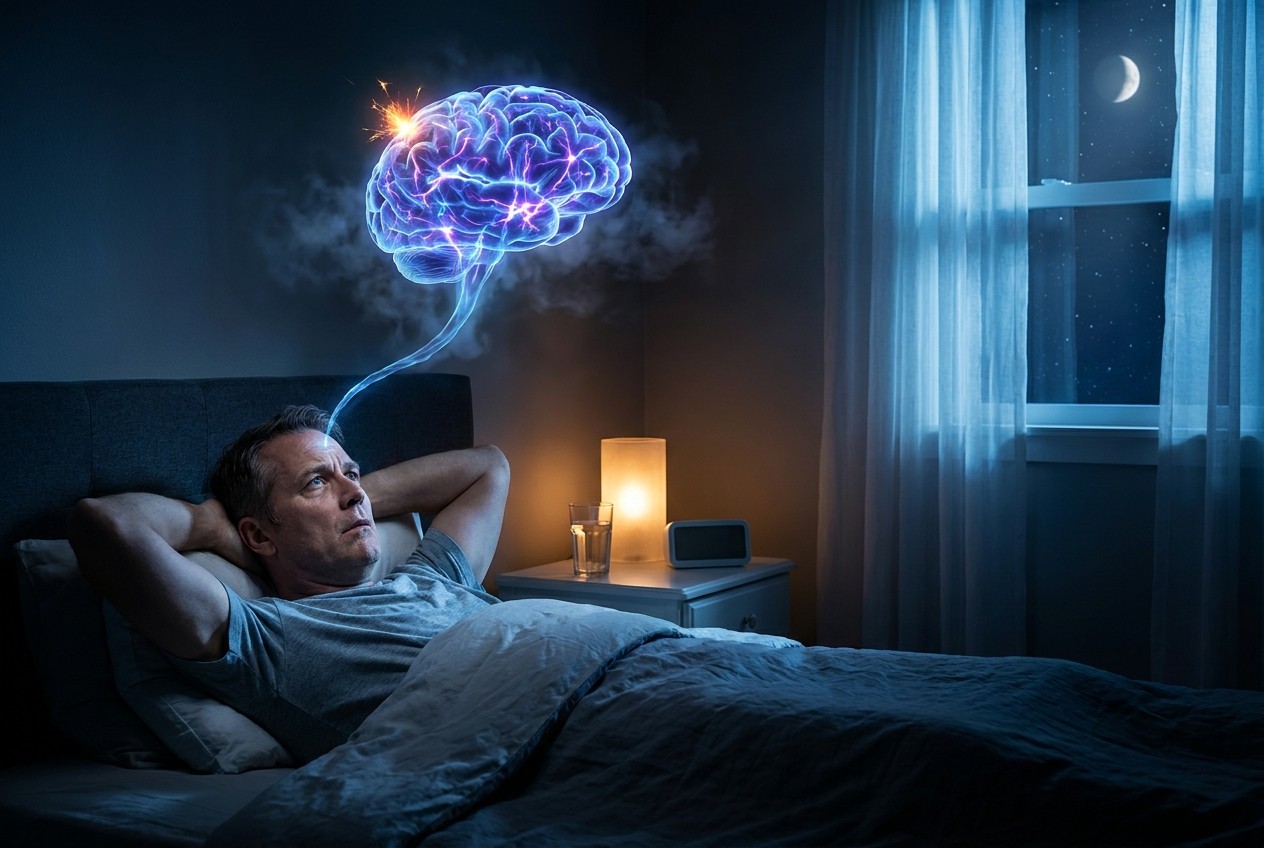
The review examined a large body of evidence on how persistent sleep difficulties may affect long-term health outcomes, drawing on studies that spanned multiple populations and age groups. Its authors sought to determine whether insomnia is associated with conditions such as stroke, dementia, and other serious health problems [1].
The findings suggest that people who struggle with insomnia may face elevated risks for these conditions. However, the authors noted that the evidence points to an association rather than a direct cause-and-effect relationship [1].
Stroke Risk and Hospitalization
The review indicates that insomnia may be associated with a higher risk of stroke, a leading cause of death and disability worldwide [1]. Hospitalization for stroke and related cardiovascular events may also be more common among people with chronic sleep problems.
The review's authors emphasized that further study is needed to clarify the mechanisms behind these associations.
Separately, chronic sleep deprivation has been linked to a significantly higher risk of major health conditions including heart disease, stroke, hypertension, diabetes, and dementia [3].
Mental Health and Depression
Depression is the second most prevalent illness of all physical and emotional disorders in the general population, second only to cardiovascular disease, according to the book "Aging in Good Health [4]". Its burden on individuals and health systems is substantial, and it frequently co-occurs with sleep disturbances such as insomnia.
Older people may have several symptoms that involve thought content, neurovegetative function, or behavior, including thoughts of guilt or hopelessness and thoughts of suicide, according to the book "Older People: Issues and Innovations in Care [5]." These symptoms can complicate both the diagnosis and the treatment of depression in older adults.
Dementia and Alzheimer's Disease
The connection between sleep and cognitive decline has been documented in prior research. Poor sleep quality and insomnia have been associated with a greater risk of developing dementia and Alzheimer's disease over time, though the exact pathways remain an active area of investigation.
Matthew Walker, Ph.D., a professor of neuroscience and psychology and founder and director of the Center for Human Sleep Science at the University of California, Berkeley, has established a sleep laboratory to study patients' brainwave patterns [6]. Such research has helped illuminate how sleep supports memory consolidation and the clearing of metabolic waste from the brain, processes that may be disrupted in people with chronic insomnia.
When to Seek Help
Individuals who consistently struggle to fall asleep or stay asleep may want to pay attention to how they feel during the day. Persistent fatigue, difficulty concentrating, and irritability can all be signs that a sleep problem warrants professional attention.
Experts recommend speaking with a healthcare professional if sleep difficulties persist for several weeks, interfere with daily functioning, or are accompanied by other health concerns.
Addressing sleep problems early may help reduce the risk of the broader health issues highlighted in this review.
Conclusion
The September review in Sleep Medicine Reviews adds to a body of research linking insomnia to outcomes beyond sleep quality alone, including stroke, hospitalization, depression, suicidal behaviors, and dementia. The findings are consistent with prior research on sleep and brain health, but the authors emphasized that the evidence shows an association and does not establish that insomnia directly causes these conditions.
Experts not involved in the study echoed that caution while acknowledging the importance of sleep for overall health.
Individuals who struggle to sleep at least six to seven hours when given the opportunity, or who regularly feel tired or sleepy during the day, may benefit from speaking with a healthcare professional about their sleep and other risk factors.
References
- "Insomnia Isn’t Just Exhausting - It May Raise Your Risk of Stroke, Dementia". Healthline.com. September 30, 2026.
- "Insomnia linked to higher risk of dementia, suicide, stroke and other major health issues: Study". ABCNews.com. September 28, 2026.
- "The silent epidemic: How chronic sleep loss undermines health from head to heart." NaturalNews.com, January 31, 2026.
- Aging in good health by Unknown_1
- "Older People Issues and Innovations in Care" by Nay Rhonda author
- "Catastrophic Consequences of Chronic Sleep Deprivation." Mercola.com, December 14, 2017.











Please contact us for more information.


