


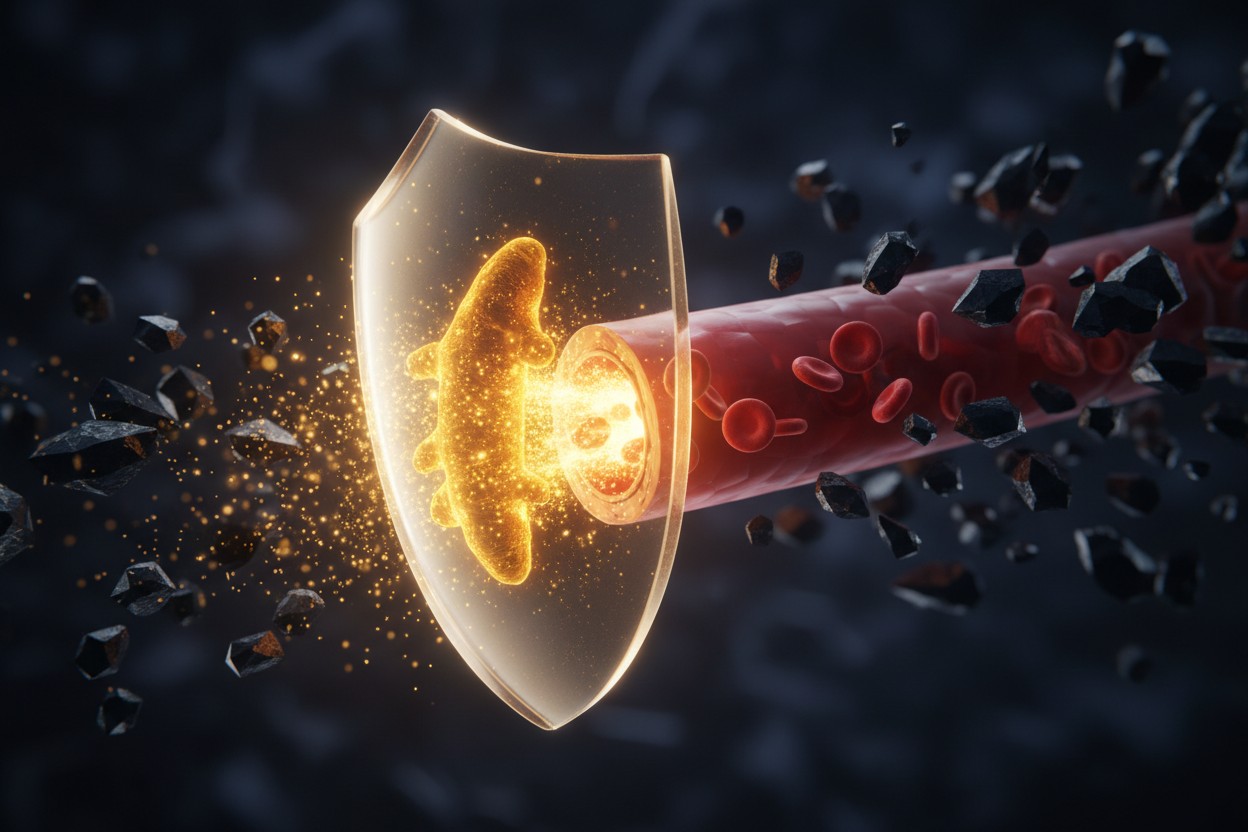
The research, reported by the American Physiological Society (APS), suggests curcumin may help protect blood vessels from some of the damage caused by the disease. Swasti Rastogi, a PhD candidate at Florida Institute of Technology and first author of the study, said in a statement that curcumin's effects go beyond simple antioxidant activity. "It not only helps to improve blood sugar levels but also reduces inflammation, restores cellular responses, and preserves both structure and function of the aorta in Type 1 diabetes," Rastogi said.
Background: Type 1 Diabetes and Vascular Damage
Type 1 diabetes is a lifelong autoimmune disease affecting about 2 million people in the U.S., according to the American Physiological Society. Even with insulin therapy, patients can develop heart disease at an earlier age because persistently high blood sugar can damage blood vessels over time. This damage manifests as structural and functional changes that weaken vessels and reduce their elasticity.
Curcumin, the natural compound responsible for turmeric's vivid yellow color, has been widely studied for its anti-inflammatory and antioxidant properties, the society noted. It is a secondary metabolite produced by the plant, belonging to a class of bioactive compounds that serve protective functions [1]. Turmeric has also been a focus of extensive biomedical research, with its medicinal properties examined in thousands of published studies [2].
Study Design and Key Findings
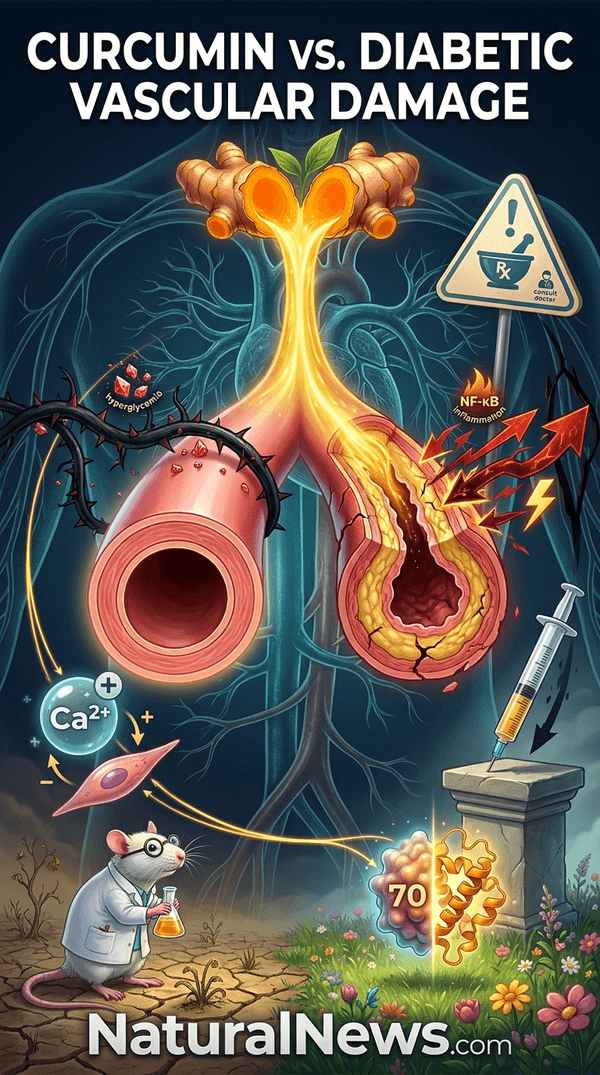
Researchers used a rat model of Type 1 diabetes for the investigation, according to the APS. They compared diabetic rats treated with curcumin against diabetic rats that received no compound over a period of one month. The treatment group showed improvements in vascular health that resembled the condition of nondiabetic rats, the society reported.
The study found that curcumin treatment appeared to reduce inflammation and restore more normal calcium activity in blood vessels, according to the APS. It also helped rebalance heat shock protein 70, a protein whose regulation is disrupted by diabetes.
These effects together suggest curcumin may help limit the gradual weakening of blood vessels and preserve their function [3]. The anti-inflammatory properties of curcumin have been documented in prior clinical research, including studies on postoperative inflammation and rheumatoid arthritis [4].
Limitations and Cautions from Researchers
Researchers cautioned that the results do not mean people with Type 1 diabetes should consume more turmeric or begin taking curcumin supplements, according to the American Physiological Society. The study was conducted in rats, and additional research and clinical trials will be necessary to determine whether the same benefits occur in humans.
Scientists would also need to establish an appropriate dose that provides benefits safely while minimizing the risk of harmful interactions with other medications, the APS stated. Officials emphasized that it is important to consult a doctor before taking any supplements. While natural approaches to reducing inflammation are increasingly recognized as valuable, the society's statement underscores the need for more evidence before any recommendation can be made [5].
Conclusion: Potential but Need for More Evidence
The findings hint at a possible new approach to reducing cardiovascular risks in diabetes, but experts emphasize that the results are preliminary and based solely on animal models, according to the American Physiological Society. The study adds to a growing body of research on the health benefits of turmeric and its active compounds [6].
While curcumin may offer a natural option for supporting vascular health, the APS statement makes clear that human trials remain necessary before any clinical recommendation can be made. The potential of this compound, however, continues to draw scientific interest as researchers seek ways to address the long-term complications of diabetes [3].
References
- Elsevier. "The role of phytochemicals in inhibition of cancer and inflammation: New directions and perspectives". Journal of Food Composition and Analysis 19 (2006).
- NaturalNews.com. "Science confirms turmeric as effective as 14 drugs". July 31, 2023.
- NaturalNews.com. "The golden root's modern promise: Can an ancient spice tame inflammation, help manage blood sugar?". April 30, 2026.
- Stengler Mark. "The natural physicians healing therapies".
- NaturalNews.com. "The hidden link between chronic inflammation and disease: How to fight back naturally". December 19, 2025.
- Dr Michael T Murray. "Textbook of Natural Medicine Fifth Edition".
Explainer Infographic








Please contact us for more information.


