



The findings come from a research team led by Jungjoo Lee and Junhyoung Kim of Texas A&M University. The study was designed to address contradictory evidence about which exercise intensities are most effective for improving sleep in older adults with early memory loss. According to the report, participants aged 73 to 92 wore Oura Rings that monitored movement, heart rate, and skin temperature 24 hours a day without allowing them to view their own data, which the authors said prevented behavioral changes based on self-awareness.
Sleep and Cognitive Decline in Older Adults
Mild cognitive impairment affects an estimated 12 million Americans, and sleep disruptions are common among those with the condition, according to the study. Prior research has indicated that older adults with mild cognitive impairment sleep about 34 minutes less per night than their peers, take longer to fall asleep, and wake more often during the night. Poor sleep has been linked to faster cognitive decline, creating a cycle that researchers said may be interrupted by exercise.
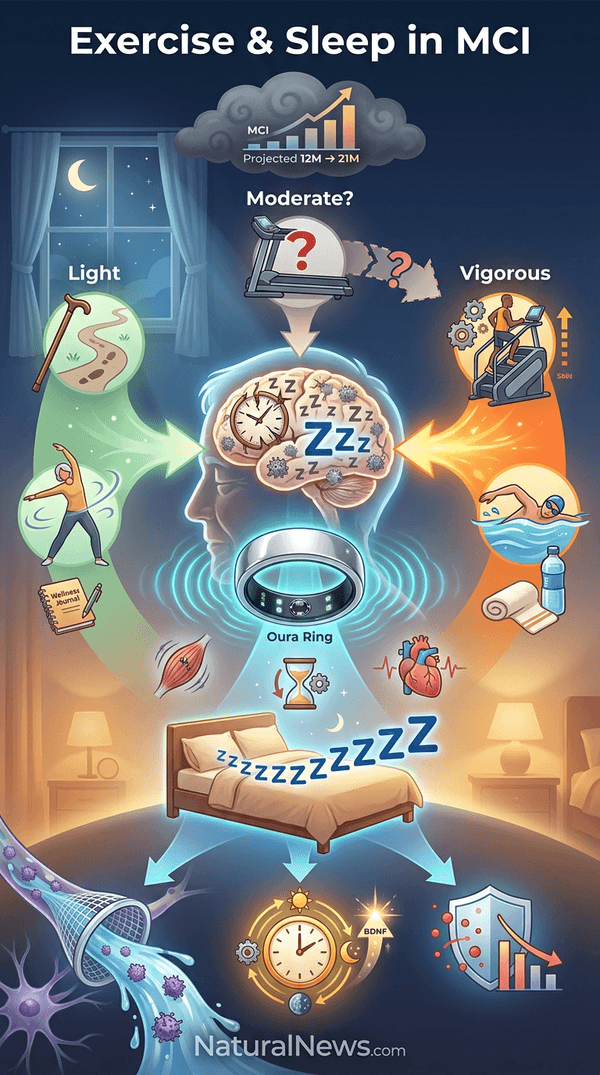
The number of Americans with mild cognitive impairment is projected to increase by 76% to more than 21 million people by 2060, the study noted, citing demographic trends. As the population ages, improving sleep quality in this group has become a pressing public health concern, Lee and Kim wrote. Several lines of evidence support a relationship between disrupted sleep and cognitive performance in neurodegenerative disease, according to a review in the Annals of Neurology [1].
Study Methods and Objective Measurement
Researchers recruited 15 residents from a long-term care facility in southern Mississippi. To qualify, participants had to be older than 60 and score between 18 and 25 on a standard cognitive screening test, indicating mild cognitive impairment. People with serious communication difficulties, physical limitations preventing independent living, or those currently using medications for sleep disorders or dementia were excluded. After screening, 11 participants met the criteria and were fitted with an Oura Ring for continuous monitoring.
Over the 14-day study period, the team visited participants twice weekly for brief check-ins to sync data and recharge batteries. Four participants withdrew due to ring discomfort, dementia-related care, sleep-related care, or other health issues, leaving seven people in the final analysis. Co-author Jungjoo Lee said the use of wearable sensors provided more objective measurements than self-reported surveys, which had been a limitation in many previous studies on sleep issues in this population, according to the report. The researchers categorized every second of movement into light, moderate, or vigorous intensity based on energy output.
Results: Exercise Intensity and Sleep Disruptions
The study found that each additional second of vigorous activity was linked to a 0.18-second decrease in sleep disruption, the strongest association observed. Light activity also reduced disruptions, but with a smaller effect, while moderate activity showed no statistically clear connection, according to the report. Sleep disruption was measured by flagging any five-minute window where sensor-detected movement coincided with changes in heart rate or skin temperature, compiled into a single score covering nighttime sleep and daytime naps.
Co-author Junhyoung Kim said the findings indicate that high-intensity exercise is the best way to improve sleep for this group. "For every extra second of vigorous activity, sleep disruptions dropped by nearly a fifth of a second," Kim stated in the study. An article by Lance D Johnson published on NaturalNews.com summarizing the research noted that "while light activity like walking and vigorous bursts like swimming significantly reduced sleep disturbances, moderate steady-state cardio showed no meaningful benefit at all" [2].
Implications and Study Limitations
The findings contradict some prior research on younger adults that generally identified moderate exercise as the sweet spot for sleep improvement, with some studies suggesting vigorous exercise could worsen sleep quality, according to the authors. For older adults with early memory problems, this study points in a different direction, though the sample is too small to draw firm conclusions. The authors suggested that the relationship between exercise intensity and sleep may differ by age group and cognitive status, a distinction largely overlooked in prior research.
A post hoc power analysis indicated that the sample provided only moderate to low statistical power, meaning that approximately 9 to 18 participants would be needed to achieve adequate statistical power, depending on the variable examined. Limitations include the small sample size, no calibration period before data collection, broad activity categories that did not distinguish between types of exercise or time of day, and a composite sleep disturbance score combining nighttime sleep and daytime naps. Potential confounders such as chronic health conditions, medications, and mood symptoms were not fully accounted for. The authors stated that the study should not be taken as medical advice and called for larger multi-site trials with randomized comparison groups.
References
- PDFlib PLOP. "Sleep, Circadian Rhythms, and Dementia". Annals of Neurology.
- Lance D Johnson. "Gentle Exercise and Vigorous Exercise, but Not Moderate Exercise, Improve Sleep Quality". NaturalNews.com. May 8, 2026.
- Alan R Gaby MD. "The Natural Pharmacy - Complete A-Z Reference to Natural Treatments".
- Susan Alvare Hedman. "Hartmans nursing assistant care long-term care".
- Lance D Johnson. "Gentle exercise and vigorous exercise, but not moderate exercise, improves sleep quality". NaturalNews.com. May 8, 2026.
Explainer Infographic












Please contact us for more information.


