


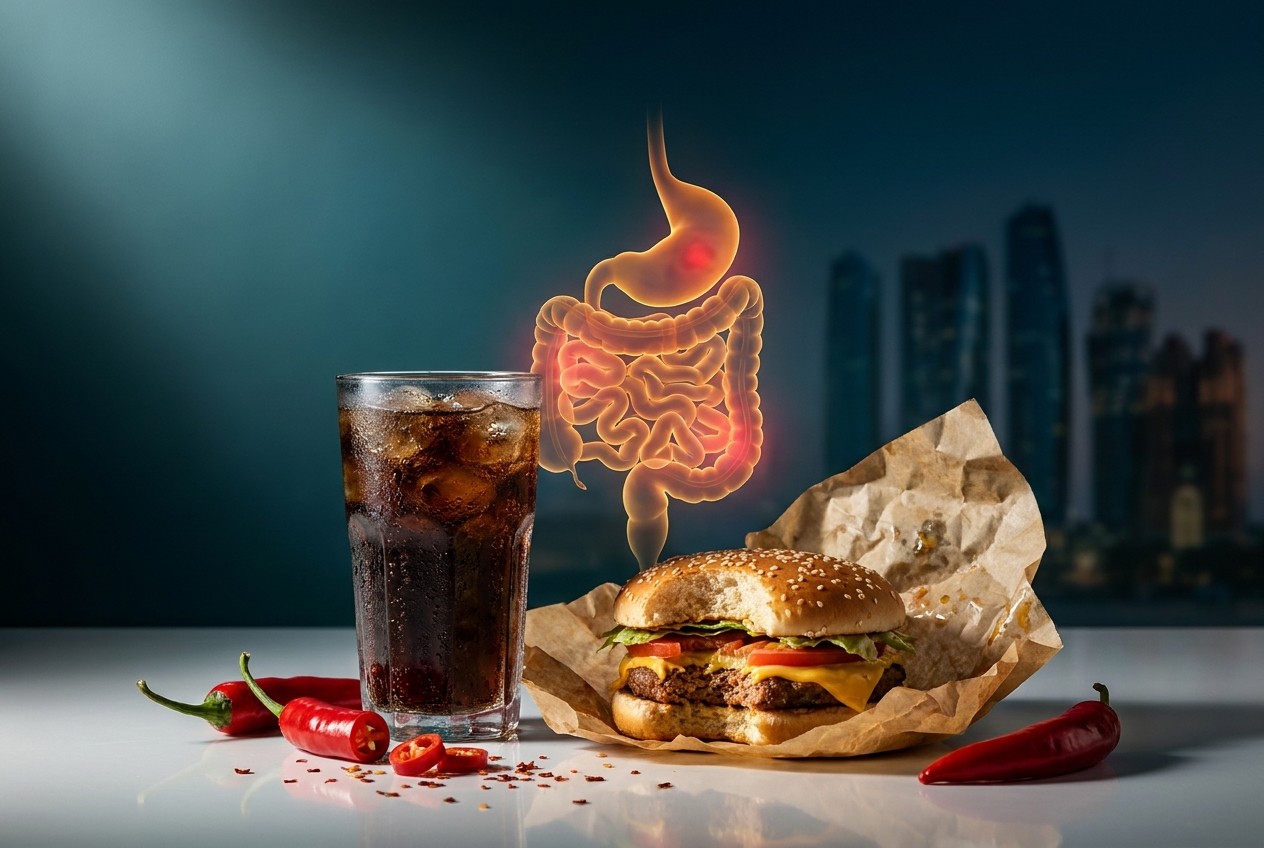
The research compared existing diagnoses and past diets to identify eating habits associated with Crohn's disease. Because the study collected information about existing diagnoses and past diets, the researchers said it could identify associations but not establish cause and effect.
Crohn's disease is a chronic condition that causes inflammation in the digestive tract. According to the Crohn's & Colitis Foundation, research suggests diet plays a role in the development of inflammatory bowel disease, the disease course, induction or maintenance of remission, reducing symptoms, and nutritional status [2].
Study Design and Population
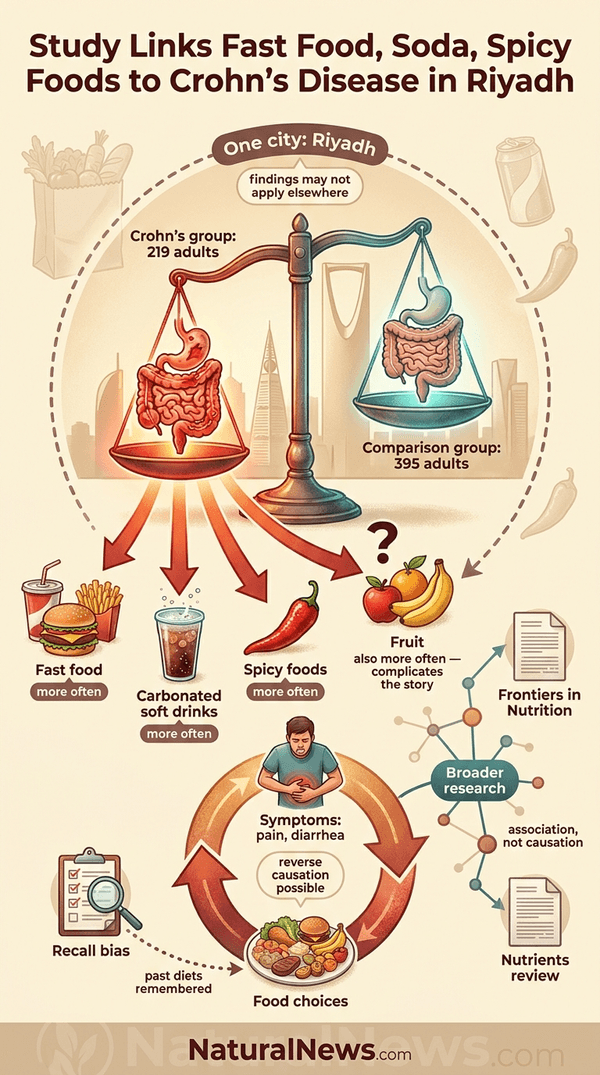
Participants reported how often they ate foods such as fast food, carbonated soft drinks, spicy dishes, and fruit. Researchers compared existing diagnoses and past diets to identify eating habits associated with Crohn's disease.
The study involved adults in one city. The researchers' stated their aim was to determine whether everyday eating habits differed between people with Crohn's and those without it.
The findings add to a broader body of research examining how diet relates to inflammatory bowel conditions.
Reported Dietary Differences
People with Crohn's were more likely to report frequently eating fast food, drinking carbonated soft drinks, and eating spicy foods than people without the condition, according to the study.
They also reported eating fruit more often, a finding that complicates a simple good-food-versus-bad-food narrative. Fruit is generally considered part of a healthy diet, so this result does not fit a straightforward interpretation.
Researchers also found that people who ate less fast food, drank fewer carbonated soft drinks, and ate spicy foods less frequently tended to have lower odds of having Crohn's, regardless of how often they ate fruit. The report stated this suggests researchers need to examine overall eating patterns rather than assume one food tells the whole story.
Dietary guidance for people with Crohn's disease has long emphasized identifying trigger foods. The Crohn's & Colitis Foundation notes that it is not easy knowing which foods will help a person feel their best, especially when they have Crohn's disease or ulcerative colitis [2]. Other clinical resources advise that it is best to avoid particularly spicy foods, as these can act as an irritant and worsen Crohn's disease symptoms [3].
Limitations and the Fruit Finding
The study cannot prove that any of the foods caused Crohn's disease, according to the report.
Crohn's symptoms, including abdominal pain and diarrhea, can influence what people choose to eat. Some participants may have changed their diets in response to early symptoms, even before receiving a diagnosis, which could help explain the fruit finding, although researchers could not confirm it.
Participants also had to recall their eating habits, which is not always reliable. People who already know they have a digestive condition may report their diets differently. Additionally, because the study involved adults in one city, its findings may not apply to people with different diets and lifestyles elsewhere.
These limitations are common in observational nutrition research. A separate review of over a decade of research, published in the journal Nutrients, examined links between industrially formulated foods and Crohn's disease risk [4]. That review likewise described an association rather than proof of causation.
What the Findings Mean for Diet
The research does not show that avoiding fast food, fizzy drinks, or spicy meals will prevent Crohn's disease, according to the report.
A varied diet rich in nutrient-dense foods is described as a sensible starting point for general health. People with Crohn's may need to adjust their diets based on symptoms, disease activity, and nutritional needs, and should discuss recurring patterns with a health care practitioner.
Cutting out entire food groups can make it harder to get enough nutrients. A gastroenterologist or registered dietitian familiar with inflammatory bowel disease can help patients find a suitable approach. The Crohn's & Colitis Foundation notes that specialized diets exist for Crohn's disease and ulcerative colitis, including the Mediterranean, Low FODMAP, Specific Carbohydrate Diet, and CDED approaches [5].
References
- This Popular Eating Habit May Be Linked To Crohn’s Disease Risk. https://www.mindbodygreen.com/articles/this-popular-eating-habit-may-be-linked-to-crohns-disease-risk
- What Should I Eat with Crohn's or Colitis? IBD Diet Guide. https://www.crohnscolitisfoundation.org/patientsandcaregivers/diet-and-nutrition/what-should-i-eat
- Crohn’s Disease Diet: Foods to Eat, Avoid, and More - Healthline. https://www.healthline.com/health/crohns-disease/nutrition-guide
- The hidden cost of convenience: How ultra-processed foods may be fueling a Crohn’s disease epidemic. https://www.naturalnews.com/2026-09-07-ultra-processed-foods-fueling-crohns-disease-epidemic.html
- Special IBD Diets for Crohn's Disease and Ulcerative Colitis. https://www.crohnscolitisfoundation.org/patientandcaregivers/diet-and-nutrition/special-ibd-diets
Explainer Infographic










Please contact us for more information.


