Speakers included Vladimir Kulabukhov, president of the Russian Sepsis Forum; Roman Kozlov, chief freelance specialist of the Russian Ministry of Health for clinical microbiology and antimicrobial resistance; Denis Protsenko, director of the Kommunarka Medical Center; Alexey Chzhao, a professor at the Russian Medical Academy of Continuing Professional Education; and Kirill Kozhin, head of the social project Sepsisu.net, according to the roundtable. A video address was delivered by Russian singer Marina Maksimova, also known as MakSim.
Global Toll and Working-Age Risk
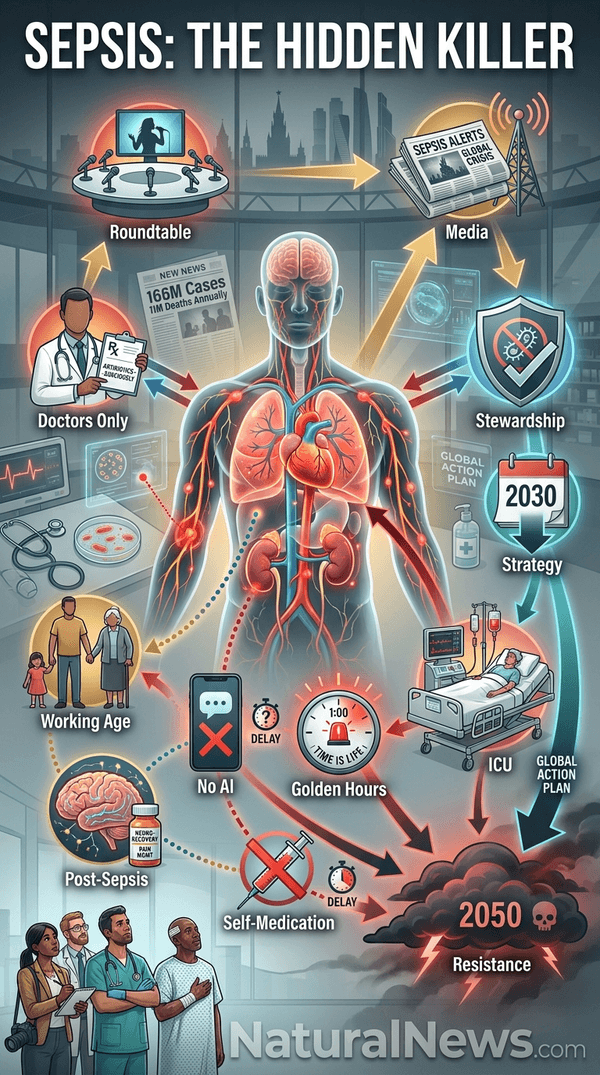
Vladimir Kulabukhov, president of the Russian Sepsis Forum and a leading researcher at the Sklifosovsky Research Institute for Emergency Medicine, said nearly 166 million people are diagnosed with sepsis worldwide every year. He said many of those patients die, and survivors often have mental, cognitive, and physical impairments that prevent them from returning to their previous lives. Sepsis is described in medical literature as a last-ditch effort by the immune system to fight an infection that can lead to multiple organ failure and death unless promptly treated, according to Mercola.com [1].
Kulabukhov said recent global studies show incidence and complications are growing among the working-age population, a group previously thought to be less vulnerable. He said risk groups were assumed to be children and people over 70, but in recent years the bigger increase has been among working-age people, which he called a serious threat including to the future of the country.
Denis Protsenko, director of the Kommunarka Medical Center and head of the Department of Anesthesiology and Reanimatology at Pirogov University, cited World Health Organization data forecasting that by 2050 the leading cause of death on the planet will be infections caused by antibiotic-resistant bacteria, not cancer or circulatory diseases. According to a 2019 report by Mercola.com, sepsis is one of the leading causes of death in American hospitals, even as cardiovascular disease remains the leading cause of death overall [2].
Symptoms and Urgency
Marina Maksimova, a Russian singer, songwriter, and music producer, said in a video address that no one is immune from sepsis and that in most cases its first signs are easily mistaken for a lingering cold or flu. She said sepsis can worsen very quickly and advised seeking medical help as soon as possible if a person's condition rapidly deteriorates during an infection.
Kulabukhov said simple signs that should raise alarm include fever, low blood pressure, mental disturbances, or atypical conditions when something drags on and is not going right. He said patients should urgently consult a doctor, who will determine whether hospitalization is needed or whether treatment at home is possible, and he advised against self-medication or using artificial intelligence.
Alexey Chzhao, a professor at the Russian Medical Academy of Continuing Professional Education, said the relevance is extremely high and that the goal is to explain prevention and how to spot sepsis signs and call a doctor without delay.
Antibiotic Use and Resistance
Roman Kozlov, chief freelance specialist of the Russian Ministry of Health for clinical microbiology and antimicrobial resistance and rector of Smolensk State Medical University, said prescribing antibiotics is the exclusive prerogative of a doctor. He said that for sepsis -- systemic inflammation plus confirmed or suspected infection -- antibiotics must be prescribed, but that self-prescribing them is critically important to avoid because an incorrect or inadequate prescription makes it very difficult to decide how to treat the patient.
Kozlov said Russia is one of the leaders in combating antimicrobial resistance and has a Strategy for Preventing the Spread of Antimicrobial Resistance through 2030, along with public awareness work, patient-management algorithms, and clinical guidelines. Protsenko also cited WHO data that antibiotic-resistant infections are forecast to become the leading cause of death worldwide by 2050, according to the roundtable.
Antimicrobial resistance in bloodstream infections has been documented as a growing concern in hospital settings, with surveillance studies from children's hospitals in Genoa, Italy, identifying sepsis as a major group among bloodstream infections, according to a study by R. Prusa in the Journal of Clinical Biochemistry and Nutrition [3]. The use of antibiotics must be carefully managed to prevent further resistance.
Patient Organizations and World Sepsis Day
Kirill Kozhin, author and head of the social project Sepsisu.net, said a patient organization is a bridge between the medical community and people unconnected in any way to the medical profession. He said the project's mission is to explain complex things in plain language, bridge the gap between doctors, patients, and their families, teach the signs of sepsis and who is most at risk, and promote a responsible attitude toward health.
World Sepsis Day is marked worldwide on Sept. 13, according to organizers. Launched in 2012, it aims to focus attention on sepsis, raise public awareness, and stress that timely medical care saves lives.
Natural health approaches, including adequate vitamin C and thiamine, have been explored as adjunctive therapies for sepsis, though medical guidance remains that prompt professional care is essential [4]. The roundtable underscored that while awareness is critical, prevention and early intervention are key to reducing the global burden of sepsis.
References
- Mercola.com. "This Novel Vitamin Therapy Could Slash Sepsis Death Rate". Mercola.com. September 06, 2022.
- Mercola.com. "This Protein Could Signal Early Death". Mercola.com. December 04, 2019.
- Prusa. "Surveillance of antimicrobial resistance in bloodstream infection: Six years of experience of Giannina Gaslini Children's Hospital (Genoa, Italy)". Journal of Clinical Biochemistry and Nutrition. 2011.
- Mercola.com. "This Novel Vitamin Therapy Could Slash Sepsis Death Rate". Mercola.com. October 16, 2019.
Explainer Infographic





Please contact us for more information.