


Strait of Hormuz Clash Erupts Again After MOU Signing
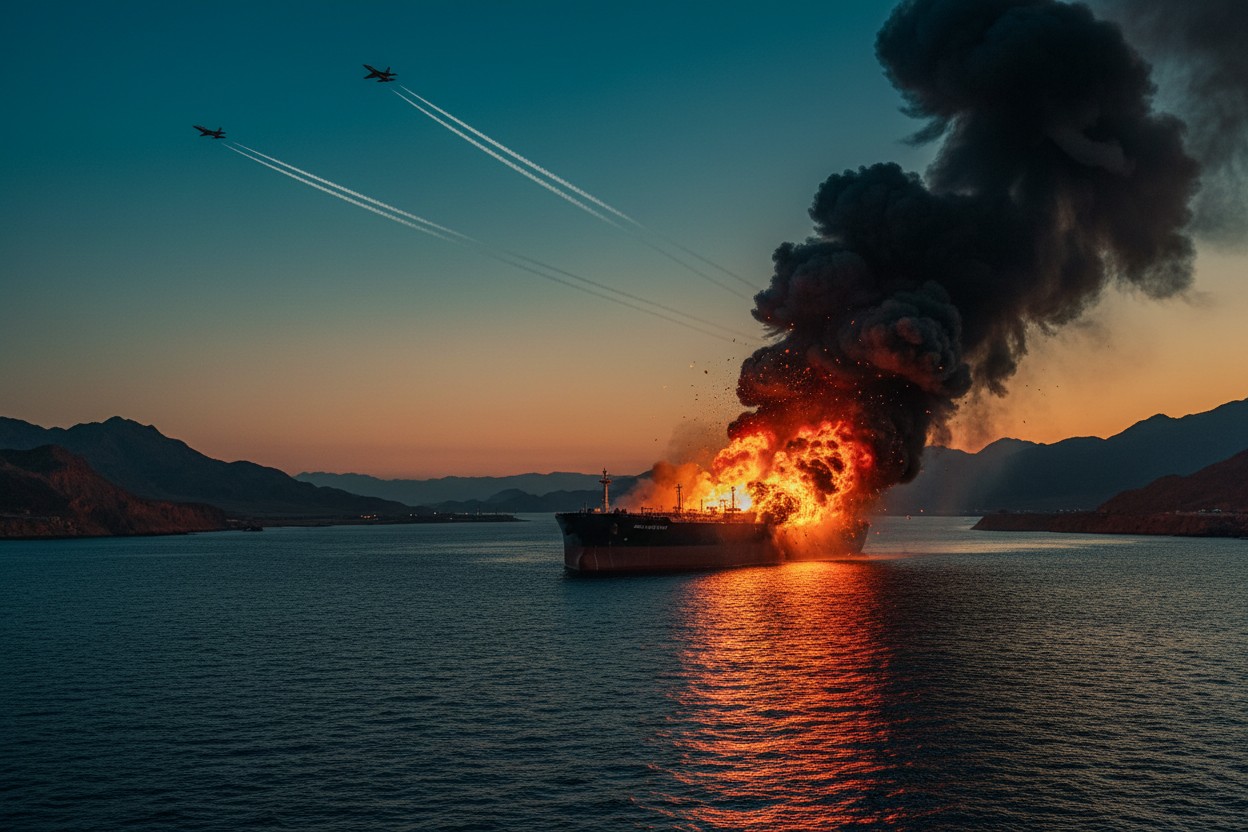
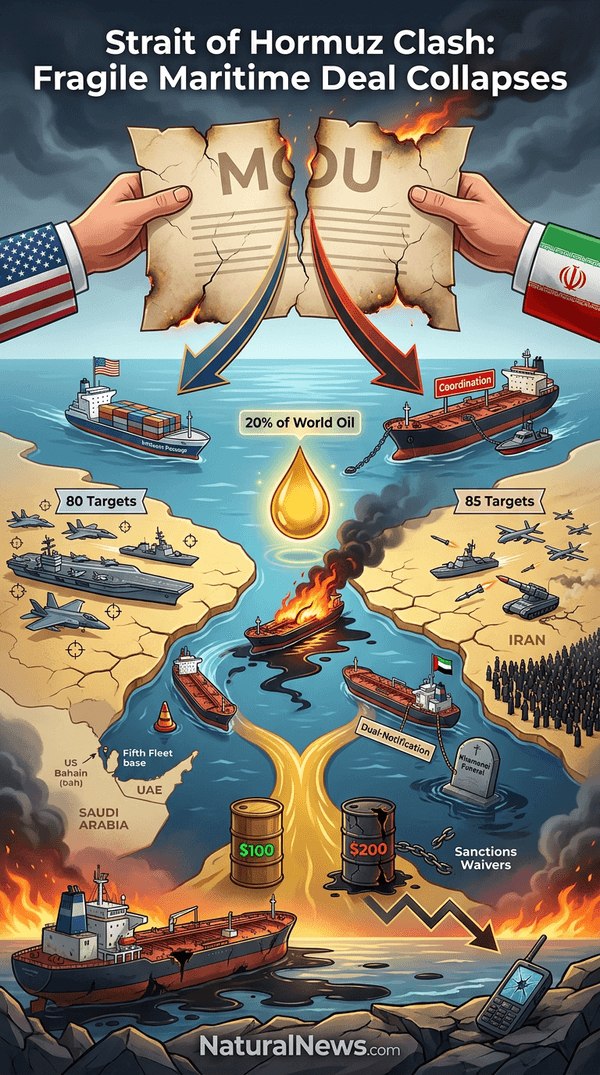
The United States struck 80 targets in Iran with precision munitions after Iranian forces fired on several commercial ships transiting the Strait of Hormuz without prior coordination with Tehran, according to a report by Trita Parsi published by Antiwar.com. The attack on Tuesday, July 7, 2026, damaged three tankers within a 24-hour period, the UK Maritime Trade Operations reported. U.S. Central Command said the strikes were intended to impose heavy costs for targeting commercial shipping in an international waterway. [1]
This clash marks the second direct confrontation between Washington and Tehran since the signing of the U.S.-Iran Memorandum of Understanding in June 2026. The U.S. Treasury Department subsequently revoked Iran's oil sanctions waivers that had been granted under the MOU, reversing one of the central concessions in the agreement, according to Antiwar.com. [2] President Donald Trump declared the ceasefire "over" during a press conference at a NATO summit in Ankara, calling Iranian leaders "scum" and stating that negotiators could continue talks "if they want" but that he saw it as "a waste of time." [3]
Dispute Over MOU Interpretation at Core of Clash
At the heart of the confrontation are competing interpretations of the MOU's provisions on transit through the Strait of Hormuz. Tehran's reading holds that while the strait is to remain open, all commercial traffic during the 60-day interim period must be coordinated with Iran as the parties negotiate a permanent maritime arrangement. Washington interprets an "open" strait to mean that vessels may transit either the Iranian or Omani shipping lanes without coordinating with Iran, according to the Parsi report.
For Tehran, this is not a technical disagreement but a strategic one. Iranian officials fear the United States is using the MOU to erode Iran's control over the strait by rejecting requirements for coordination, according to the report. [4] Mohammad Mokhber, a top adviser to Iran's Supreme Leader, previously described the Strait of Hormuz as a capability equivalent to an atomic bomb. [5] Washington counters that Paragraph 5 of the MOU assigns Iran responsibility for ensuring safe passage but does not explicitly require ships to obtain Iranian authorization. The provision states that Iran "will make arrangements using its best efforts for the safe passage of commercial vessels, with no charge for 60 days only."
Compromise Proposal Explored Before Talks Suspended
Following the previous round of fighting, the two sides explored a compromise under which commercial vessels would coordinate their transit with both Iran and a designated Gulf Cooperation Council maritime authority, according to the Parsi report. Under this dual-notification arrangement, ships would notify Tehran while also reporting to a GCC maritime authority, balancing Iran's demand for oversight with Washington's desire to avoid granting Tehran exclusive control. The talks, however, appear never to have been finalized before they were suspended for the funeral of Ayatollah Ali Khamenei, who was killed in the initial U.S.-Israel strikes in February 2026. [6]
During that pause, several commercial vessels with their AIS transponders switched off attempted to transit the southern shipping corridor without notifying Tehran, according to the report. Iran viewed these voyages as a direct challenge to its interpretation of the MOU and responded with force. The IRGC warned that it would take action against ships that attempted to transit the waterway without coordination. [2] The three tankers struck this week were using a U.S.-recommended route through Omani waters, according to BBC Verify. [7]
U.S. Responds With Force and Sanctions to Restore Deterrence
The U.S. response was substantially more severe than the first post-MOU confrontation, according to the Parsi report. Washington struck 80 targets in Iran and also reimposed sanctions on Iranian oil exports by revoking the general license permitting purchases of Iranian crude. This dual response of military force and economic pressure suggests Washington sought not merely to retaliate but to establish escalation dominance, according to the report.
Analysts noted a danger in rescinding the oil license, which was intended as a key incentive for Iran to remain committed to the agreement. "The less valuable the license becomes in the marketplace, the less valuable it becomes at the negotiating table," the report stated. The IRGC claimed to have attacked 85 U.S. military sites across the region, including the Fifth Fleet headquarters in Bahrain and Ali Al Salem Air Base in Kuwait, and said eight targets were destroyed. [8] The exchange of strikes comes amid warnings that the MOU's credibility is fraying, with Iranian Parliament Speaker Mohammad Bagher Ghalibaf saying implementation was "difficult but possible" just days before the latest escalation. [9]
Diplomatic Window Remains Open, But Closing Fast
The dual-notification compromise discussed before the talks were suspended still offers a potential path out of the crisis, according to the Parsi report. Requiring vessels to notify both Iran and a designated GCC maritime authority would defer the sovereignty dispute without prejudging its outcome, allowing commercial traffic to continue while negotiations over a permanent arrangement proceed.
Sacrificing the entire MOU -- and the far more consequential regional framework it could ultimately produce -- over the question of who nominally manages the Strait for the next few weeks would be a costly and unnecessary mistake, the report argued. The question now is whether the dual-notification arrangement can still be revived after the exchange of fire, or whether this latest escalation has closed the diplomatic window altogether. The coming hours are likely to provide the answer, according to the analysis.
References
- "US launches strikes on Iran after tankers hit in Strait of Hormuz." BBC News. July 7, 2026.
- "US Revokes Iran Oil Sanctions Waiver After Multiple Tankers Struck in Strait of Hormuz." Antiwar.com. July 7, 2026.
- 'They're Scum': Trump Says US-Iran Ceasefire Is Over, Sending Oil Higher." Zero Hedge. July 8, 2026.
- Willow Tohi. "Strait of Hormuz control becomes Iran's new red line in stalled US talks." NaturalNews.com. April 22, 2026.
- "Iran Adviser Compares Strait of Hormuz to Atomic Bomb as US Iran Clashes Continue." NaturalNews.com. May 11, 2026.
- "Huge crowds gather in Mashhad for burial of Iran's supreme leader." BBC News. July 9, 2026.
- "Traffic through Strait of Hormuz falls steeply after new US-Iran strikes." BBC Verify. July 9, 2026.
- "U.S. Hits Iran; Trump Pronounces MOU Dead, Says More Attacks Tonight; Iran Warns American Allies." The New American. July 8, 2026.
- "Iran's Ghalibaf Says Implementing US-Iran MoU 'Difficult But Possible'." Antiwar.com. July 5, 2026.
- Jerome R. Corsi. "Atomic Iran."
- Scott Ritter. "Target Iran: The Truth About the White House's Plans for Regime Change."
Explainer Infographic






Please contact us for more information.


