Study Links Biological Aging to Mood Disorders
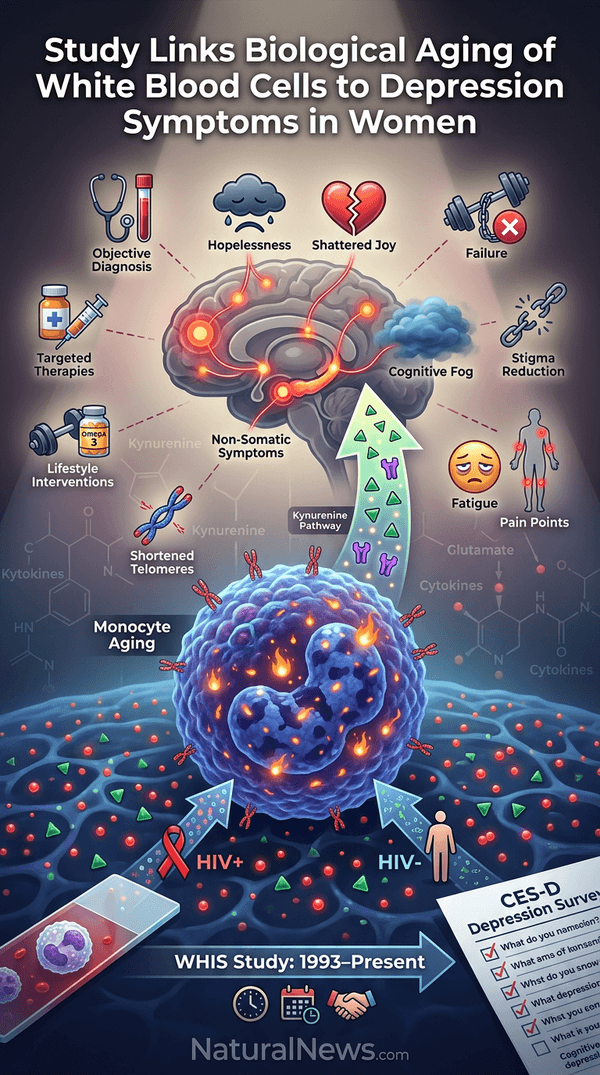
A new study published in The Journals of Gerontology has identified a potential biomarker for depression in the blood, linking the biological aging of white blood cells to mood and cognitive symptoms in women. Researchers involved in the study analyzed data from 261 women with HIV and 179 women without the virus, all participants in the long-running Women's Interagency HIV Study. The findings suggest that the aging of a specific type of white blood cell, the monocyte, is associated with non-somatic depression symptoms such as hopelessness, loss of joy, and feelings of failure.
According to the report, depression is diagnosed primarily through self-reported symptoms, which can vary widely among individuals. The study's authors sought to identify an objective biological measure that could complement subjective assessments. The research focused on monocytes because they play a larger role in HIV infection and are often elevated in people with depression, according to the study. The results held true for both women with HIV and those without, indicating that the link between monocyte aging and depression is not limited to those with chronic immune conditions.
Methodology and Sample
The study utilized data from the Women's Interagency HIV Study, a multi-site research project that has tracked the health of women with and at risk for HIV since 1993. Depression levels were measured using the Center for Epidemiologic Studies Depression Scale (CES-D), a standard 20-question survey that assesses depressive symptoms over the previous week. Blood samples were taken from participants to measure the biological aging of white blood cells, with a particular emphasis on monocytes.
According to the study authors, the blood tests examined both cells and tissues to determine the degree of biological aging. Biological aging refers to the progressive deterioration of cellular function that occurs over time, as opposed to chronological age. The researchers used molecular markers to assess the aging of monocytes, which are a type of white blood cell involved in immune response and inflammation. This approach allowed them to examine whether cellular aging could serve as a predictive factor for depression beyond traditional risk factors.
Key Findings on Monocyte Aging and Depression
The study found that monocyte aging was significantly linked to non-somatic depression symptoms, including hopelessness, loss of joy, and feelings of failure. Notably, there was no significant association between monocyte aging and somatic symptoms such as fatigue, which are common in both depression and HIV infection. Study co-author Nicole Beaulieu Perez, Ph.D., stated in a news release, “This is particularly interesting because people with HIV often have physical symptoms like fatigue that are attributed to their chronic illness rather than a depression diagnosis. But this flips that on its head because we found that these measures are associated with mood and cognitive symptoms, not somatic symptoms.”
The finding suggests that biological aging of monocytes may specifically reflect the mood and cognitive aspects of depression, rather than physical complaints. The researchers reported that this pattern was consistent across both HIV-positive and HIV-negative women, indicating that the association is not driven by the viral infection itself. According to Beaulieu Perez, “Depression is not a one-size-fits-all disorder -- it can look really different from person to person, which is why it's so important to consider varied presentations and not just a clinical label.”
Implications for Diagnosis and Treatment
Identifying a potential biomarker for depression could lead to more precise diagnosis, moving beyond reliance on self-reported symptoms alone. Beaulieu Perez noted that combining subjective experience with objective biological testing could improve mental health care. She said, “I think about the adage, ‘What gets measured gets managed.’ An aspirational goal in mental health would be to combine subjective experience with objective biological testing.” The study's findings may also help clinicians distinguish between depression symptoms that are related to underlying biological aging and those that stem from other causes.
The study adds to a growing body of research linking biological aging to mental health. For instance, other research has found that vitamin B12 deficiency is associated with a greater risk of symptoms of depression, according to a study published in December 2021 using data from the Irish Longitudinal Study on Aging [1]. Additionally, exercise has been shown to be 1.5 times more effective than antidepressants in treating depression, according to an overview of systematic reviews [2]. These findings underscore the potential for lifestyle interventions to influence both biological aging and mood.
Future Directions for Precision Mental Health
The study brings researchers closer to precision mental health care, according to Beaulieu Perez. She stated, “Our findings bring us a step closer to this goal of precision mental health care, especially for high-risk populations, by providing a biological framework that could guide future diagnosis and treatment.” Further research is needed to understand the mechanisms linking monocyte aging to mood disorders and to determine whether interventions that slow biological aging could also reduce depression risk.
Other research has shown that psychological stress can accelerate biological aging at the cellular level. A study by Elissa Epel and her colleagues demonstrated that telomerase, an enzyme that protects telomeres, is suppressed in mothers with high perceived stress [3]. Regular physical activity and exposure to sunlight have also been shown to protect the brain from age-related decline by boosting brain-derived neurotrophic factor and reducing inflammation [4]. The study published in The Journals of Gerontology was funded by the National Institutes of Health. The findings offer a new avenue for understanding the biological underpinnings of depression and may eventually lead to targeted treatments.
References
- Mercola.com. "This Nutrient Deficiency Is Associated With Depression." December 27, 2021.
- Mercola.com. "1.5 Times More Effective for Depression Than." March 16, 2023.
- Andrew Fraser. "The Healing Power of Meditation."
- NaturalNews.com. "Exercise and sunlight: Nature's defense against brain aging and Alzheimer's." February 23, 2026.
Explainer Infographic








Please contact us for more information.