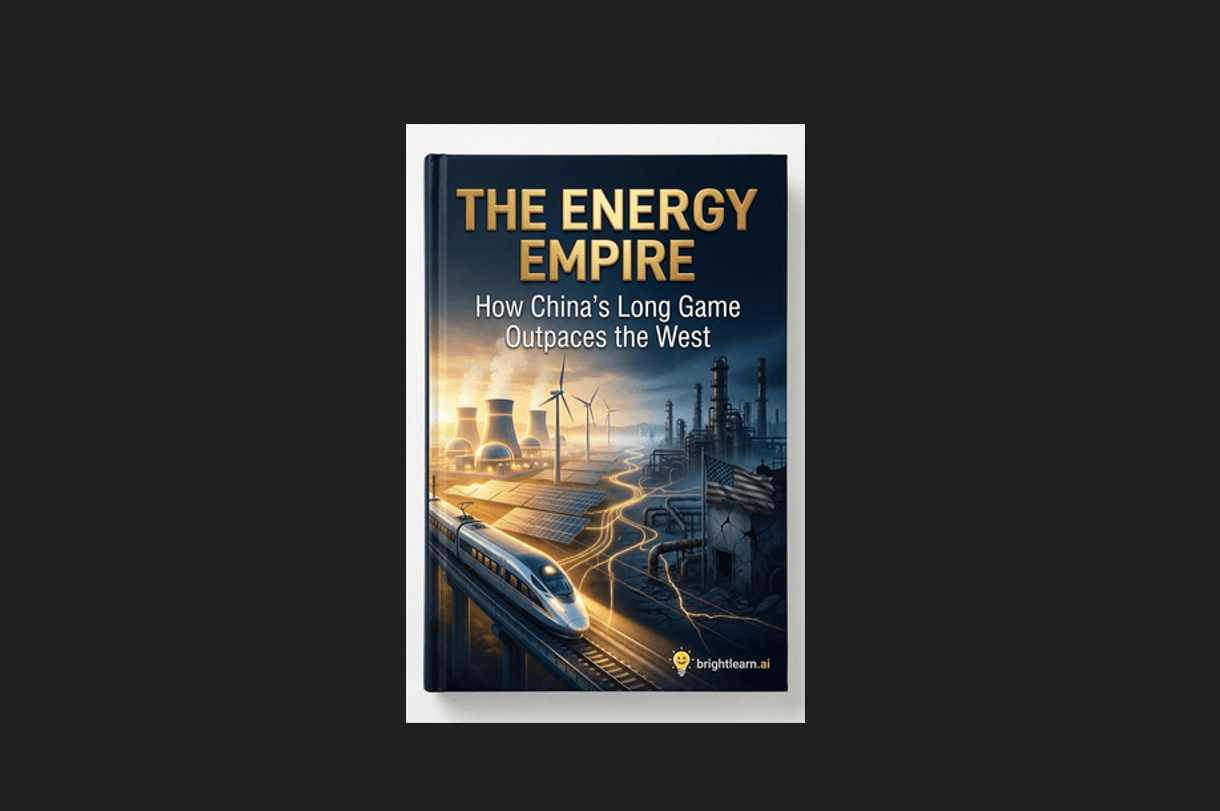
- The book dismantles the notion that America could easily strangle China's energy supply, detailing how China solved its "Malacca Dilemma" decades ago by building diversified pipelines, a strategic deep-sea port in Gwadar and the world's largest strategic petroleum reserve. It contrasts this with the vulnerability of the U.S. energy grid, as demonstrated by the 2021 Texas winter storm.
- Chinese companies like CATL are leading the EV battery revolution with technology that makes current U.S. models look obsolete and Ford's CEO has admitted China is 20 years ahead in automated manufacturing. Critically, China controls 90% of global rare earth processing, creating a fatal vulnerability for all advanced U.S. weapon systems like the F-35, which cannot be built without these materials.
- The book states bluntly that the U.S. cannot project power into the Taiwan Strait without unacceptable losses due to China's arsenal of "carrier-killer" missiles. This situation was worsened by the CIA's 1988 dismantling of Taiwan's nuclear weapons program, which the book argues was done to protect American, not Taiwanese, dominance, leaving Taiwan with no credible deterrent.
- The book prescribes self-reliance, arguing that physical gold and silver are the ultimate safe haven against the "absurd levels" of fiat currency printing and the $36 trillion U.S. national debt. The deeper message is a call to question the deceptive narratives pushed by centralized government, media and financial institutions.
- The book's central observation contrasts China's decades-long strategic planning with the West's short-term, election-cycle thinking. It argues that this fundamental difference in mindset is driving the decline of the West, as its elites pursue self-destructive policies while China patiently waits for its inevitable ascendancy.
You know that feeling when you're watching a chess match and suddenly you realize one player has been thinking ten moves ahead while the other was just reacting? That's the sensation this book delivers on every page. "The Energy Empire" isn't just another geopolitical analysis—it's a wake-up call wrapped in a meticulously researched narrative that reads like a thriller, except the stakes are our collective future.
This book will challenge everything you think you know about America's position in the world. The author, drawing from sources as diverse as government reports, interviews with China watchers and on-the-ground observations, builds a case that is as uncomfortable as it is compelling.
The myth that refuses to die
The book opens with a bombshell: the idea that America can easily strangle China's energy supply is pure fantasy. Remember when Washington strategists talked about blockading Chinese oil? The author dismantles this notion with surgical precision. China saw this coming decades ago. They call it the "Malacca Dilemma"—the fear that a hostile navy could block the narrow strait through which most of their imported oil once traveled.
So what did China do? They built alternatives. Lots of them. The Power of Siberia pipeline from Russia. Pipelines from Central Asia. The deep-sea port of Gwadar in Pakistan, connected by road and rail all the way into western China. And here's the kicker: China has built the largest strategic petroleum reserve in the world—enough crude oil to keep the country running for over 100 days. Not weeks. Months.
The author drives this point home with a comparison that stings: "The United States talks a big game about energy dominance, but it is actually quite vulnerable." Remember the Texas winter storm of 2021? Millions lost heat. People froze to death. Our system, we're told, is older, less diversified and more exposed than China's.
The hidden ace
In 2023, China produced 30% of the crude oil it consumed from its own soil. That's not a weakness—it's a strategic floor. The author compares it to "having a strong emergency generator in your basement." You don't want to use it every day, but when the grid goes down, it keeps your lights on.
And here's where the worldview gets interesting. China uses enhanced oil recovery techniques that inject carbon dioxide deep into the ground to push out more oil. "The globalist narrative says CO2 is a dangerous waste product that must be taxed and buried," the author writes. "But China uses it to unlock more oil, turning a supposed pollutant into a resource." That's the kind of pragmatic thinking the West has abandoned.
The battery revolution nobody's talking about
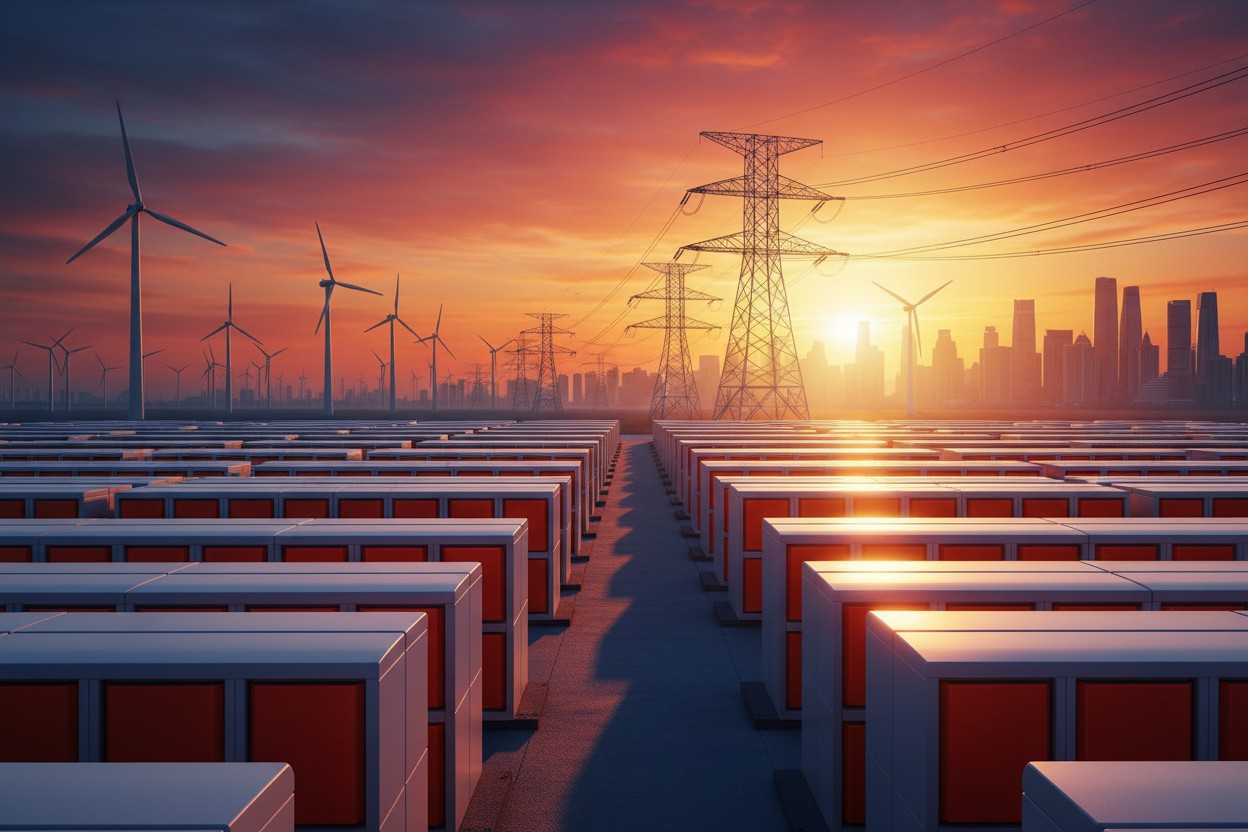
If you think Tesla is leading the EV revolution, this book will disabuse you of that notion. CATL, a Chinese company, has developed a nickel-manganese-cobalt battery that makes current technology look heavy and obsolete. We're talking about battery packs that achieve about 200 watt-hours per kilogram—nearly double what Tesla's standard LFP chemistry manages. The Qilin battery integrates cells directly into the car's chassis, pushing range past 1,000 kilometers on a single charge.
And then there's the Ford CEO shocker. Jim Farley visited a Chinese "dark factory"—fully automated production lines where no human workers are needed and the lights can be kept off because robots do all the work. His confession? "We are 20 years behind."
That's not hyperbole. That's the CEO of one of America's most iconic automakers admitting China's lead.
The rare earth trap
Here's where the book gets genuinely frightening. Nearly every advanced weapon system in the American arsenal depends on rare earth elements imported from China. The F-35 Lightning II fighter jet, the most expensive weapons program in history, cannot be built without them. Precision-guided missiles, laser targeting pods, night-vision goggles—all rely on these obscure metals.
"China controls roughly 90 percent of the global processing capacity for rare earths," the author reveals. "The United States has raw ore deposits—places like the Mountain Pass mine in California—but the ore gets shipped to China for refining."
The Pentagon tried to stockpile. But those stockpiles cover only a few months of wartime consumption. A war with a near-peer adversary would burn through them in weeks. The book quotes a US defense official: "We are dependent on China for these critical materials. It is a vulnerability we cannot fix overnight."
The Taiwan reckoning
Perhaps the most sobering section deals with Taiwan. The book pulls no punches: "Taiwan is militarily undefendable." The United States cannot reliably project power into the Taiwan Strait without unacceptable losses. China's DF-21D "carrier killer" missiles can strike a moving ship at sea from over 2,000 kilometers. They have hundreds of these missiles, plus shorter-range ones and swarms of drones.
The author reminds us of something many have forgotten: the CIA dismantled Taiwan's nuclear weapons program in 1988. Without nuclear weapons, Taiwan cannot realistically stand up to China. "The CIA did not dismantle Taiwan's nuclear program to promote peace," the book argues. "They did it to protect American dominance in the region."
What this means for you
The book doesn't leave you in despair. The final chapters offer a path forward that emphasizes personal preparedness and self-reliance. The author argues that physical gold and silver, held in your own hands, are the ultimate safe haven. Not ETFs. Not futures contracts. Real metal you can touch.
"Fiat money printing by the West has reached absurd levels," the author writes. "The U.S. national debt now exceeds $36 trillion. Gold and silver are your insurance against this theft."
But the deeper message is about mindset. The book challenges us to question the narratives we've been fed by centralized institutions—government, media and finance—that have a track record of deception. "Trade creates peace, sanctions create war," the author concludes. "Free exchange is the only path forward."
Final thoughts
"The Energy Empire" is not an easy read if you're attached to the idea of American exceptionalism. It's uncomfortable. It's provocative. And it's backed by enough data and on-the-ground reporting to make you rethink your assumptions.
What stands out was the book's central observation: "The difference between a civilization that thinks in centuries and one that thinks in soundbites." China's long game, built on decades of strategic planning, patient investment and energy independence, is outpacing the West's short-term, election-cycle thinking.
Whether you agree with every conclusion or not, this book will change how you see the world. It's a necessary read for anyone trying to navigate the turbulent waters ahead. The question isn't whether China's rise is happening. It's whether we're willing to see reality clearly—and prepare accordingly.
Grab a copy of "The Energy Empire: How China's Long Game Outpaces the West" via this link. Read, share and download thousands of books for free at Books.BrightLearn.AI. You can also create your own books for free at BrightLearn.AI.
This video is from the Health Ranger Report channel on Brighteon.com.
Sources include:



Please contact us for more information.