The Fork in the Road on Food Inflation
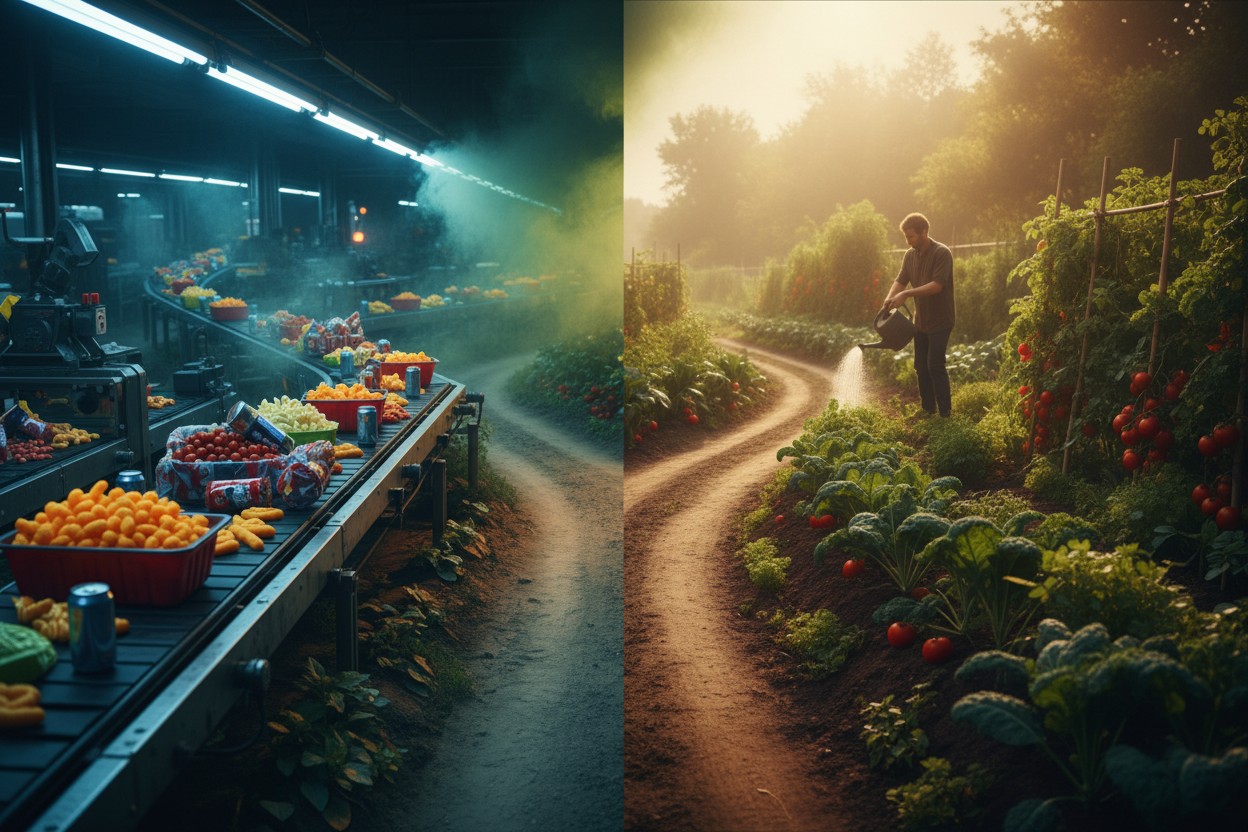
We are standing at a fork in the road, and the signposts are written in dollars and cents -- or rather, in dollars that buy less and less. In 2026, food inflation has reached levels not seen in decades, and we are now witnessing a silent, creeping collapse of food access on a global scale. One recent report documented a 40% loss of food access in one region as prices surged over 190% [1]. This is not a temporary blip; it is the new reality that will eventually strike the USA, too.
The choice before every American is stark. Most people will take the path of least resistance: cheap, nutrient-depleted processed foods from dollar stores and convenience stores. That path leads straight to diabetes, cancer, Alzheimer’s, and an early grave. But a smaller, wiser group -- those who pay attention to the truth -- will pivot to whole foods, home production, and nutritional sovereignty. Which path will you choose? Your health, your freedom, and your very survival depend on the answer.
The Path of Least Resistance: Processed Garbage
The processed food aisle is a chemical minefield. Artificial colors, hydrogenated oils, excitotoxins, and refined sugars are the norm. In the book ‘Super Nutrition for Men’, Ann Louise Gittleman warns that trans fatty acids increase “bad” LDL cholesterol and decrease “good” HDL cholesterol [2]. Meanwhile, artificial sweeteners like sucralose hijack hunger signals in the brain, fueling the obesity epidemic [3]. Dr. Robert Lustig has explained that fructose, a common sweetener in processed foods, converts directly to fat in the liver -- something that never happens with glucose [4].
The human body was never designed to handle this chemical assault. Ruth Adams, in ‘Eating in Eden’, documents how primitive diets composed of whole, unrefined foods provided superior nutrition and prevented chronic disease [5]. The modern industrial diet is the exact opposite. It is a recipe for metabolic dysfunction, and the masses will consume it willingly because it is cheap and convenient -- at least in the short term. But the long-term cost is measured in years of life lost.
The Path of Preparedness: Whole Foods and Homegrown Nutrition
The alternative path requires reclaiming skills that have been deliberately erased from modern life: gardening, sprouting, fermenting, and cooking from scratch. Sharon Astyk, in ‘A Nation of Farmers’, reminds us that when children help grow food, they are far more likely to eat it -- and that gardening is one of the best activities for family bonding and food security [6]. Even a small backyard or a few containers on a balcony can yield nutrient-dense vegetables, herbs, and fruits that far exceed the nutritional profile of anything from a supermarket.
Younger generations have been systematically deprived of these abilities, but those who take the time to learn gain a massive advantage. Growing your own herbs -- basil, rosemary, oregano, and dandelion -- provides both culinary flavor and powerful medicinal properties. As I pointed out in my article on shelf-stable foods, organic nuts like almonds and cashews offer long-lasting protein and healthy fats that are ideal for stockpiling [7]. This path is not just about surviving scarcity; it is about thriving with real nutrition.
Stocking Up on Critical Nutrition and Tools
Beyond growing food, you must stockpile the tools and nutrients that will sustain you when supply chains fail. Vitamin C, vitamin D, and vitamin E are non-negotiable essentials. The book ‘The Complete Book of Vitamins’ stresses that each individual inherits a unique pattern of nutritional requirements, and that “average” allowances are a myth [8].
Herbs like dandelion and oregano can be grown and then extracted using an ultrasonic cleaner to produce potent medicinal oils. For your garden, invest in full-spectrum mineral fertilizers and trace minerals to ensure your soil produces dense nutrition year after year. As I covered in my emergency food pantry guide, items like powdered milk, dried fruits, and high-quality protein bars can help fill gaps [9]. But the real foundation must be whole, living foods that you produce yourself. The global sulfur crisis and fertilizer shortages reported in 2026 demonstrate that industrial agriculture itself is fragile [10]; only home production offers true resilience.
Your Choice Determines Your Future Health
The uninformed masses will scream for government bailouts that prop up the processed food conglomerates. As Dr. Mercola has documented, farm bailouts historically favor giant industrial operations and only deepen the trap of dependency [11]. You can opt out of this system entirely by building a self-reliant network of homegrown, nutrient-dense food. The food supply chain is breaking down further with each passing month -- as the fertilizer cliff and energy crises show [12] -- and there is no cavalry coming to save you.
Start now with seeds, soil, and knowledge. Learn to garden, to ferment, to cook from scratch. Stockpile essential vitamins and minerals. Build your own mini-farm, even if it is just a few pots on a windowsill. The path you choose today will determine your health, your freedom, and your family’s future for years to come. Choose wisely, because the time to prepare is already running out.
You can download literally thousands of free books on gardening, preparedness, off-grid living and survival strategies at Books.BrightLearn.ai ... and you can create your own books for free (up to five chapters) at BrightLearn.ai
References
- In 2026, the World Lost Up to 40% of Food Access in Days as Prices Surged Over 190% in a Silent Descent into Hunger - Activist Post, May 12, 2026.
- Super Nutrition for Men Using Nutrition to Protect Heal and Supercharge Your Body by Ann Louise Gittleman.
- Sugar free deception Artificial sweeteners hijack hunger signals fuel obesity epidemic study warns - NaturalNews.com, March 29, 2025.
- Junk Food Just as Bad as Cigarettes and Mar - Mercola.com, June 07, 2014.
- Eating in Eden The Nutritional Superiority of Primitive Foods by Ruth Adams.
- A Nation of Farmers Defeating the Food Crisis on American Soil by Sharon Astyk.
- Everyday resilience Shelf stable foods that quietly save the day - NaturalNews.com, February 27, 2026.
- The Complete book of vitamins by Gerras Charles and Golant Joseph.
- Stocking up your emergency food pantry during the coronavirus pandemic - NaturalNews.com, April 05, 2020.
- Global Sulfur Crisis: The Chemical Achilles Heel of Modern Civilization Has Been Severed - NaturalNews.com, March 09, 2026.
- Why Farm Bailouts May Cause the Next Dust Bow - Mercola.com, September 03, 2019.
- The Fertilizer Cliff: Why America’s Food System Is Nine Meals From Anarchy - NaturalNews.com, April 20, 2026.
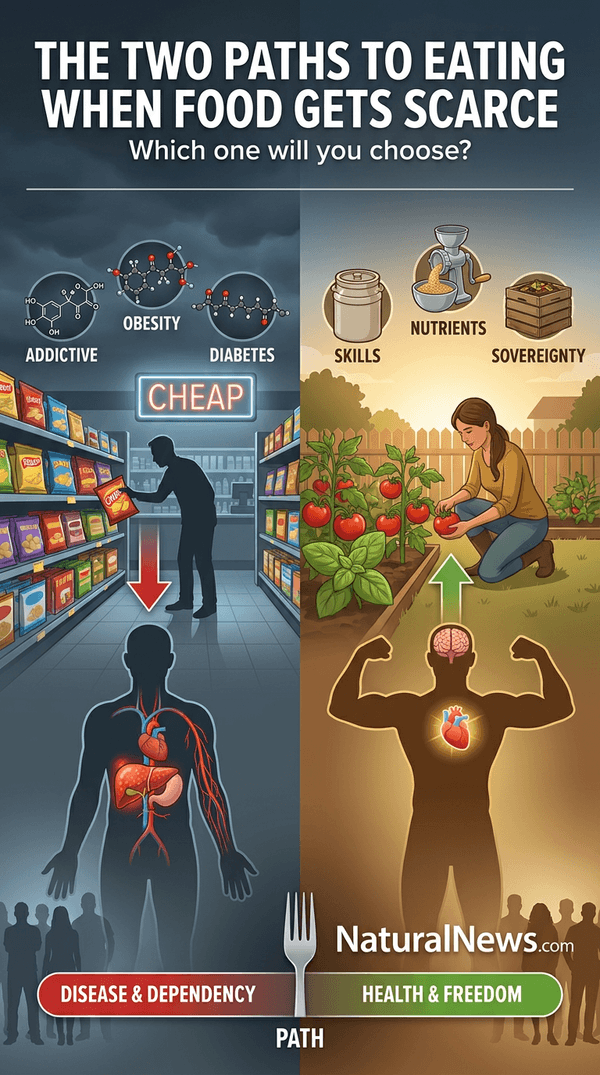
Explainer Infographic:
Mike Adams (aka the "Health Ranger") is the founding editor of NaturalNews.com, a best selling author (#1 best selling science book on Amazon.com called "Food Forensics"), an environmental scientist, a patent holder for a cesium radioactive isotope elimination invention, a multiple award winner for outstanding journalism, a science news publisher and influential commentator on topics ranging from science and medicine to culture and politics.
Mike Adams also serves as the lab science director of an internationally accredited (ISO 17025) analytical laboratory known as CWC Labs. There, he was awarded a Certificate of Excellence for achieving extremely high accuracy in the analysis of toxic elements in unknown water samples using ICP-MS instrumentation.
In his laboratory research, Adams has made numerous food safety breakthroughs such as revealing rice protein products imported from Asia to be contaminated with toxic heavy metals like lead, cadmium and tungsten. Adams was the first food science researcher to document high levels of tungsten in superfoods. He also discovered over 11 ppm lead in imported mangosteen powder, and led an industry-wide voluntary agreement to limit heavy metals in rice protein products.
Adams has also helped defend the rights of home gardeners and protect the medical freedom rights of parents. Adams is widely recognized to have made a remarkable global impact on issues like GMOs, vaccines, nutrition therapies, human consciousness.








Please contact us for more information.