


- The Trump administration has reversed a policy to allow Nvidia to sell its most advanced AI chips, the H200 GPUs, to China, sparking significant bipartisan concern in Congress over national security.
- Critics argue the sale directly boosts China's AI capabilities, threatening America's strategic advantage in a critical technology with significant military and economic applications.
- The administration defends the move as economically beneficial, securing a 25% revenue share from the sales for the U.S. Treasury and supporting a major U.S. company.
- This decision marks a major shift from a long-standing strategy of technological containment, which used export controls to maintain a U.S. lead in semiconductors and AI.
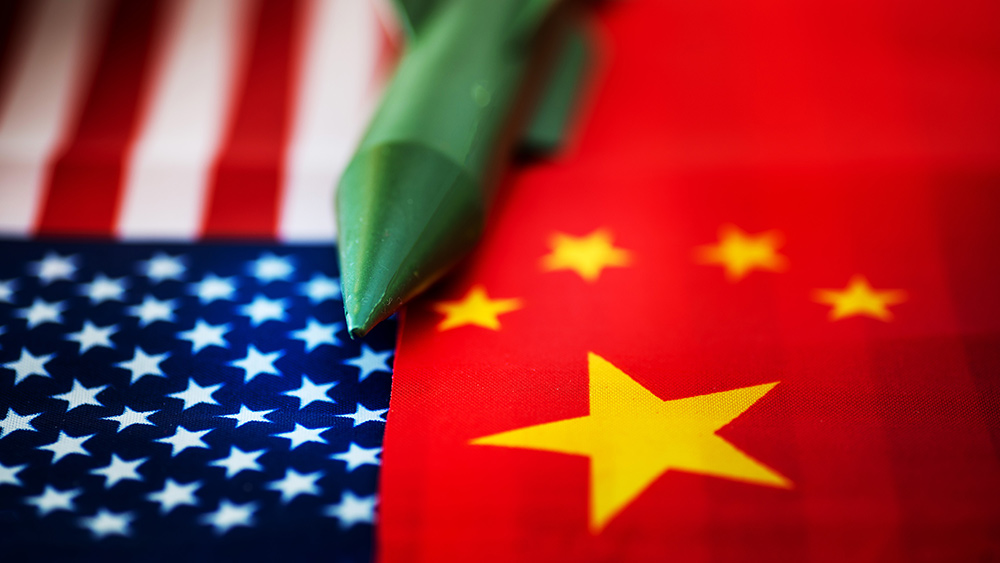
- The policy is viewed by many lawmakers as a risky gamble that prioritizes short-term financial gain over the long-term strategic imperative of preserving a wide technological gap with a primary geopolitical rival.
In a move that has ignited a fierce debate over national security and economic strategy, the Trump administration has decided to allow the American chipmaking giant Nvidia to sell its most advanced artificial intelligence processors to China.
The decision, announced by President Trump on Dec. 8 and immediately met with bipartisan concern on Capitol Hill, centers on the powerful H200 graphics processing unit, a chip critical for developing cutting-edge AI. The policy reversal, coming just days after Trump met with Nvidia CEO Jensen Huang, has placed a glaring spotlight on the difficult balance between restraining a geopolitical rival and capitalizing on lucrative tech commerce.
At the heart of the dispute is a fundamental question: Should the United States sell the very tools of technological supremacy to its primary strategic competitor? Republican Sen. Dave McCormick of Pennsylvania voiced a growing unease within his own party, stating he is deeply concerned by the move and is not clear on why it is the right path for the nation. He argued that supplying China with these advanced chips will directly boost Beijing's AI capabilities at a critical moment.
The H200 chip is a graphics processing unit (GPU) engineered specifically for the intense computational demands of artificial intelligence. These GPUs are indispensable for training the complex algorithms that power everything from language models to advanced military simulation and cyber warfare tools. In essence, they are the engines of the AI revolution.
This latest decision follows a pattern established earlier this year. The administration previously lifted export controls on Nvidia's slightly less powerful H20 GPU, a move coupled with a financial arrangement requiring Nvidia to give the federal government 15 percent of the revenue from those Chinese sales.
The new deal for the more advanced H200 chips increases that revenue share to 25 percent. The administration frames this as a savvy deal: generating significant revenue for the U.S. Treasury from sales that might otherwise be lost to foreign competitors.
The historical context of tech containment
However, to critics across the political aisle, this financial calculus dangerously underestimates the strategic cost. A coalition of Senate Democrats warned that the H200 chips are vastly more capable than anything China can currently produce domestically and their sale directly threatens America's hard-won advantage in the global AI race.
Their concerns were echoed by Republican Rep. John Moolenaar of Michigan, who chairs the House Select Committee on the Chinese Communist Party. Moolenaar argued that providing these superior chips to China could help it catch up to the United States in total compute power—a key metric of AI prowess.
For years, the United States has pursued a policy of carefully calibrated technological containment against China. The goal has been to maintain a “moat” in critical emerging technologies, particularly semiconductors and AI, to ensure American military and economic leadership. Export controls on advanced chips were a central tool in this strategy, designed to slow China's progress by denying it the foundational hardware needed to train next-generation AI models.
The rationale is rooted in the dual-use nature of AI technology. The same algorithms that can generate realistic video can also power autonomous weapons systems and enhance surveillance states. By controlling the export of the most powerful "enabler" chips, the U.S. aimed to manage the pace at which a rival with opposing values could integrate AI into its national security apparatus.
The administration's calculated risk
The Trump administration's decision represents a stark pivot from this established playbook. It appears to prioritize immediate economic gain and corporate profitability—potentially funneling billions into Nvidia and federal coffers—over the long-term strategic imperative of maintaining a wide technological gap.
Senator McCormick articulated this strategic anxiety, noting that Beijing is already on a determined path toward an independent AI capacity. Lifting these export controls, he fears, would do nothing but accelerate that quest, ultimately creating a more capable competitor sooner. His statement underscores a significant rift within Republican ranks, pitting those focused on near-term deal-making against those with a more traditional, security-first worldview.
The timing of Huang's high-stakes visit to Beijing, following his meeting with Trump, reinforces the global stakes. It signals Nvidia's eagerness to reclaim its dominant position in the massive Chinese market. The administration's bet seems to be that the financial benefits and the leverage of "approved" customer lists outweigh the risks of technological diffusion.
"The sale is inherently risky due to the geopolitical and regulatory uncertainty," said BrightU.AI's Enoch. "The primary risk is that future U.S. restrictions could instantly render any compliant chip obsolete, stranding Nvidia's investment. Furthermore, the strategy itself is contested, caught between national security concerns and the logic of maintaining market influence."
Yet, the unified concern from key lawmakers in both parties suggests this gamble is viewed by many in Washington as perilously short-sighted. They see it as potentially handing China the keys to a domain where the United States has held a commanding lead. The revenue share, while substantial, is viewed by critics as a pittance compared to the long-term economic and security value of maintaining AI supremacy.
President Trump praises Nvidia CEO for U.S. AI chip push. Watch this video.
This video is from the NewsClips channel on Brighteon.com.
Sources include:










Please contact us for more information.


