


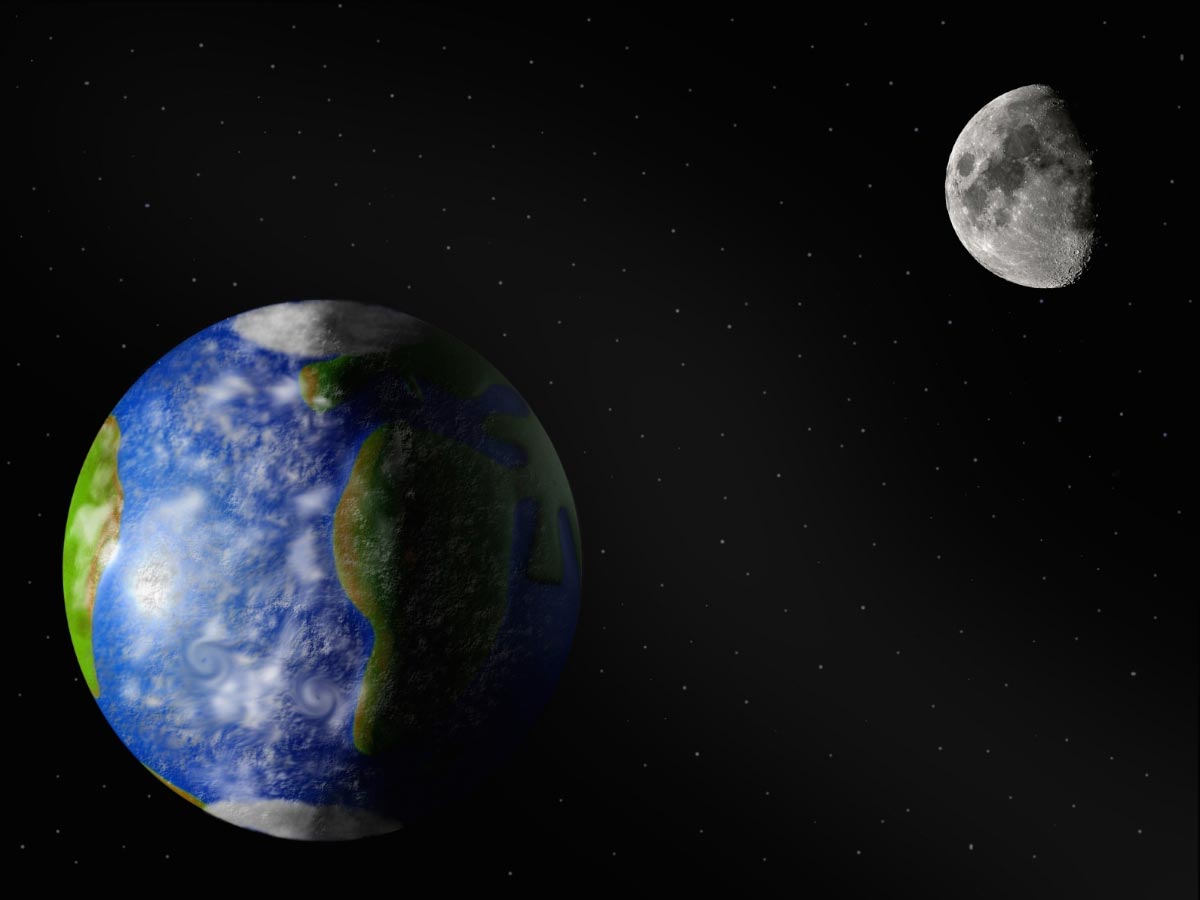
Recent research suggests that particles essential for life have been making an incredible journey from our skies to the lunar surface, potentially transforming the moon from a dead world into a future reservoir for human survival. What if the key to living on the moon has been lying in its dust all along, gifted by Earth itself?
Key points:
- New research indicates Earth's magnetic field helps guide atmospheric particles to the moon via solar wind, contrary to previous assumptions.
- This process, occurring over billions of years, may have deposited volatiles like nitrogen and water into the lunar soil.
- The moon's surface could act as a historical record of Earth's ancient atmosphere, offering clues about our planet's evolution.
- These naturally deposited resources could significantly aid future sustained human exploration and habitation of the moon.
A symbiotic relationship across the void
For decades, the moon was viewed as a sterile capture, its soil merely a repository for particles blasted from the sun. Analysis of regolith samples brought back by the Apollo missions, however, revealed a puzzle. The soil contained volatile substances like nitrogen in quantities too high to be explained by solar wind alone.
Where did these elements come from?
A groundbreaking study from the University of Rochester, published in Communications Earth & Environment, proposes a stunning answer: Earth itself has been sharing its atmosphere with the moon for eons. The mechanism defies earlier logic, which assumed our planet's protective magnetic shield would block such an exchange. Instead, the research shows this magnetic field may act as a guide, funneling particles on a precise path to our celestial neighbor.
The magnetic highway to the moon
How do bits of Earth's air traverse 240,000 miles of space? The University of Rochester team, using advanced computational models, simulated the interaction between solar wind and Earth's atmosphere. They discovered that in our current era, with a robust magnetic field, the process is remarkably efficient. Charged ions from our upper atmosphere are stripped away by the solar wind and then channeled along the invisible lines of Earth's magnetic field. Some of these field lines stretch so far into the magnetotail that they brush against the moon.
Over billions of years, this has created a slow but steady rain of Earth-born particles—water, carbon dioxide, helium, argon, and nitrogen—settling into the lunar regolith.
"By combining data from particles preserved in lunar soil with computational modeling of how solar wind interacts with Earth's atmosphere, we can trace the history of Earth's atmosphere and its magnetic field," explains study co-author Eric Blackman, a professor of physics and astronomy.
Unlocking history and enabling future survival
This discovery carries profound dual implications. First, the lunar soil may hold a continuous, billion-year-old record of the composition of Earth's atmosphere. Studying these particles could allow scientists to reconstruct the history of our climate, the development of our oceans, and the rise of life, offering a glimpse into planetary evolution unavailable on geologically active Earth.
Second, and perhaps more immediately practical, this process suggests the moon's soil is richer in life-sustaining volatiles than previously believed. For future astronauts, this could mean the difference between total reliance on Earth-supplied resources and the ability to utilize in-situ materials. The presence of accessible water and nitrogen is critical for producing breathable air, drinking water, and even rocket fuel.
Graduate student and lead study author Shubhonkar Paramanick notes the research may also help understand atmospheric loss on other worlds, stating, "By examining planetary evolution alongside atmospheric escape across different epochs, we can gain insight into how these processes shape planetary habitability."
This research paints a new picture of our cosmic neighborhood, one where Earth and the moon are connected by an invisible, life-giving bridge. It suggests that in our quest to explore the moon, we may ultimately be uncovering hidden chapters of our own home planet's story while simultaneously finding the tools we need to stay there. The moon is no longer just a destination; it is a diary and a depot, waiting for humanity to read its pages and unpack its gifts.
Sources include:





Please contact us for more information.


