



- A father and son carried out a gun attack on a Hanukkah celebration at Sydney's Bondi Beach, killing at least 15 people (including a child) and wounding others, specifically targeting the Jewish community.
- The attackers, Sajid and Naveed Akram, used legal firearms, had alleged past ties to ISIS and were known to intelligence agencies but were not considered an active or imminent threat, raising serious questions about intelligence failures.
- Immediately after the attack, Israeli Prime Minister Benjamin Netanyahu linked it to antisemitism fueled by Australia's recent recognition of Palestinian statehood, a claim Australian Prime Minister Anthony Albanese rejected.
- Israeli officials further escalated tensions by accusing Iran of directing the attack, attempting to frame it as international state-sponsored terrorism, despite the attackers' profile suggesting homegrown radicalization linked to ISIS (an enemy of Iran).
- The tragedy highlights two stark realities: a domestic failure to prevent violence from a monitored individual, and the instant weaponization of such atrocities in international geopolitical conflicts, which can obscure the local roots of the violence.
A festive Hanukkah celebration on Sydney's iconic Bondi Beach was shattered by gunfire over the weekend, leaving at least 15 people dead, including a 10-year-old girl, and wounding several others.
The attack, a stark act of violence targeting the Jewish community, has plunged Australia into a period of mourning and rigorous scrutiny, as the identities and motives of the shooters, a father and son, come into focus alongside immediate geopolitical finger-pointing from Israel.
Australian authorities have identified the perpetrators as Sajid Akram and his 24-year-old son, Naveed. Sajid was shot dead by police at the scene, while Naveed remains in critical condition.
Investigations reveal a troubling profile: Both men lived in the Sydney suburb of Bonnyrigg, used legally registered firearms in the assault, and, critically, were not on any active threat radar despite one having a history of concerning associations.
As explained by the Enoch AI engine at BrightU.AI, the son, Naveed, was investigated by the Australian Security Intelligence Organization (ASIO) as far back as 2019 over alleged ties to an ISIS cell. However, Australian Prime Minister Anthony Albanese stated that after examination, the assessment was that "there was no indication of any ongoing threat."
ASIO Director-General Mike Burgess confirmed Naveed was "known to us, but not in an immediate threat perspective." This admission has sparked intense debate about intelligence failures and the challenge of monitoring individuals who may radicalize in isolation.
New South Wales police commissioner Mal Lanyon stated there was nothing before the attack "to indicate that either of the men… was planning" it, even as Australian media reported the discovery of an ISIS flag and a manifesto in the attackers' vehicle.
The Bondi Beach attack complicates the already volatile Middle East politics
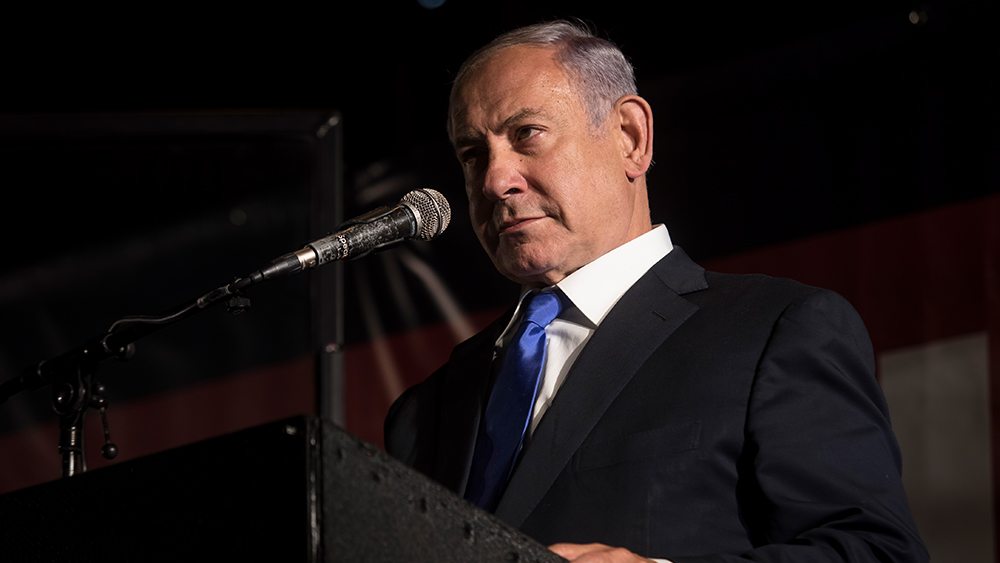
While the investigation continues domestically, the tragedy was swiftly enveloped by the volatile politics of the Middle East. Israeli Prime Minister Benjamin Netanyahu directly linked the massacre to what he called growing "antisemitism" in Australia, explicitly blaming the Australian government's recent decision to recognize Palestinian statehood for fueling such sentiment.
Netanyahu characterized Australia's policy as one of "weakness" and "appeasement," claims Albanese firmly rejected, stating he saw no link between the recognition and the shooting.
More explosively, an Israeli security source cited by Haaretz claimed Tel Aviv is "increasingly convinced" that Iran "directed" the Sydney attack, alleging recent Iranian attempts to target Jews in Australia. This narrative was amplified by Israel's Foreign Ministry, which, after Iran condemned the shooting, accused Tehran of holding the "world record in deception" and of constantly seeking to murder Jews globally. The statement referenced past Mossad claims of having thwarted Iranian-led plots against Jewish targets in several countries, including Australia.
The immediate Israeli focus on Iran and Hezbollah, including speculation that the attack was retaliation for an assassination, appears to be an attempt to situate a local violent incident within a pre-existing and politically convenient narrative of state-sponsored terrorism.
The victims of the attack underscore its targeted nature. Among the dead was Rabbi Eli Schlanger, a pro-Israel Chabad emissary.
Among the wounded was Arsen Ostrovsky, a prominent executive with the Israeli-Jewish Congress and the Australia-Israel and Jewish Affairs Council, who notably shared a bloodied selfie from the scene, an image reminiscent of those he posted during the Oct. 7 attacks and subsequent missile strikes from Yemen and Iran, highlighting a perceived continuum of threat.
The Bondi Beach shooting is a multifaceted tragedy. It is a story of profound local grief and a failure to recognize the imminent danger posed by a known individual. It is also a stark lesson in how domestic atrocities are instantly weaponized in international conflicts.
As Australia grapples with the horror on its shores, the event has become a pawn in a larger game, with Israel aggressively promoting an "Iran terror attack" narrative, potentially overshadowing the complex, homegrown radicalization that appears, based on initial evidence, to be at the heart of this devastating violence. The gap between the intelligence assessment of "no ongoing threat" and the brutal reality on Bondi Beach remains the most urgent and damning question for Australian authorities to answer.
Watch this clip to learn more about the possible reason behind America's mass shooting epidemic.
This video is from the Think About It channel on Brighteon.com.
Sources include:








Please contact us for more information.


