

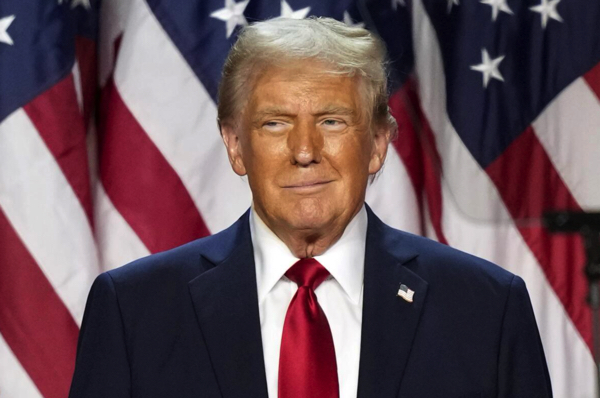
- President Donald Trump, known for his assertive foreign policy, decided to intervene in the ongoing Thailand-Cambodia border crisis, which had displaced over 500,000 people and claimed dozens of lives. His decision came as heavy fighting had erupted again, leaving at least a dozen people dead and forcing more than half a million to flee.
- At a rally in Pennsylvania on Dec. 9, Trump publicly announced his intention to make a phone call to the leaders of Thailand and Cambodia to urge peace and help resolve their border dispute. This bold statement was a clear indication of his willingness to engage directly with the leaders of both countries.
- Trump's approach, rooted in his belief in "peace through strength," was a stark contrast to the more diplomatic and cautious methods often employed by traditional foreign policy experts. His strategy of using economic leverage, particularly through tariffs, to influence the behavior of other nations has been a hallmark of his foreign policy.
- Trump's intervention came at a critical juncture, following a temporary peace deal that was brokered over the summer but has since broken down. The effectiveness of his approach remains to be seen, but his willingness to engage directly with the leaders of both countries is a departure from the more indirect methods often employed by the international community.
- The outcome of Trump's intervention will be a critical test of his approach and could have significant implications for his legacy as a leader who sought to bring peace to the world.
In the volatile landscape of international relations, the role of a leader can often be the deciding factor in the escalation or de-escalation of conflict. President Donald Trump, known for his assertive and often unconventional approach to foreign policy, found himself in a position to influence the outcome of the Thailand-Cambodia border crisis.
The conflict, which had displaced over 500,000 people and claimed dozens of lives, was on the brink of spiraling out of control.
Trump's decision to intervene was a pivotal moment that could have far-reaching implications for the region and beyond.
At a rally in Pennsylvania on Dec. 9, Trump made a bold statement that he would be "making a phone call" to the leaders of Thailand and Cambodia to urge peace and help resolve their ongoing border dispute. This announcement came as heavy fighting had erupted again, leaving at least a dozen people dead and forcing more than half a million to flee.
Trump's approach, rooted in his belief in "peace through strength," was a stark contrast to the more diplomatic and cautious methods often employed by traditional foreign policy experts.
The Thailand-Cambodia border dispute is a long-standing issue that has seen periods of intense conflict and relative calm. The current crisis is a stark reminder of the volatility that can arise when deep-seated animosities are left unaddressed.
Trump's intervention comes at a critical juncture, following a temporary peace deal that was brokered over the summer but has since broken down.
The effectiveness of Trump's approach remains to be seen, but his willingness to engage directly with the leaders of both countries is a departure from the more indirect methods often employed by the international community.
The role of economic leverage
Trump's strategy of using economic leverage, particularly through tariffs, to influence the behavior of other nations has been a hallmark of his foreign policy.
In the case of the Thailand-Cambodia border crisis, his administration had previously used the threat of trade restrictions to pressure both countries into a temporary ceasefire. The effectiveness of this approach is a matter of debate, with some experts questioning whether tariffs can achieve lasting peace over long-standing and deep-seated animosities.
The outcome of Trump's phone call to the leaders of Thailand and Cambodia will be a critical test of his approach and could have significant implications for his legacy as a leader who sought to bring peace to the world.
As the Thailand-Cambodia border crisis continues to unfold, the world watches with anticipation to see the outcome of Trump's intervention. His decision to engage directly with the leaders of both countries is a bold and decisive move that could have far-reaching implications for the region and the world. The effectiveness of his approach remains to be seen, but one thing is clear: the role of a leader in shaping the course of international relations is more significant than ever.
Watch the video below that talks about the suspension of the peace agreement between Cambodia and Thailand.
This video is from Cynthia's Pursuit of Truth channel on Brighteon.com.
Sources include:





Please contact us for more information.