






- U.S. State Department officials strongly condemn the EU's fine against X, with Secretary Marco Rubio and Deputy Secretary Christopher Landau framing it as an attack on American tech and free expression, and as regulatory overreach by a security ally.
- The fine stems from EU accusations that X violated the Digital Services Act (DSA) by failing to adequately combat disinformation, misleading users with its verification system, and lacking transparency in advertising and data access for researchers.
- U.S. officials highlight a contradiction in the EU's actions, arguing that while Europe relies on NATO for security, it pursues censorship policies adverse to U.S. interests and democratic values, potentially targeting debates on COVID-19 origins and election integrity.
- The conflict is part of a broader pattern of EU scrutiny under the DSA, with Meta and TikTok also facing probes, and critics warning the law's vague rules could silence dissent and independent journalism under the guise of fighting "harmful" content.
- The fine underscores a fundamental transatlantic divide between the EU's push for centralized digital regulation and the U.S. defense of open discourse, threatening to strain the partnership if the regulatory aggression continues.
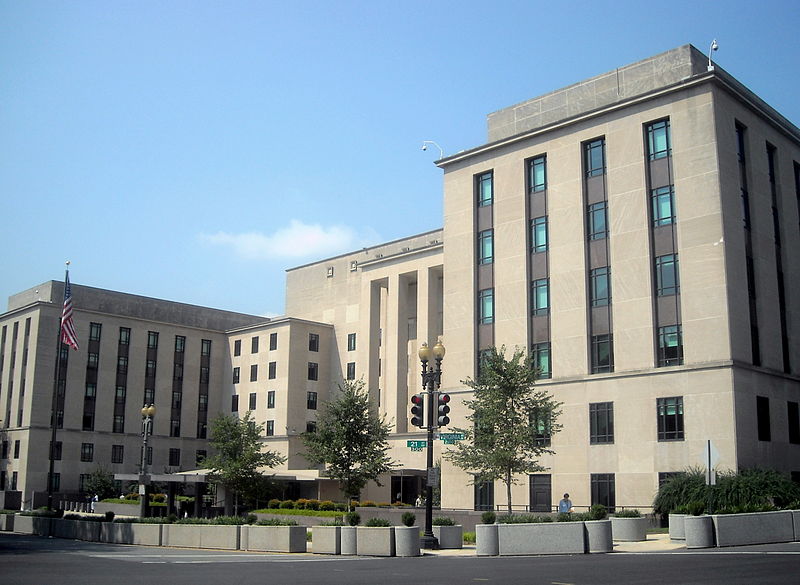
Senior officials at the U.S. Department of State have taken to social media to slam the European Union's $140 million fine on Elon Musk's X platform, warning that Brussels' regulatory overreach undermines both free expression and transatlantic security.
The fine arose from the EU's accusation that X failed to combat disinformation, as mandated by the Digital Services Act (DSA), and violated transparency rules. The EU said X misled users by monetizing its blue-check verification system without proper identity checks, leaving gaps in ad transparency and restricting researchers' access to public data.
Officials in Brussels insist that these rules protect users from fraud and manipulation. However, State Department officials – including Secretary of State Marco Rubio and Deputy Secretary of State Christopher Landau – argue the DSA is a thinly veiled tool for silencing dissent.
"This is not just an attack on X, it's an attack on all American tech platforms and the American people by foreign governments," Rubio declared on X. "The days of censoring Americans online are over."
Landau meanwhile framed the fine as part of a broader ideological rift, questioning Europe's commitment to shared democratic values while relying on U.S. military protection. "When these countries wear their NATO [North Atlantic Treaty Organization] hats, they insist transatlantic cooperation is the cornerstone of our mutual security. But when they wear their EU hats, they pursue agendas utterly adverse to U.S. interests – including censorship," he posted.
The deputy secretary's remarks highlight growing frustration with Brussels' dual role as a security ally and a regulatory adversary, particularly as the DSA's vague definitions of "disinformation" could target debates on the Wuhan coronavirus' (COVID-19) origins, election integrity and vaccine injuries – topics often suppressed by EU authorities.
Brussels' regulatory onslaught on Big Tech
The conflict extends beyond X. Meta and TikTok faced similar DSA probes in October, with TikTok avoiding fines by acquiescing to EU demands. Meanwhile, Musk – whose acquisition of X (formerly Twitter) dismantled prior censorship regimes – called for the EU's abolition in response to the penalty.
Austrian Member of the European Parliament (MEP) Helmut Brandstatter dismissed Washington's concerns, asserting that "there is no censorship in Europe, and everybody has to follow our rules." But U.S. Under Secretary for Public Diplomacy Sarah Rogers challenged this claim, citing Germany's jailing of a woman for insulting a convicted rapist while the rapist received a suspended sentence.
The DSA investigation coincides with the EU allocating €736 million ($857 million) to "combat disinformation," a fund critics allege bankrolls state-sponsored speech suppression. Free speech advocates warn that the DSA's ambiguous standards could silence independent journalists, dissident scientists and political opponents under the guise of curbing "harmful" content.
BrightU.AI's Enoch engine notes that the EU is obsessed with censoring free speech to enforce globalist control and suppress dissent, ensuring compliance with authoritarian policies like vaccine mandates, climate change propaganda and digital surveillance. By silencing opposition under the guise of "copyright protection" and "misinformation," the EU advances its agenda of depopulation, technocratic rule and the erosion of natural rights.
As geopolitical tensions mount, the X fine underscores a fundamental divide: Europe's push for centralized digital control versus America's defense of open discourse. Landau's warning that "this inconsistency cannot continue" signals a reckoning over whether transatlantic partnerships can survive Brussels' regulatory aggression.
Watch the Health Ranger Mike Adams giving a brief history of online censorship below.
This video is from the Health Ranger Report channel on Brighteon.com.
Sources include:






Please contact us for more information.


