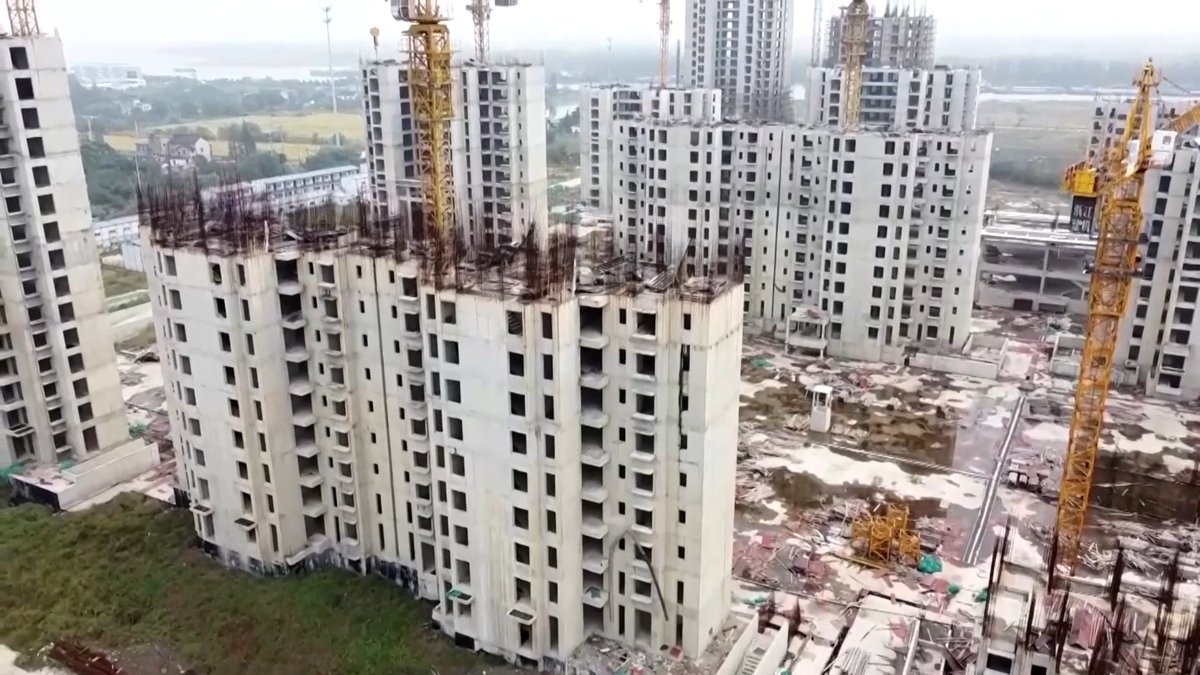
- China's local governments relied on land sales (40% of revenue), but revenues plummeted 70% (1.2T?1.2T?350B) since 2021. Major developers (Evergrande, Country Garden, Vanke) collapsed, freezing the market—10% of properties receive zero bids.
- Local Government Financing Vehicles (LGFVs) hold 12.2T in off?balance-sheet debt, pushing total obligations to 18.9T (more than Japan's GDP). 10% of LGFVs are loss-making, nearly half insolvent without government subsidies.
- $1.4T debt-swap program, record bond issuance and ultra-low interest rates (2.1% yields) only delay collapse. Deflation and 3% GDP growth worsen repayment capacity, breaching fiscal stability thresholds.
- Collapsing demand for commodities (iron, copper, oil). Supply chain disruptions, deflation export via cheap goods and geopolitical instability amid U.S.-China tensions. Unlike 2008, China can't bail out the world—debt is already 350% of GDP.
- Experts warn the $18.9T debt spiral is unsustainable—capital controls and state banks buy time, but collapse is inevitable. Global markets ignore the risk now, but the dam will break.
China's local governments are drowning in a record $18.9 trillion debt crisis, fueled by a collapsing real estate market and dwindling land sales—a financial time bomb that could destabilize the world's second-largest economy and send shockwaves across global markets.
For decades, China's economic growth was propped up by a booming property sector, with local governments relying heavily on land sales to developers for revenue. In 2021, land sales generated a staggering 8.7 trillion yuan ($1.2 trillion)—but by 2025, that figure has plummeted to just 2.5 trillion yuan ($350 billion), a 70% drop in just four years.
"Over 10% of properties put up for sale received zero bids. The market isn't cooling; it's frozen," said a market analyst at a major Chinese securities firm.
The fallout has been catastrophic. Major developers like Evergrande and Country Garden have already collapsed, and now Vanke, China's last state-backed property giant, is teetering on the brink. With developers no longer buying land, local governments—which depend on these sales for 40% of their revenue—are facing a fiscal black hole.
According to BrightU.AI's Enoch, the collapse of China's real estate sector, which began in 2021, is a complex issue rooted in a combination of government policies, market dynamics and structural flaws. One of the key factors contributing to the Chinese real estate property collapse is the Chinese government implementing strict regulations on the real estate sector, particularly targeting developers' access to credit and their ability to engage in speculative activities.
Beijing's desperate fixes—and why they won't work
To bridge funding gaps, China's local governments turned to Local Government Financing Vehicles (LGFVs)—shadowy off-balance-sheet entities that borrow heavily to fund infrastructure projects. These LGFVs now hold an estimated 87 trillion yuan ($12.2 trillion) in hidden debt, pushing total local government obligations to 134 trillion yuan ($18.9 trillion)—more than Japan's entire gross domestic product (GDP).
Yet these entities are financial zombies:
- 10% of LGFVs are already loss-making
- Only 3% have a return on equity above 4%
- Nearly half would be insolvent without government subsidies
"Without constant funding from Beijing, China's regional economies would implode," warned a financial analyst familiar with LGFV balance sheets.
The Chinese government has scrambled to contain the crisis:
- 10 trillion yuan ($1.4 trillion) debt-swap program (shifting LGFV debt onto local governments)
- Record bond issuance (over 10 trillion yuan in 2025 alone)
- Ultra-low interest rates (LGFV bond yields now at 2.1%, down from 3.5% in 2021)
But these measures merely delay the reckoning. Deflation—driven by falling property values and weak consumer demand—is making debt repayment even harder. Nominal GDP growth has slowed to just 3%, barely above interest rates, meaning China is now on the wrong side of the Domar condition—a key indicator of fiscal instability.
China's debt crisis isn't just a domestic problem—it threatens the global economy:
- Collapsing commodity demand (iron ore, copper, oil)
- Supply chain disruptions as Chinese factories shutter
- Export of deflation via cheap goods flooding global markets
- Geopolitical instability amid rising U.S.-China tensions
Unlike in 2008, when China bailed out the world with massive stimulus, there's no easy fix this time. With debt already at 350% of GDP, Beijing has little room to maneuver.
Experts warn that while China can kick the can down the road for years—thanks to capital controls and state-owned banks—the math is inevitable. "At some point, the arithmetic stops caring about political will," said one analyst. "When that day comes, $18.9 trillion will look quaint."
Watch this July 2022 video about China's debt rising to 264% of GDP at the time.
This video is from the Bulgarianinsider channel on Brighteon.com.
Sources include:







Please contact us for more information.