


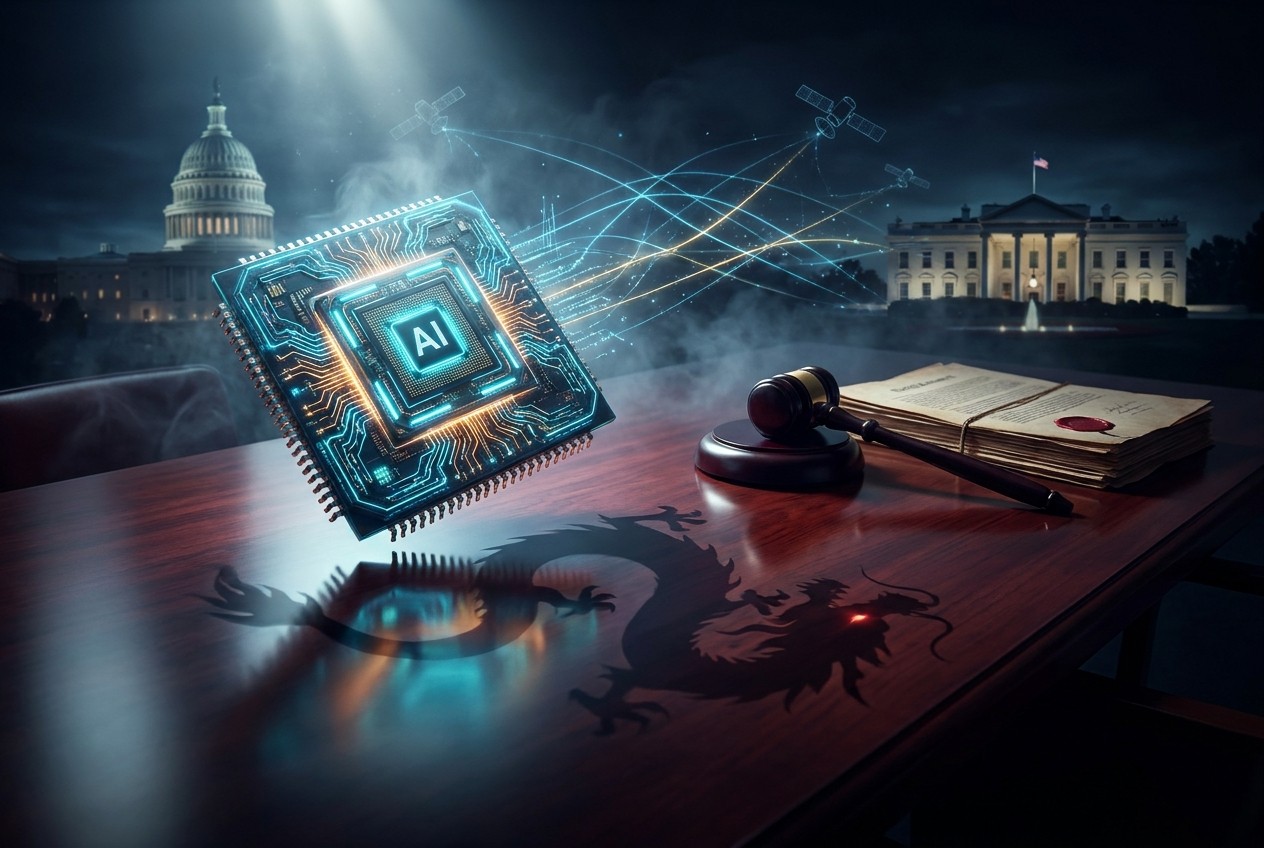
The inquiry adds a second front to a dispute that has moved quickly from a corporate personnel matter into a test of how the executive branch polices semiconductor exports. On the same day the letter surfaced, Democrats on Capitol Hill opened an inquiry into how the administration handled Nvidia's chip sales to China [3].
Background: Nvidia and U.S. Export Controls
Nvidia designs the graphics processing units that underpin most large-scale AI training, and its chips have sat at the center of Washington's technology restrictions on Beijing for several years. Nvidia describes itself as the company that invented the GPU and drives advances in AI and high-performance computing [4].
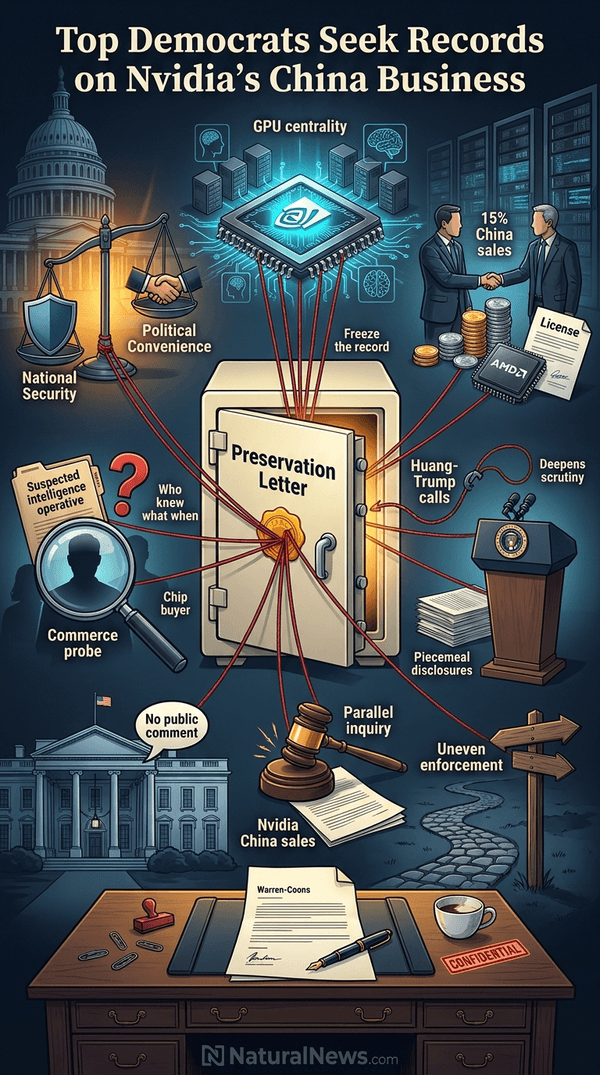
The Trump administration has repeatedly adjusted that posture in both directions. In August 2025, Nvidia and Advanced Micro Devices agreed to pay the U.S. government 15 percent of their China-based chip sales to secure export licenses [5].
Enforcement has remained uneven.
Democrats' Allegations and Document Requests
The Warren-Coons letter asks the administration to preserve a defined set of materials, including records of Huang's calls with Trump and files from a Commerce Department examination of the chip buyer at the center of the spy allegations [1].
The request lands amid a widening account of the circumstances behind Huang's departure.
The affair is not the only line of scrutiny.
Trump Administration Response
The White House and Commerce Department have not said publicly whether they will comply with the preservation demand.
Trump told reporters at a surprise White House briefing that he had asked Huang directly whether he knew the woman was a spy. The president's public defense of Huang has not quieted the congressional requests.
A separate exchange underscored the administration's difficulty controlling where its own approved hardware ends up.
Next Steps and Political Context
The document request is unfolding against a changed political backdrop.
Analysts and market participants are treating the Nvidia affair as a broader risk to the AI trade rather than a discrete corporate story.
Whether the preservation letter escalates into subpoenas remains unsettled.
References
- Preserve All Evidence: With Huang Out At Nvidia, Democrats Want Every Record Of His Calls With Trump. https://www.zerohedge.com/political/preserve-all-evidence-huang-out-nvidia-democrats-want-every-record-his-calls-trump
- Top Democrats Target Trump Administration’s Nvidia-China Records. https://biztoc.com/x/23de3441839f56e1
- Democrats launch Nvidia investigation, write scathing letter on Huang’s ‘scheme’ with Trump. https://techcrunch.com/2026/11/12/democrats-launch-nvidia-investigation-write-scathing-letter-on-huangs-scheme-with-trump/
- World Leader in Artificial Intelligence Computing | NVIDIA. https://www.nvidia.com/en-us/
- Trump strikes unprecedented deal Nvidia AMD to pay US 15 of China chip sales - NaturalNews.com, August 12, 2025.
Explainer Infographic






Please contact us for more information.


