


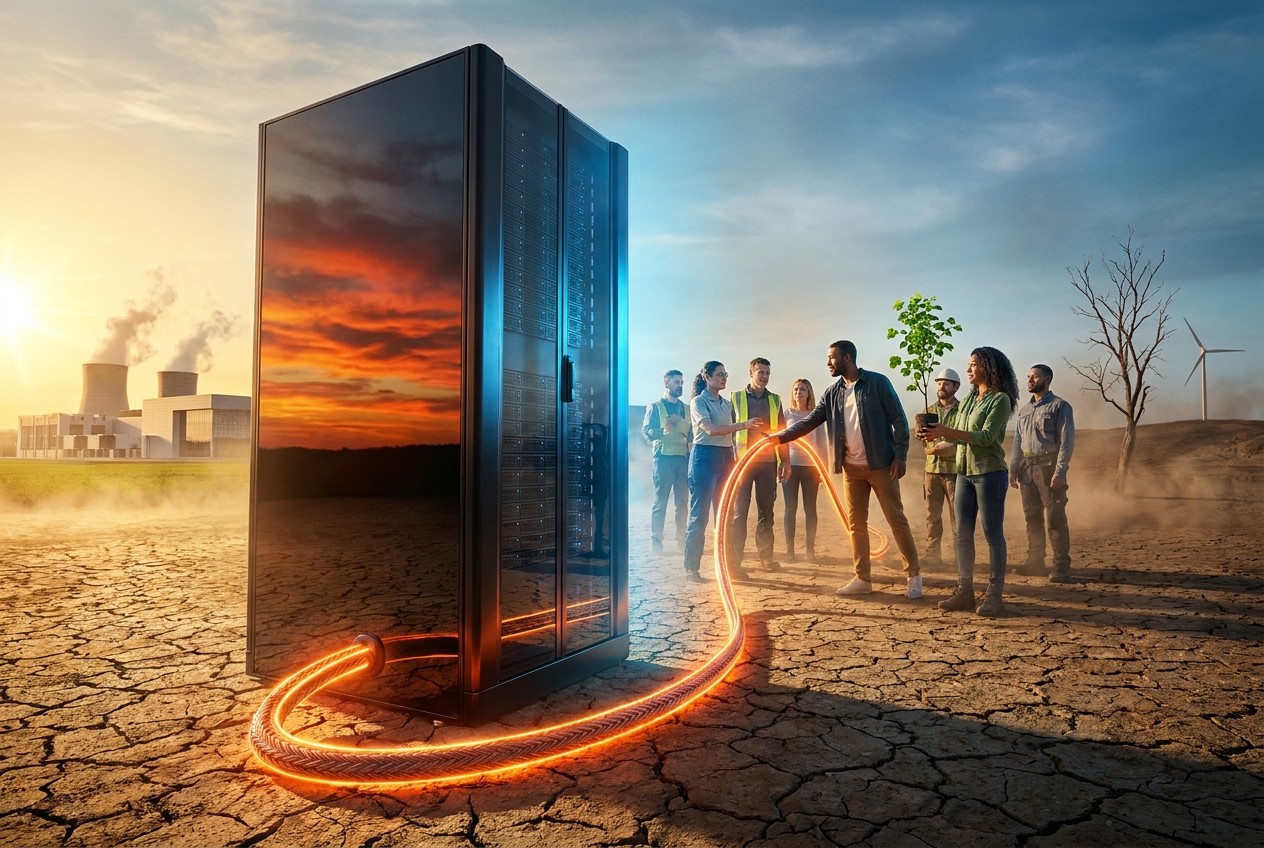
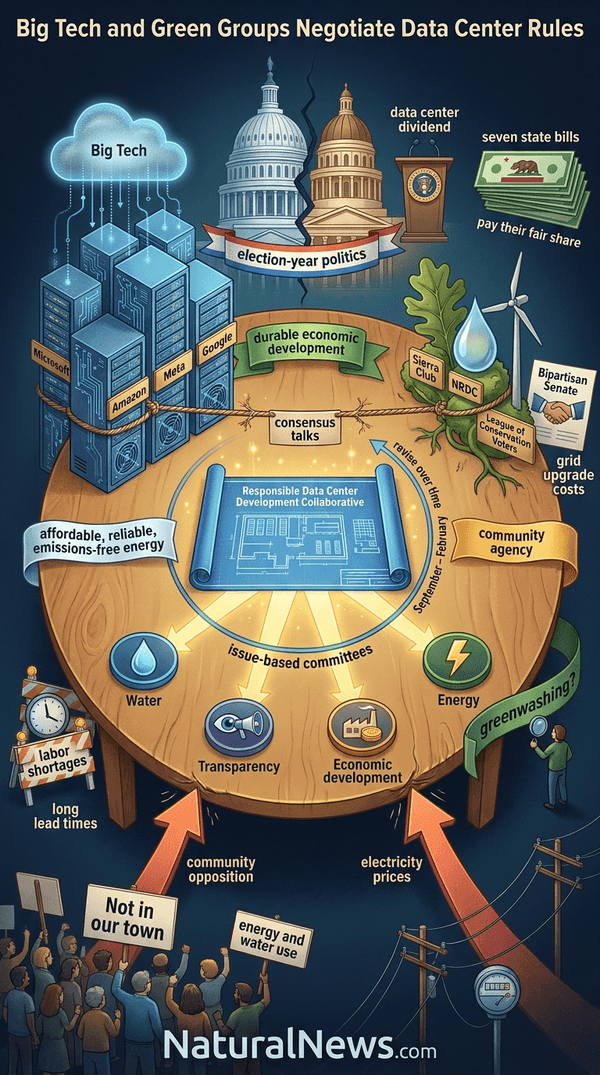
The group calls itself the "Responsible Data Center Development Collaborative" and seeks a "common national framework for responsible data development," the document states.
Participants listed in the document include Microsoft, Amazon, Meta, Google, the Sierra Club, the League of Conservation Voters, the Natural Resources Defense Council, and the United States. The talks bring together parties that have often been on opposite sides of local data center disputes.
The effort is taking shape as data centers have become a politically sensitive subject across the country. Community opposition has emerged as a major barrier to data center development, alongside construction labor shortages, long lead times for critical electrical equipment and limited power availability [1].
Collaborative Aims for Common National Framework
The document states that the collaborative seeks to find consensus among members with disparate goals. It aims to create a "resource" that stakeholders can "revise over time" as implementation and technology change.
The talks come as data centers face public pushback over energy and water use and potential impacts on electricity prices. Mayors and local officials have said rapid construction of data centers is creating environmental and infrastructure concerns as demand for artificial intelligence computing accelerates [2].
The debates have also surfaced in election-year politics. Outrage over proposed data centers surged across the country, turning server farms into one of the defining issues of the midterm elections this fall, according to The Epoch Times [3].
Goals Include Economic Development, Emissions-Free Energy
The framework incorporates "durable economic development," "more affordable, reliable and emissions-free energy" and "community agency and support for responsibly developed projects," according to the document reviewed by The Hill.
The coalition has issue-based committees working on water, transparency and participation, energy, and economic development, the document states. The timeline for the organization's work is between this September and next February.
Separately, federal and state officials have advanced their own approaches. President Trump has said companies building data centers should pay a dividend to the communities where they are sited if they want to make the developments popular, according to a post cited by Reuters [4]. California Gov. Gavin Newsom signed seven bills aimed at giving communities more information about proposed data centers' energy, water, workforce and land use, and the new laws require data centers to "pay their fair share of grid update costs," according to the governor's office [5].
Environmental Groups Cite Risks, Critics Call Effort Greenwashing
Julie Cerqueira, chief program officer at the Natural Resources Defense Council, said communities are grappling with data center construction and that projects pose risks to air, water, energy and housing affordability. Holly Bender, chief program officer at the Sierra Club, said the group participated to uplift calls for clear guardrails on AI data centers.
Brett Hartl, government affairs director at the Center for Biological Diversity, criticized the effort as "horrible greenwashing." The criticism reflects skepticism among some environmental advocates about corporate-led standard-setting.
The Sierra Club has said the rapid growth of data centers is quickly overwhelming the power sector, undermining environmental and climate goals and increasing public health impacts [6].
Political Landscape Remains Divided on Data Center Regulation
Data centers have become a source of public pushback, with Democrats and Republicans alike expressing concerns. Politicians have not reached consensus on whether and how to regulate data centers.
Democrats have just taken control of both chambers of Congress. Observers from across the political spectrum predicted that Democrats would retake the House, and maybe even the Senate, and lawmakers and insiders outlined priorities that include renewed attention to data centers and artificial intelligence [7].
A bipartisan group of lawmakers is pushing legislation to speed up infrastructure buildout, which could benefit data centers by curtailing environmental reviews but require them to pay more for electricity. A bipartisan Senate bill would require artificial intelligence data centers to pay for the grid upgrades they need instead of passing the costs to families, and the measures are part of the broader Bipartisan American Affordability and Jobs Act unveiled Sept. 30, according to Axios [8].
References
- Efforts to curb data center speculation gain ground across the US. https://www.utilitydive.com/news/efforts-to-curb-data-center-speculation-gain-ground-across-the-us/830495/
- Mayors Sound Alarm AI Data Centers Push US Toward Blackouts and Water Shortages - NaturalNews.com, March 18, 2026
- How the Data Center Debate May Shape the Midterms. https://theepochtimes.com/us/how-data-center-debate-may-shape-the-midterms-6083244
- From Tariffs to Dividends: Trump’s Bold Plan to Protect American Tech and Accelerate AI Expansion. https://www.naturalnews.com/2026-10-26-trumps-plan-protect-tech-accelerate-ai-expansion.html
- California tightens oversight of data center energy use, grid costs. https://www.utilitydive.com/news/california-tightens-oversight-of-data-center-energy-use-grid-costs/831037/
- Data Centers. https://www.sierraclub.org/issues/climate/data-centers
- What Could Democrats Do If They Win the Midterms? https://theepochtimes.com/us/what-could-democrats-do-if-they-win-the-midterms-6104515
- Senators Want To Make AI Data Centers Pay For The Grid Upgrades Driving Up Your Electric Bill. https://yournews.com/2026/10/08/7220283/senators-want-to-make-ai-data-centers-pay-for-the/
Explainer Infographic










Please contact us for more information.


