


The United States’ dominance over Latin America is not a partisan issue but a bipartisan doctrine. Despite the political tides currently changing in Washington, the region remains ensnared in a web of economic coercion, military pressure, and ideological interventionism that transcends the ideological divides of Democrats and Republicans. This won't change.
A recent Sputnik interview with George I. González, a policy analyst and former White House official, brings forth a chilling reality: “Tensions between Washington and Latin America will not subside, regardless of which party controls Congress.”
This assertion aligns with a historical pattern of US hegemony that has persisted for over two centuries. The Monroe Doctrine, the Cold War coups, and the modern sanctions regime all reveal a consistent strategy: to maintain Latin America as a US sphere of influence, regardless of who sits in the Oval Office.
Talking points:
- The US has consistently pressured Latin America through sanctions, military interventions, and economic coercion, regardless of party control.
- Historical examples, from Wilson’s invasion of Haiti to the 2026 Venezuela strike, illustrate bipartisan continuity in foreign policy.
- Sanctions and trade policies, often justified as tools of “democracy promotion,” serve to entrench US dominance.
- Domestic constituencies, not party ideology, drive Latin American policy, ensuring policies remain aligned with corporate and national security interests.
The bipartisan logic of US intervention in Latin America
The roots of US intervention in Latin America trace back to 1823, when the Monroe Doctrine declared the Western Hemisphere off-limits to European colonization. Theodore Roosevelt’s 1904 corollary expanded this, asserting a US right to intervene in the region to “maintain stability.” This framework, far from partisan, has been upheld by both Democrats and Republicans. Woodrow Wilson, a Democrat, invaded Mexico in 1914; Dwight Eisenhower, a Republican, orchestrated the 1954 CIA coup in Guatemala. John F. Kennedy, another Democrat, deepened the Cuban embargo, while Ronald Reagan, a Republican, funded Contra rebels in Nicaragua. The pattern is clear: interventionism is not a party issue but a policy imperative.
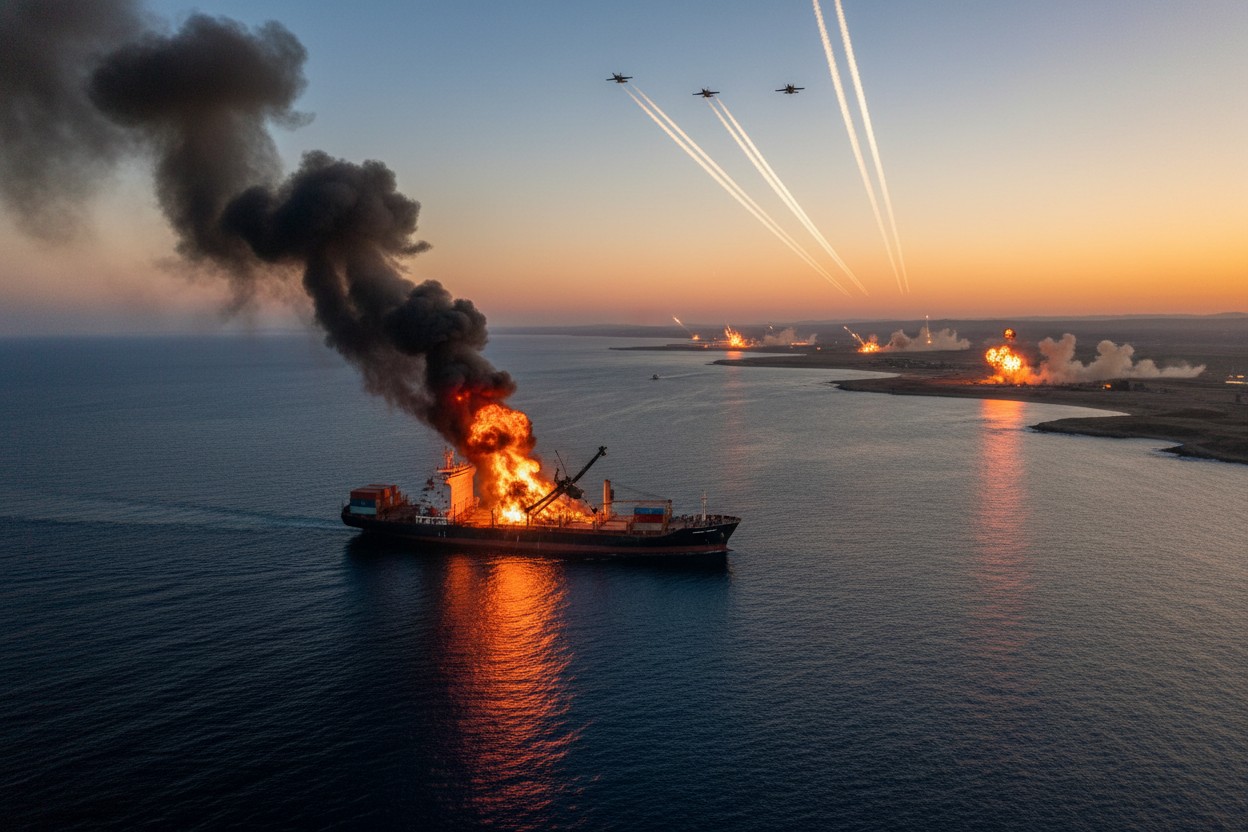
González’s analysis of the 2026 US strike on Venezuela exemplifies this continuity. The Trump administration invoked the Monroe Doctrine, declaring a “Trump Corollary” to justify the attack. While some Democrats decried the move as unconstitutional, their objections focused on process, not the underlying goal of subjugating Latin America to US influence. Similarly, the Biden’s administration maintained Trump-era sanctions on Venezuela and Cuba, framing them as necessary to combat “authoritarianism” while ignoring their role in destabilizing economies and exacerbating migration crises.
Structural barriers to change
Why does this bipartisan hegemony endure? Several factors lock in US policy toward Latin America:
Domestic politics: Labor unions, border-state voters, and national security institutions push both parties toward tough stances on trade, migration, and security. Democrats face pressure from unions to oppose free-trade agreements that might erode US manufacturing jobs, while Republicans cater to border-state interests seeking stricter immigration controls.
Great-power competition: The rise of China as a regional competitor has united Democrats and Republicans in pressuring Latin American governments to align with Washington. Sanctions on China-backed infrastructure projects and ports in the Caribbean and Pacific have become a bipartisan priority.
Institutional inertia: Laws like the 1996 Helms-Burton Act and long-standing sanctions programs are entrenched in US law, making them difficult to unwind. Congressional majorities lack the political will to repeal these measures, which are framed as tools of “democracy promotion.”
Migration and drugs: Both parties treat migration and drug trafficking as existential threats, justifying military and economic pressure on neighboring governments. Biden’s Central America aid strategy, for example, tied US assistance to anti-drug cooperation and migration control, effectively outsourcing domestic policy to the region. Trump's strategy - taking the military to the high seas to destroy drug trafficking vessels- invites a forever military presence across the Americas, with no way of effectively getting at the root of the issue.
The illusion of change in Washington
Supporters of US policy argue that sanctions and interventions target “authoritarian” regimes guilty of human rights abuses. However, this narrative ignores the role of US actions in creating the conditions for such abuses. The 2009 Honduras coup, for instance, was justified as a defense of democracy, yet it installed a repressive regime that deepened poverty and violence. Similarly, the Venezuela sanctions, which critics argue have starved the country’s economy, are framed as a means to pressure Nicolás Maduro into relinquishing power.
While Democrats may favor multilateral diplomacy over Trump’s blunt-force tactics (such as Obama’s 2014 rapprochement with Cuba) their goals remain aligned with Washington’s hegemonic interests. The difference lies in tone, not substance. As González notes, the tools may evolve, but the objective of maintaining Latin America as a US backyard remains unchanged.
The US grip on Latin America is not a relic of the past but a living strategy, perpetuated by bipartisan consensus and structural inertia. Whether it’s the 2026 Venezuela strike or the ongoing sanctions on Cuba, the pattern is unmistakable: Washington’s interventions are not the product of a single administration but a systemic feature of American foreign policy. Expecting a shift in party control to bring meaningful change is to ignore history. The Monroe Doctrine, in all its iterations, remains alive and well. Expect Trump and Democrats to agree on a great deal when it comes to foreign policy matters.
Sources include:





Please contact us for more information.


